

Ifakara, Kilombero District
22 September 2026
In the fertile plains of the Kilombero Valley — where sugarcane, rice, and horticultural crops fuel Tanzania’s agricultural growth — an invisible ecological threat has been quietly accumulating at the farm gate. For years, empty pesticide bottles, chemical sachets, and toxic rinse water have been discarded along field boundaries, threatening river basins, soil health, and public safety.
On Tuesday, Kilombero District Commissioner Hon. Dunstan Kyobya drew a firm line, officially elevating agrochemical waste management from a routine environmental issue to a core matter of public safety and security (Ulinzi na Usalama).
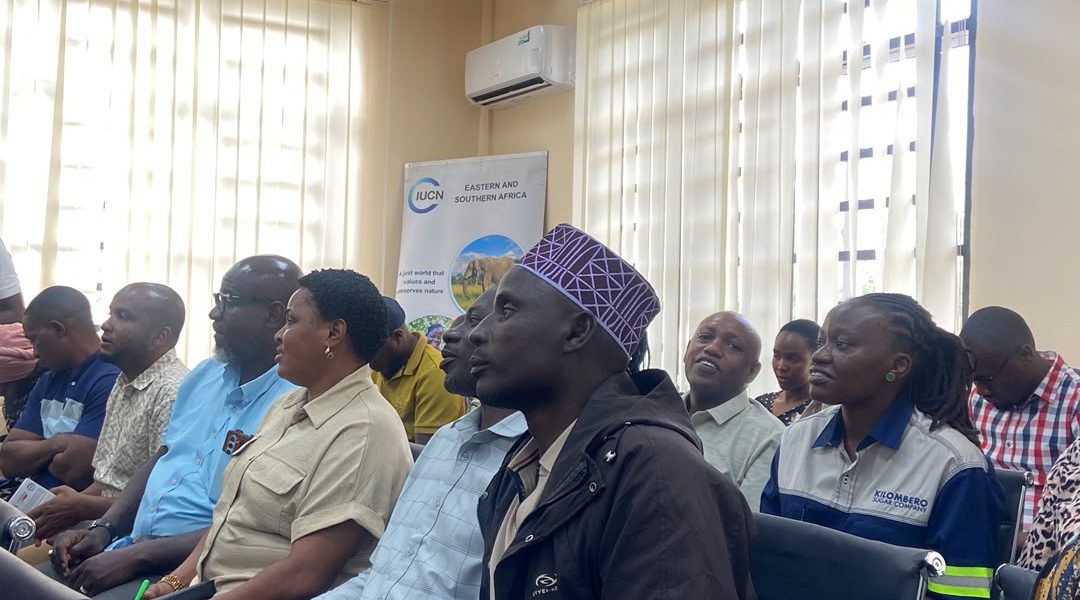
Speaking in Ifakara Town during a multi-stakeholder workshop convened by the International Union for Conservation of Nature (IUCN), the African Wildlife Foundation (AWF), and AGCOT Centre, DC Kyobya issued a sweeping mandate across Kilombero and Kilosa Districts: accelerate community-wide adoption of vizimba — agrochemical waste collection kiosks.
“The management of hazardous waste is not an option; it is an urgent matter of public safety and security,” DC Kyobya declared before an audience of over 50 Local Government Authority (LGA) leaders, ward councillors (Madiwani), village chairpersons, and agribusiness executives. “Improperly disposed hazardous chemicals poison our soils, seep into our rivers, and threaten human lives. Every government leader in this district must treat this as an active priority.”
The Innovation: Dual-Chamber Vizimba Kiosks Protecting the Kilombero Ecosystem
The workshop followed a joint field evaluation conducted in July 2026 by the Vice President’s Office (Division of Environment – VPO) and the Ministry of Agriculture (MOA), which inspected 18 newly constructed vizimba across Kilombero District.
A kizimba (plural: vizimba) is a specialized farm-level containment kiosk, engineered under AGCOT’s Inclusive Green Growth (IGG) Guiding Tool, designed to isolate hazardous agricultural waste before it pollutes the surrounding ecosystem:
🗃️ The MAKOPO Chamber safely collects and seals solid waste, including empty plastic pesticide bottles, glass containers, and aluminum packaging.
🛢️ The MIFUKO Chamber contains liquid chemical residues, equipment rinse water, and concentrated pesticide runoff.
By trapping toxic chemicals at designated collection points, vizimba help prevent chemical runoff from leaching into nearby river networks — safeguarding drinking water sources, livestock, and the surrounding wetland ecosystem.
Grassroots Accountability: Agro-Input Suppliers Put on Notice
The workshop brought together key actors across the value chain, including Kilombero Sugar Company Limited (KSCL), the National Environment Management Council (NEMC), Agricultural Marketing Cooperative Societies (AMCOS), agro-input suppliers, and local civic leaders.
Recognizing that infrastructure alone cannot change behavior without community enforcement, Village Leaders and Madiwani committed to taking the vizimba awareness campaign directly to village assemblies.
Local leaders also emphasized that agro-input suppliers — who profit from selling these chemicals — must take active responsibility for post-consumer waste, warning that action would be taken against suppliers who fail to participate in community awareness and collection drives.
Executive Directives: DC Kyobya’s 5-Point Enforcement Roadmap
Commending IUCN, AWF, and AGCOT for championing the green growth agenda under the Kilombero Cluster Compact, District Commissioner Kyobya issued five directives:
🚛 Establish Village Collection Logistics — Village and Ward authorities must set up designated central aggregation points to enable safe, organized transport of collected waste from vizimba to disposal facilities.
🔒 Full Utilization of the Existing 18 Vizimba — Local leadership must ensure the 18 constructed vizimba operate at full capacity as frontline defenses against chemical contamination.
📢 Immediate Community Education — Village chairpersons must convene meetings to educate smallholders on the health risks of pesticide exposure and proper disposal protocols.
📸 Evidence-Based Progress Reporting — Ward and Village officials must submit regular progress updates to the District Commissioner’s office, supported by photographic evidence of clean collection sites.
🛡️ Maintenance & Asset Protection — LGAs must protect and maintain vizimba structures against vandalism or structural neglect to guarantee long-term functionality.
DC Kyobya committed to conducting individual follow-ups with LGA officers to ensure compliance with the directives.
“Kilombero will not become a dumping ground for hazardous agricultural waste,” Kyobya concluded. “Protecting our environment is protecting our economic future.”