Search Agricultural Insights

Menu

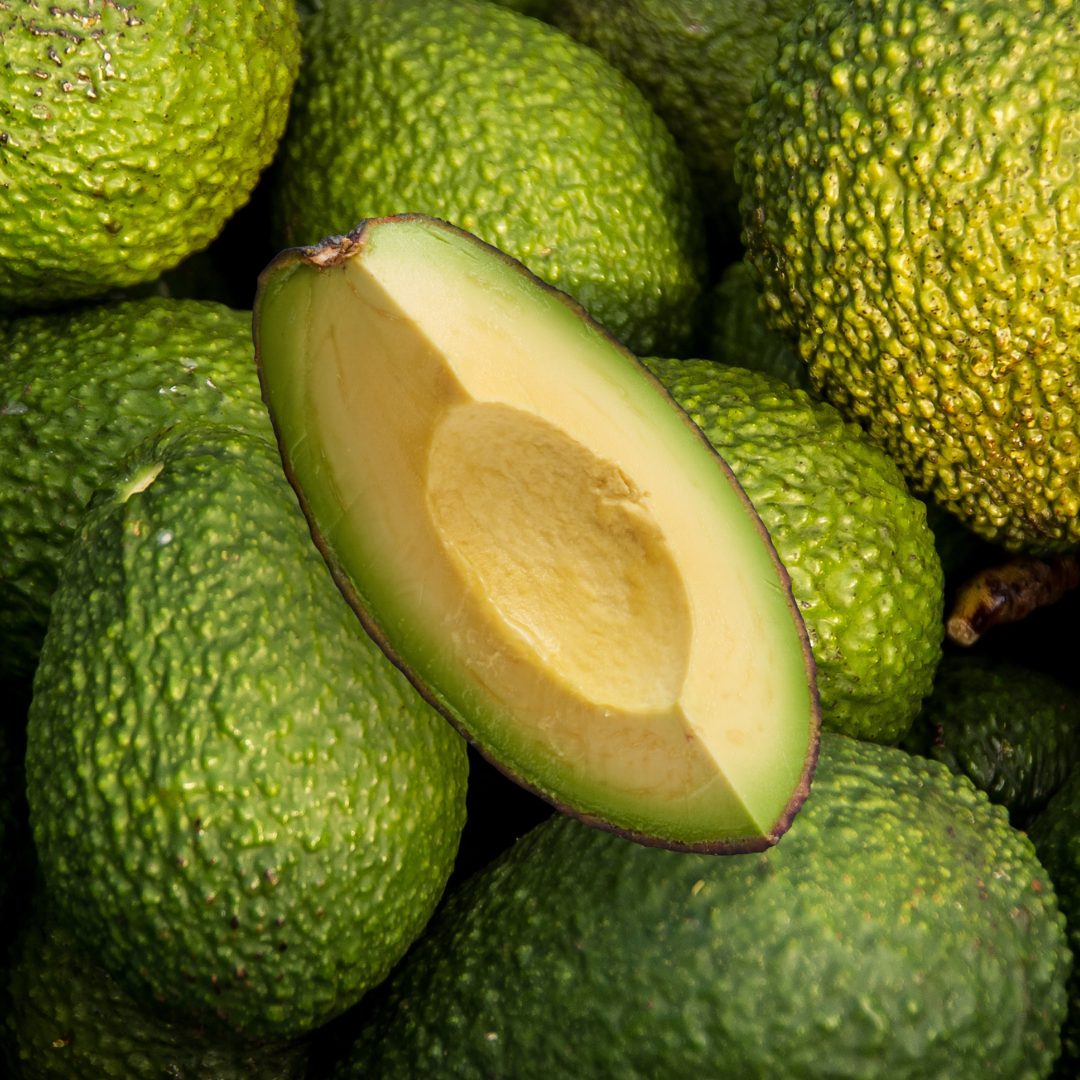
Three Quarters of Fruit-Farming Households in Northern Tanzania Grow Bananas. Almost Nobody Grows Anything Else.

By Kilimokwanza If Tanzania’s vegetable farming is dominated by a small number of crops, its fruit farming is dominated by a single one. The July 2025 research brief titled Vegetable, Fruit, and Staple Crop Production and Input Use: Baseline Findings from the FRESH End-to-End Evaluation (Tanzania Evaluation, Research Brief 3, July 2025), assessing agricultural production […]

Arusha Farms More Intensively. Kilimanjaro Grows Differently. The FRESH Baseline Reveals a Regional Divide That Policy Cannot Ignore.

By Kilimokwanza Arusha and Kilimanjaro sit beside each other on the map, share a climate zone shaped by Mount Kilimanjaro, and are often grouped together in development programming. The July 2025 research brief titled Vegetable, Fruit, and Staple Crop Production and Input Use: Baseline Findings from the FRESH End-to-End Evaluation (Tanzania Evaluation, Research Brief 3, […]

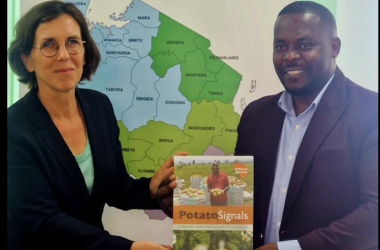
How the Potato Council of Tanzania Is Driving a Potato Transformation That Changes Lives

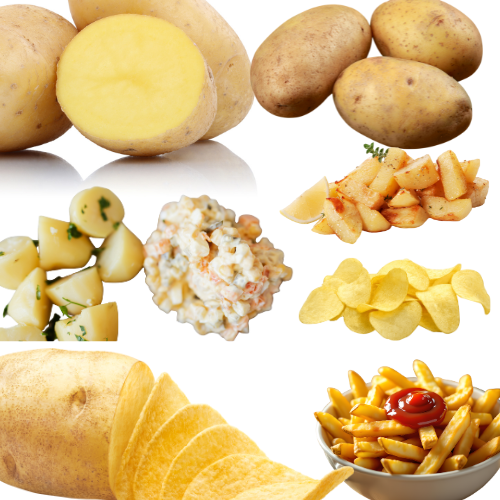
A humble tuber grown in the mists of the Southern Highlands is quietly transforming the fortunes of thousands of Tanzanian families. With the founding of the Potato Council of Tanzania and the power of farmer-led programmes, the country is poised to become Africa’s next great potato powerhouse. Kilimokwanza.org –The harvest that changed minds. Songea Municipal Hon. […]

Farmers Are Getting 4.5 Tons Per Hectare. Field Trials Show 27.7 Is Possible. What Is Going Wrong With Tanzania’s Amaranth?

By Kilimokwanza Amaranth, known in Kiswahili as mchicha, is one of the most nutritionally dense leafy vegetables grown in East Africa. Rich in iron, calcium, protein, and vitamins A and C, it is among the greens most frequently mentioned in discussions of food-based approaches to addressing micronutrient deficiencies in the region. It is widely cultivated, […]

The Staple Crop Trap: 79% of Farming Households Grow Maize. Only 41% Grow Vegetables. And Just 14% Grow Any Fruit at All.

By Kilimokwanza Correspondent The question of why so few Tanzanians eat enough fruit and vegetables is often framed as a market problem, a behaviour problem, or an affordability problem. A baseline evaluation published in July 2025 by researchers from the International Food Policy Research Institute and partners suggests it is also, at a foundational level, […]

Khalid Mgaramo: How public–private trust is actually built

Ihemi Cluster  ·  Iringa & Njombe  ·  March 2026 Khalid Mgaramo:How public–private trustis actually built By Kilimokwanza Correspondent Ihemi Cluster Field Report  ·  March 2026 Khalid Mgaramo joined SAGCOT in 2017 as an infrastructure specialist in Dar es Salaam, moved to Dodoma in 2018 to establish the policy office during the government’s capital transition, and […]

Buy It or Lease It: Farm For the Future Opens Its Agro-Dealer Catalogue to Farmers and Cooperatives Across Tanzania

Farm For the Future, operating from Ilula in Iringa and backed by Norwegian agricultural equipment manufacturers Underhaug AS and Kverneland Group, has launched a formal buy-or-lease offering of modern farm machinery targeting smallholder farmers, AMCOS, and agro-dealers across Tanzania. A Tanzanian agricultural enterprise based in Ilula, Iringa has positioned itself as the country’s newest dedicated […]

A Farming System That Is Not Feeding Its People: Seven Findings from Tanzania’s Most Detailed Baseline Study of Smallholder Agriculture in Arusha and Kilimanjaro

A landmark CGIAR evaluation published in July 2025, covering 2,611 households across 33 villages in five districts, has produced the most granular picture yet of what smallholder farmers in northern Tanzania grow, how they grow it, and what the data reveals about why the region’s nutrition crisis is, at its root, a production crisis. In […]