

Over 100 Farmers, Financial Institutions, and Policymakers Converge as Minister Kakurwa Orders Nane Nane Launch of National Poultry Strategy
DODOMA, May 22, 2026
A convergence of over 100 lead farmers, more than 20 young poultry champions, major financial institutions, and government officials at Hotel Mesuma Hall in Dodoma on Thursday marked a watershed moment for Tanzania’s agricultural transformation—one that placed contract farming, poultry commercialisation, and feed security at the centre of the nation’s economic future.
The High-Level Stakeholder Dialogue on Contract Farming, Agricultural Financing, Policy, and Farmer Organisation Development delivered more than just policy discussions: it produced firm commitments, stark revelations about production deficits, and a unified call to modernise Tanzania’s most accessible poverty-alleviation tool—chicken farming.
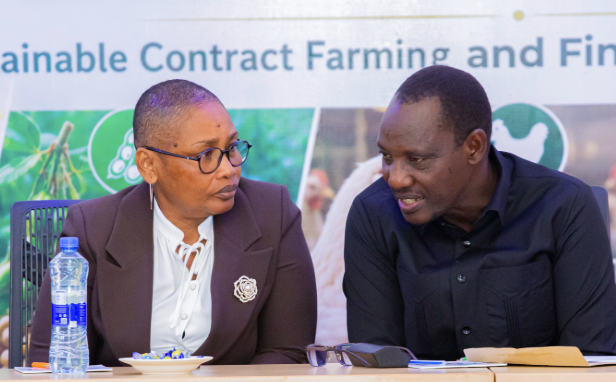
“Five Chickens to Economic Independence”: Private Sector Makes the Case
Ms. Elizabeth Swai, Managing Director of AKM Glitters Company—the firm that organised the landmark event—delivered what many described as the dialogue’s most compelling testimony: poultry farming, she argued, is Tanzania’s fastest route out of poverty, and the evidence is everywhere.
“Chicken farming—the entire poultry value chain—is the easiest way to remove poverty and change the economic wellbeing of millions of youth and women in Tanzania. This is an open secret,” she declared before the packed hall.
Drawing on years of field experience, Ms. Swai painted a picture that resonated with the farmers in attendance: “A woman starts with five chickens. Within six months, she has twenty. Within a year, she is generating steady income that pays school fees, buys medicine, improves her family’s nutrition, and gives her dignity and economic independence. A youth group starts with a brooder unit of 500 chicks. Six months later, they have generated profits of 8 to 10 million shillings and are planning their expansion. This is not theory. This is reality on the ground, happening every day across Tanzania.”
She emphasised that contract farming—when properly structured and equitably implemented—provides the mechanism for this transformation by delivering guaranteed markets, access to inputs and credit, technical training, and risk-sharing mechanisms, whilst ensuring reliable supply chains and quality standards for agribusinesses.
Policy Evolution: From Filling Stomachs to Nourishing Nations
Mr. Obey Assery, CEO of Uchumi Institute—an institution advancing evidence-based policy dialogue—articulated the critical shift now driving government strategy.
“In the past, our policies spoke only of food security, but today, the focus is on food and nutrition security. This means that poultry, livestock, and fisheries must be heavily involved so we can secure the protein our nation needs,” he stated during the panel on strengthening the regulatory environment for contract farming.
For decades, he explained, Tanzania focused on staple crops—maize and rice—to fill stomachs. “But filling stomachs is not enough if we are not nourishing our people. To build a highly productive and competitive economy, we must conquer malnutrition and ensure that our children grow up healthy and strong. To achieve this, we need accessible, high-quality animal protein, and poultry is one of the fastest and most sustainable ways to deliver that protein to Tanzanian tables.”
Mr. Assery warned that poultry farming must transition from informal, backyard activity to modernised agribusiness, and stressed that upcoming contract farming guidelines are vital. “Policy predictability in agriculture is critical because farming is a long-term investment activity. Farmers, agro-processors, exporters, and investors make decisions months or years in advance.”
“We’re Ready—But Not with Hand Hoes”: Morogoro Farmers Call for Mechanisation
Athumani Juma Kipura, Farmer Leader from Morogoro, delivered one of the dialogue’s most direct messages: Tanzanian farmers have embraced the commercial mindset, but they cannot scale production with outdated tools.
“We, the farmers of Morogoro and across Tanzania, have opened our eyes. We no longer farm just to put a single meal on the table; we now clearly see the immense business opportunities in both crops and livestock. The mindset has shifted from subsistence to commercialisation—we are ready to engage in contract farming, and we are ready to supply the markets,” he stated.
However, he emphasised that awareness and guaranteed markets alone cannot unlock this potential if farmers lack proper tools. What farmers urgently need, he stated, is zana za kilimo—modern agricultural mechanisation.
“To feed a growing nation, honour contracts, and supply massive industries using only a hand hoe is not possible. We have the land, we have the energy, and we have the business drive. If the government and financial institutions can help us access the right farming implements—the tractors, planters, and harvesters—production will multiply.”
Trust, Transparency, and Accountability: AGCOT’s Message to Farmers
Mr. Godfrey Kirenga, CEO of the AGCOT Centre, addressed smallholder farmers directly about the transformative potential of contract farming—and the non-negotiable requirement for integrity.
“When contracts are honoured by both parties, the benefits are extraordinary: guaranteed markets, access to quality inputs on credit, technical support, and stable pricing. This is your pathway from subsistence farming to profitable commercial agriculture—not just for one season, but for generations to come.”
However, he did not shy away from addressing past challenges. “We acknowledge that in the past, limited business experience has sometimes led to side-selling and contract breaches. I urge you to honour your agreements. The government is now actively coordinating these systems to protect both farmers and buyers, and modern tools such as National ID tracking ensure full transparency and accountability throughout the supply chain.”
Mr. Kirenga warned that those who breach contracts will face consequences and risk losing future opportunities, but for those who choose integrity, the rewards are substantial: “a strong reputation, sustained partnerships, and a prosperous future for your families and our nation’s agricultural economy.”
Minister Orders Nane Nane Launch of National Poultry Strategy
Against this backdrop of stakeholder convergence, the Minister for Livestock and Fisheries, H.E. Ambassador Dr. Bashiru Ally Kakurwa, delivered the government’s commitment: the National Poultry Development Strategy will be finalised and officially launched at this year’s Nane Nane agricultural exhibitions.
Speaking before the assembled farmers, financial institutions, and development partners, Dr. Bashiru articulated the urgency. “The big problem we have, despite the sector being large, is that it has not been formalised or given the status it deserves. That is why within the ministry we are preparing the National Poultry Development Strategy,” he stated, issuing the firm directive for its launch.
The Minister also called upon financial institutions—including CRDB Bank, PASS Trust, TADB, NMB Bank, and TCB Bank, all of which participated in the dialogue’s financing panel—to increase the provision of affordable loans to youth and women operating within the maize, soybean, animal feed, and poultry value chains.
The Sobering Numbers: A 95% Soybean Deficit Threatens Growth
Dr. Asimwe Rwiguza, Director of Pasture and Animal Feed Development, presented the production figures that underscored the dialogue’s urgency. National animal feed production for 2025/2026 reached 897,750 tonnes, with poultry feed accounting for 610,470 tonnes, followed by pig feed at 197,505 tonnes.
However, the sector faces a massive raw material deficit: current demand for soybeans for animal feed stands at approximately 275,000 tonnes, whilst current local production totals just 13,585 tonnes—a gap of over 95 per cent. This deficit forces Tanzania to rely heavily on imports from Zambia and Malawi, draining foreign exchange and increasing production costs.
Ms. Kissa Chawe, Assistant Director of Crop Development at the Ministry of Agriculture, announced that the Ministry of Agriculture, in collaboration with the Ministry of Livestock and Fisheries, has prepared a National Soybean Development Strategy expected to be launched soon to strengthen the value chain and boost domestic production capacity.
Background: Years of Collaborative Strategy-Building Come to Fruition
The dialogue’s outcomes reflect years of collaborative policy work facilitated by the Agricultural Growth Corridors of Tanzania (AGCOT, formerly SAGCOT), sector ministries, and the private sector to align the poultry and soybean value chains.
The National Poultry Development Strategy (NPDS)
The push to formalise the poultry sector comes as Tanzania aims to meet surging domestic demand for protein and reduce feed costs, which currently account for about 70% of the total cost of raising birds. To build the NPDS, the Ministry of Livestock and Fisheries collaborated with the Tanzania Poultry Breeders Association (TPEEC) and the World Bank. AGCOT established a dedicated “National Poultry Delivery Lab” and facilitated the signing of a Poultry Commodity Compact to address investment challenges.
The National Soybean Development Strategy (NSDS) (2024–2030)
Soybean is a vital component of poultry feed (comprising approximately 30%), yet Tanzania has historically faced a massive supply-demand gap. The National Soybean Development Strategy was drafted by a 10-member task force and sets an ambitious target to expand the domestic soybean market to USD 480 million by 2030, anchored by a targeted investment of TZS 163.15 billion.
The strategy reached final approval stages in late 2025 and early 2026. To ensure smallholder farmers can participate, initiatives like the Tanzania Sustainable Soybean Initiative (TSSI) have been rolling out improved seed varieties, inoculants, and training. AGCOT has actively brokered partnerships to link soybean farmers and youth-led agribusinesses with commercial banks to ensure they have the capital needed to close the national feed deficit.
In his closing remarks at the dialogue, Mr. Kirenga thanked Minister Kakurwa for attending. “We thank the Minister for coming to this meeting and giving hope and encouraging farmers to do the right things. The government is working to improve things, and together we will build a stronger agricultural sector.”