

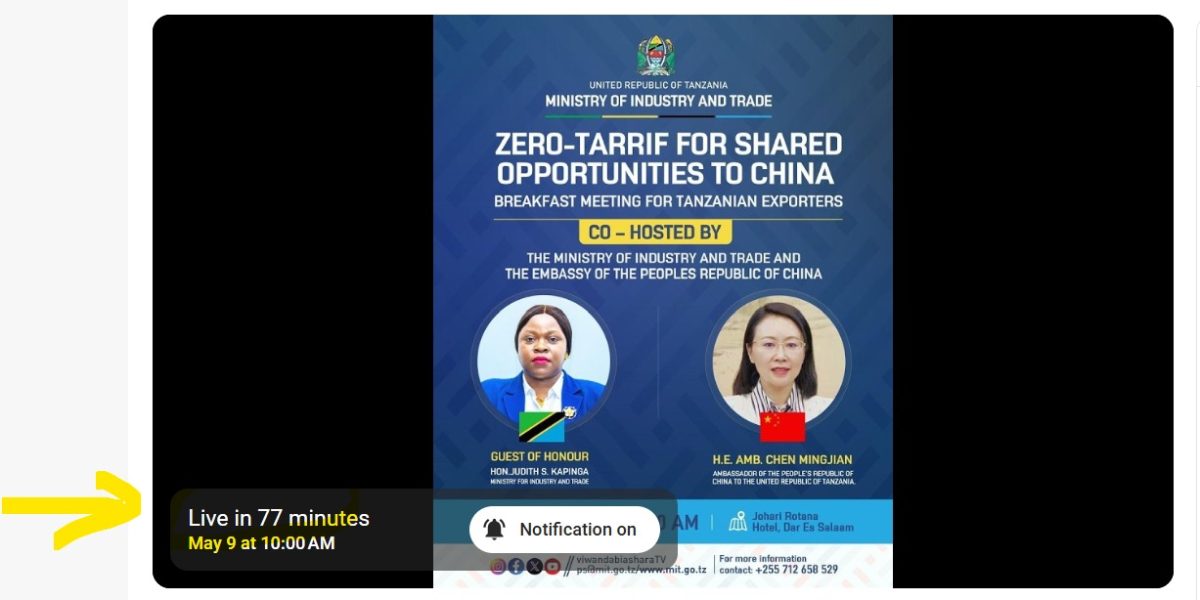
Dar es Salaam, 9 May 2026 — The Ministry of Industry and Trade, in partnership with the Embassy of the People’s Republic of China, has today convened over 200 stakeholders at the Johari Rotana Hotel to chart Tanzania’s strategic response to China’s landmark zero tariff initiative for African exporters.
The breakfast meeting, themed “Zero-Tariff, Shared Opportunities,” brings together exporters, agricultural producers, government officials, and industry associations to understand the mechanics and implications of the preferential trade arrangement that took effect on 1 May 2026.
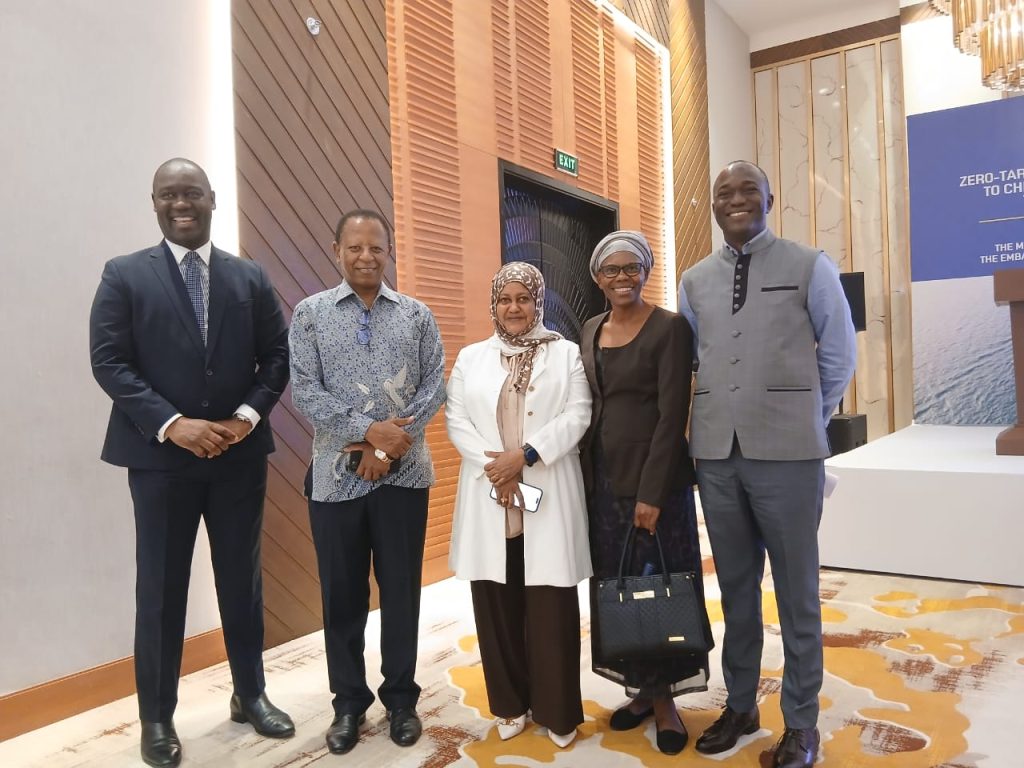
A Two-Year Window of Opportunity
The zero tariff treatment, which runs until 30 April 2028, covers exports from all 53 African countries maintaining diplomatic relations with China. The initiative was announced by President Xi Jinping during the 39th African Union Summit in February 2026, marking a significant expansion of China-Africa trade cooperation.
Speaking at the opening of today’s event, Hon. Judith Salvio Kapinga (MP), Tanzania’s Minister for Industry and Trade, emphasized the strategic importance of positioning Tanzania to capitalize on the initiative amid heightened continental competition.
“While this opportunity benefits all African nations, including those with larger economies, it simultaneously intensifies competition,” Minister Kapinga noted in her opening address. “The Ministry is therefore developing a national strategy to ensure Tanzania maximally benefits from this two-year preferential access period.”
Understanding the Mechanics
The stakeholder briefing included technical presentations on the zero tariff framework and export compliance requirements. Mr. Chu Kun, Economic Counselor at the Chinese Embassy, provided detailed interpretation of the zero tariff treatment and the so-called “Green Channel” mechanism designed to expedite customs clearance for qualifying African exports.
Amb. Waziri Rajab Salum, Permanent Secretary in the Ministry of Industry and Trade, followed with clarification on Tanzania’s domestic export regulations and the documentation requirements for exporters seeking to leverage the initiative.
The technical sessions were designed to equip Tanzanian exporters with practical knowledge on accessing the Chinese market under the new preferential regime, including rules of origin, product eligibility, and certification procedures.
Strategic Coordination Across Sectors
The meeting drew representation from key stakeholders in Tanzania’s export ecosystem. Among the invited institutions was the Agricultural Growth Corridor of Tanzania (AGCOT), reflecting the central role agricultural exports are expected to play in Tanzania’s response to the initiative.
In the invitation letter to AGCOT’s Executive Director, the Ministry specifically identified AGCOT as “a critical stakeholder in external trade” and requested the organization to mobilize relevant actors within its network to participate in the briefing.
The breadth of participation underscores the cross-sectoral nature of Tanzania’s export mobilization effort, spanning agricultural producers, value addition enterprises, logistics providers, financial institutions, and regulatory agencies.
Questions and Strategic Dialogue
Following the formal presentations, organizers allocated substantial time for questions and answers, allowing exporters and media representatives to seek clarification on specific aspects of the zero tariff regime and Tanzania’s implementation strategy.
The session was moderated to facilitate direct engagement between government officials, Chinese Embassy representatives, and private sector actors, fostering the kind of public-private dialogue essential for translating policy frameworks into export outcomes.
H.E. Ambassador Chen Mingjian, Chinese Ambassador to Tanzania, and Minister Kapinga made themselves available for media interviews following the conclusion of the formal programme, signaling both governments’ commitment to transparency and stakeholder engagement around the initiative.
Looking Ahead: From Briefing to Implementation
Today’s meeting marks the beginning of a broader national effort to translate the zero tariff opportunity into tangible export growth and foreign exchange earnings. The Ministry has indicated that subsequent engagements will focus on implementation, with relevant government agencies and industry associations expected to play active coordination roles.
For agricultural exporters in particular, the initiative presents an opportunity to expand market access for products ranging from raw commodities to processed agricultural goods, provided they meet China’s phytosanitary, quality, and documentation standards.
About the Zero Tariff Initiative
The zero tariff treatment for African exports to China represents one of the most significant trade policy developments in recent China-Africa relations. Announced at the 39th African Union Summit and effective from 1 May 2026, the initiative grants duty-free access to the Chinese market for qualifying products from all 53 African countries with which China maintains diplomatic relations. The preferential arrangement runs for an initial period of two years, until 30 April 2028.