

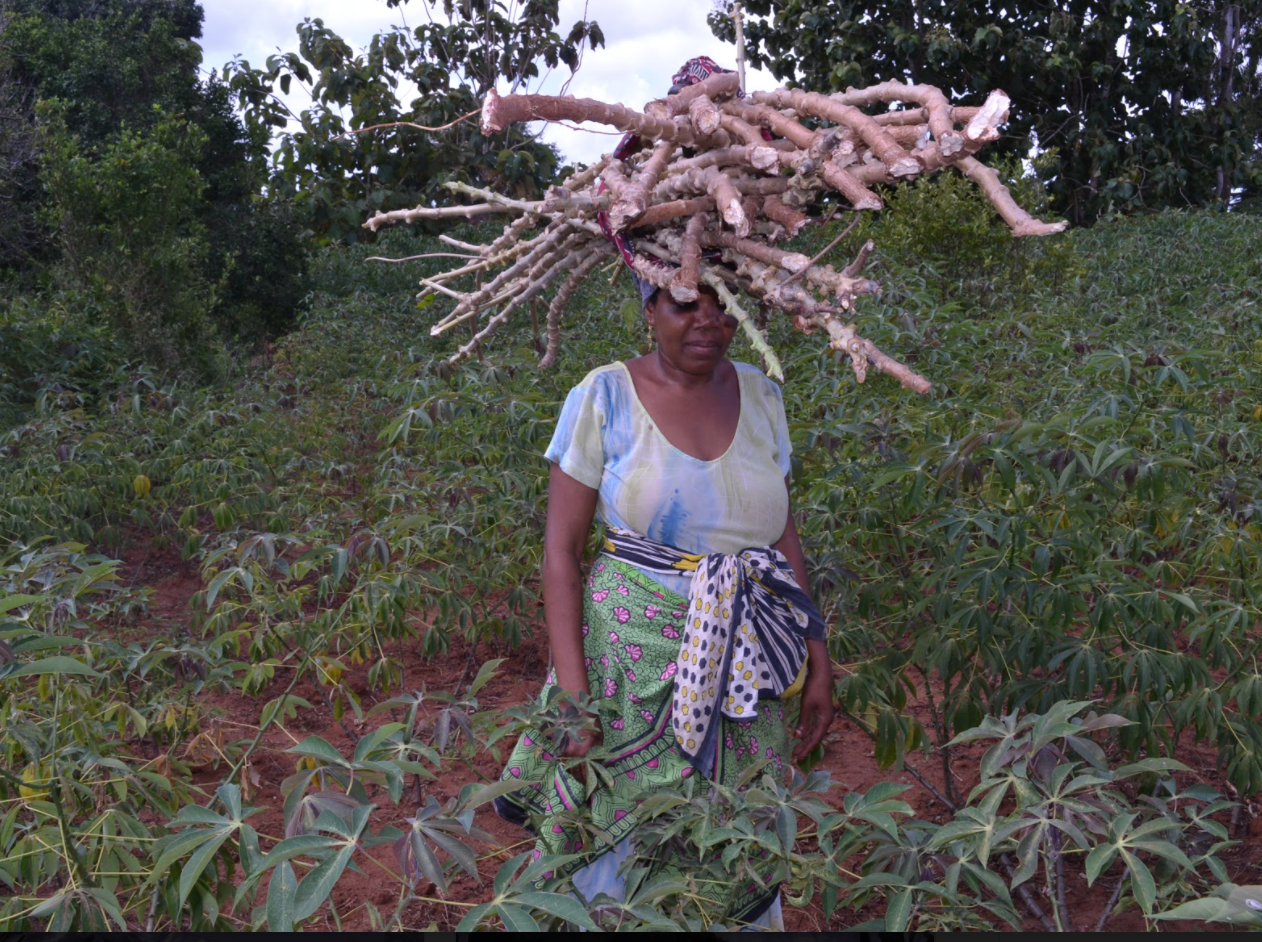
MOUNTAIN VIEW & SEATTLE — September 18 — Google and the Gates Foundation have announced an expanded multi-year initiative to bring advanced artificial intelligence tools to 200 million smallholder farmers across Sub-Saharan Africa and South Asia, with a focus on climate resilience, agricultural productivity and food security.
The initiative combines more than $100 million in funding and dedicated technical support from Google researchers and engineers to organizations developing and deploying AI solutions for agriculture.
The new roadmap expands the initiative’s initial ambition of reaching 50 million farmers to 200 million smallholders, targeting some of the challenges facing farmers as climate variability makes agricultural decision-making increasingly difficult.
“No matter where they farm, people deserve access to the weather, crop, and soil information that can mean the difference between a good harvest and a failed one,” said Mark Suzman, CEO of the Gates Foundation.
“When that information reaches farmers at scale, it’s transformational for their families, their communities, and their economies,” he said, adding that the partnership aims to put AI to work on challenges made more urgent by climate change.
Maggie Johnson, Global Head and Vice President of Google.org, said the collaboration is intended not simply to develop AI for communities in the Global South, but to develop it alongside the people and communities that will use it.
“Together, we’re connecting frontier AI with the farmers who feed a third of the world,” Johnson said.
Bringing AI closer to the farm
Smallholder farmers produce nearly 35% of the world’s food across more than 500 million farms, according to the initiative’s announcement. Most of these farms are smaller than two hectares and are highly exposed to unpredictable weather.
The initiative identifies several areas where AI, satellite information and local research capacity can help address these challenges.
Supporting local researchers and innovators
The Gates Foundation and Google say funding, computing resources and technical assistance will be directed toward local researchers and innovators.
Among the organizations identified are Wadhwani AI and Digital Green in India.
The approach is intended to keep talent, data governance and intellectual property anchored in the regions where solutions are developed and deployed.
Turning climate forecasts into farm-level information
The initiative will also focus on translating increasingly sophisticated weather forecasting into information that farmers can use in making decisions.
Advanced AI forecasting will be integrated into TomorrowNow, an operational climate platform co-funded by the Gates Foundation, the UK’s Foreign, Commonwealth & Development Office and Google.org.
The objective is to provide more precise, farm-level information in areas where farmers face increasing weather volatility.
Mapping farms that are difficult to see from space
Another component focuses on one of the challenges associated with smallholder agriculture: identifying small and irregularly shaped farms through satellite imagery.
The Agricultural Understanding Platform, an AI foundation-model suite, is being developed for farmers, governments and companies. It is designed to map field boundaries at sub-meter resolution and monitor crops throughout the growing season.
Google is combining overhead imagery from third-party providers with AI to identify smallholder fields and crops, reducing the need for costly manual surveys.
The Gates Foundation is supporting partners involved in local imagery collection and working with agricultural ministries and CGIAR research centres to prioritize important staple crops.
The Agricultural Land Use (ALU) data layer, part of Google Earth AI, already spans India, Malaysia, Vietnam and Indonesia, while deployments are underway in Kenya, Uganda, Ghana, Rwanda, Zambia and Nigeria.
The initiative says such mapping can help farmers receive more tailored weather alerts and gain access to services including government credit programmes.
Researching crops for a changing climate
The $100 million commitment will also support agricultural research and infrastructure, including collaboration with CGIAR to accelerate the development of crop varieties capable of withstanding drought, heat and disease.
The initiative also includes work on language technology.
Open-source speech and text datasets covering more than 40 African languages will be supported to help make agricultural information available to farmers in their own languages.
Regional networks including the Masakhane Research Foundation and Digital Umugunda are identified as participants in this work.
Building AI around local needs
The initiative brings together technology companies, agricultural organizations, researchers, governments and local innovators through the AI Collaborative: Food Security.
The Gates Foundation and Google say the collaborative approach is intended to allow organizations to share learning and accelerate development rather than attempting to address food-security and climate challenges independently.
At the centre of the initiative is an effort to move advanced AI from largely technical systems into practical agricultural tools — connecting climate forecasts, satellite imagery, crop research and local-language information with farmers making day-to-day decisions.
The two organizations say their longer-term objective is to ensure that AI solutions are not only available at scale, but are also developed, governed and sustained by the communities they are intended to serve.
Media contacts:
Gates Foundation: media@gatesfoundation.org
Google: press@google.com