

Young agripreneurs and policymakers converge in Kigali to reimagine agriculture as a pathway to wealth, not a last resort
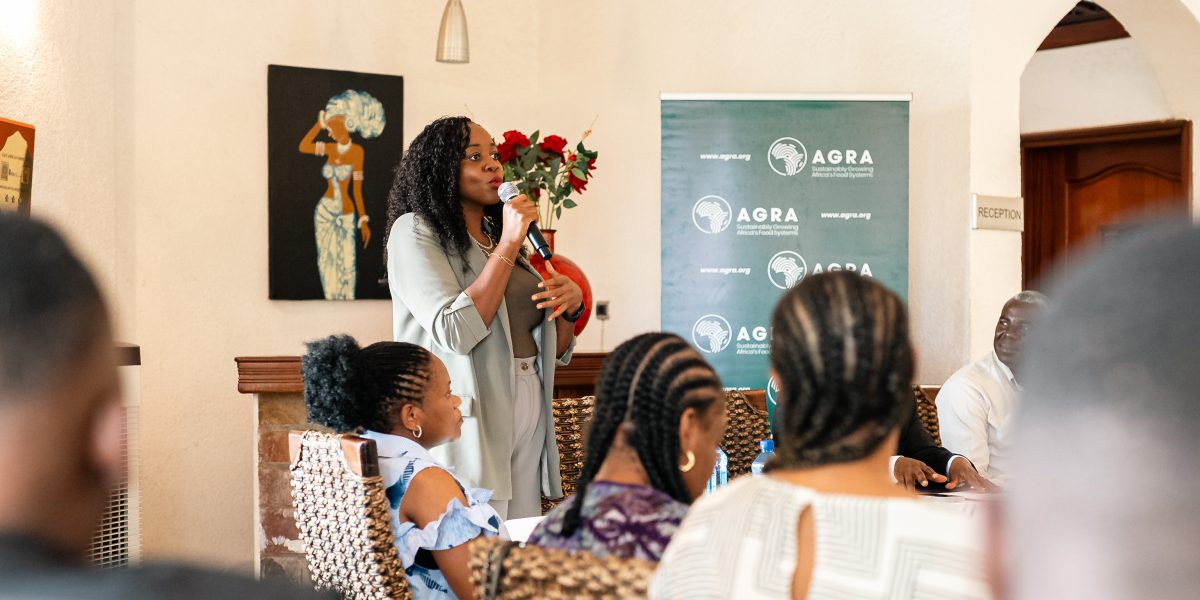
KIGALI, Rwanda — The room at Select Boutique Hotel & Restaurant was, by design, different from the usual policy conference. No podiums draped in institutional banners. No long-winded opening ceremonies. Instead, on the morning of 14th March, a group of young entrepreneurs, government ministers and development partners pulled their chairs into something closer to a conversation — and proceeded to argue, honestly, about the future of food in Africa.
The dialogue, titled “Who Gets to Shape Africa’s Food Future?”, was convened by AGRA in partnership with Global Citizen on the sidelines of Move Afrika in Kigali. It was youth-led by intention, not just by name. And the question in its title was not rhetorical.
A sector still fighting its image problem
Across sub-Saharan Africa, agriculture remains the backbone of most economies, employing the largest share of the workforce in country after country. Yet ask a young person in Nairobi, Accra or Dar es Salaam whether they want to be a farmer, and the answer is likely to be a polite — or not so polite — no.
The perception problem is old and stubborn. Agriculture has long been framed as what you do when other options run out: a fallback, not a frontier. For the continent’s youth bulge — the largest and fastest-growing young population the world has ever seen — that framing carries real economic consequences. It keeps talent, ambition and innovation away from the very sector that feeds the continent.
That is the problem the Kigali dialogue was convened to address.
“From food comes cash”
Rwanda’s Minister of Agriculture and Animal Resources, Dr. Telesphore Ndabamenye, did not arrive with prepared platitudes. He arrived with a challenge.
“You cannot market what you do not have,” he told the assembled young entrepreneurs, cutting quickly to the core of the matter. His argument was deceptively simple: food production must come first, before the dreams of profit and scale. “In the food systems journey, we must first secure food. From food comes cash, and from cash come jobs.”
It was not the sort of sequential thinking that tends to animate pitch competitions or startup ecosystems, where the emphasis is typically placed on monetisation and market disruption. But Ndabamenye’s point landed — because it named something that development frameworks often skip over: that the foundation of any agri-food economy is, in fact, food.
He was equally direct about where responsibility lies. While acknowledging the role of organisations like AGRA and the Mastercard Foundation in supporting youth initiatives, the minister pushed back against a culture of waiting for support to arrive.
“Young people must also step forward and play a bigger role,” he said. “We want youth to help us produce healthy foods for our populations. When food systems are strong, the economy becomes stronger.”
Listening before fixing
For Ifeoma Chuks-Adizue, Managing Director for Africa at Global Citizen, the conversation served a practical purpose beyond inspiration.
“We need to understand what challenges they face — as Global Citizen and as AGRA — so that we can help them achieve their goals,” she said. It was a candid acknowledgement that institutions, however well-resourced, can miss the mark when they design programmes without first genuinely listening to the people those programmes are meant to serve.
Chuks-Adizue described the event as a response to exactly that gap. Global Citizen’s current focus on job creation and AGRA’s long-standing work on food and nutrition had converged around the recognition that young entrepreneurs needed more than grants and training — they needed a room where their experiences were taken seriously.
“This event was organised to create an open and honest conversation among young people who are already doing great work within the agriculture space,” she said.
Not beneficiaries — innovators
Nana Yaa Boakyewaa Amoah, AGRA’s Director for Gender, Youth and Inclusiveness, offered the framing that perhaps best captured the spirit of the morning.
“Young people are not just beneficiaries — they are innovators, entrepreneurs and leaders in the food system.”
It is a distinction that matters more than it might initially appear. When youth are positioned only as recipients of development programmes, the implicit message is that transformation happens to them, not through them. When they are recognised as agents — as people already building, already solving, already leading — the entire logic of support shifts.
AGRA has been operationalising that shift through its Youth Entrepreneurship for the Future of Food and Agriculture (YEFFA) initiative, which works to strengthen the systems around young entrepreneurs rather than simply delivering services to them. In Rwanda alone, the results are beginning to show. Youth-led enterprises supported under YEFFA have created 12,248 work opportunities across agrifood value chains. Another 649 young people with disabilities have been enabled to participate in agriculture and agribusiness — a figure that speaks both to the scale of what is possible and the importance of designing for inclusion from the start.
Voices from the floor
The dialogue’s most animated moments came not from the main speakers but from the entrepreneurs themselves.
Lydia Murekatete, who runs All Greens, summarised the morning’s energy in eight words: “Don’t just talk about it, be about it.” It was part rallying cry, part gentle rebuke of an agricultural development ecosystem that can, at times, mistake conversation for action.
Evariste Sibobugingo, co-founder of Igisubizo Ltd, described what the dialogue had given him in less tangible but equally important terms.
“This dialogue builds our confidence, opens our minds and allows us to share experiences with other young people,” he said. Confidence, it turns out, is not a soft outcome. In a sector where young entrepreneurs often operate without networks, without mentors and without the credibility that comes from institutional backing, the ability to stand in a room with a minister and speak as an equal is itself a form of capital.
A moment with momentum
The Kigali conversation arrives at an inflection point for Africa’s agricultural agenda. This year marks twenty years since AGRA was established to strengthen agricultural systems across the continent — two decades of iterative work that has generated both hard lessons and scalable models.
At the continental level, the African Union’s Kampala CAADP Declaration and the newly adopted CAADP Strategy 2026–2035 place agri-food systems transformation at the centre of Africa’s broader economic development ambitions. The frameworks are in place. The question — as the Kigali dialogue made clear — is who will bring them to life.
The answer, increasingly, is young people. Not someday. Now.
AGRA’s YEFFA initiative operates across multiple African countries, supporting youth-led agribusiness development through skills training, market linkages, financing access and policy engagement.