

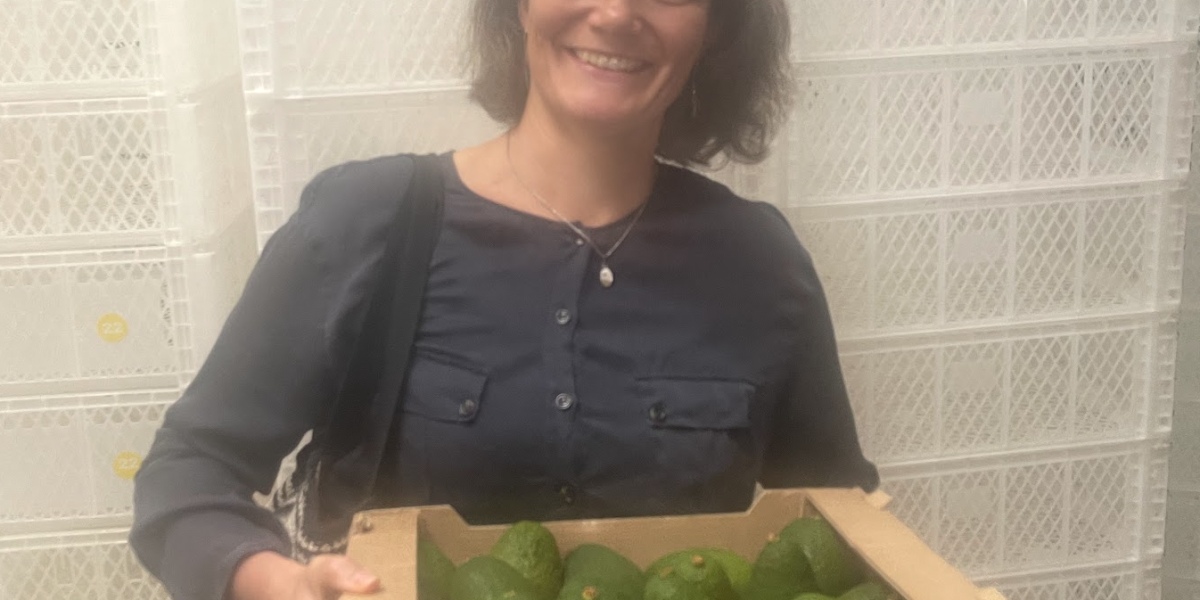
SAGCOT Corridor avocado pioneer reveals Chinese buyers are ready as export license approval is pending
Dar es Salaam, 9 May 2026 — As Tanzania’s Ministry of Industry and Trade convened stakeholders to chart the country’s Zero Tariff strategy this morning, a comment from Finland delivered a powerful validation of the opportunity at hand: Tanzanian avocados already have buyers waiting in China.
“Good morning from Finland. Our company Tanzanice Agrofoods Ltd is the gateway of Tanzanian avocados from Southern Highlands area farmers to global market. We have client in China waiting that we get the export license,” Eero Pissilä posted during the live-streamed stakeholder briefing at Johari Rotana Hotel.
The comment, made by the founder of one of Tanzania’s pioneering agricultural export enterprises, underscores a critical reality often obscured by high-level policy discussions: the Zero Tariff window is not a theoretical opportunity requiring years of market development. For some Tanzanian exporters, Chinese buyers are already identified, relationships established, and orders pending—awaiting only regulatory clearance to move forward.
From Southern Highlands to European Supermarkets: The Tanzanice Journey
Tanzanice’s readiness to access the Chinese market builds on over a decade of export experience that began with an equally audacious market entry strategy. In 2015, when Eero Pissilä founded Tanzanice Co. Ltd, Tanzanian avocados were virtually unknown in international markets, despite the exceptional quality of Hass avocados produced in the Southern Highlands—the fertile SAGCOT Corridor region where favorable climate and rich soils create ideal growing conditions.
Southern Highlands farmers faced a paradox: they produced outstanding avocados but had limited access to substantial markets. Many were uncertain where and how to sell their crops, particularly given the stringent demands of international trade. Various development organizations had supported farmers to cultivate avocados, but critical market knowledge—understanding quality requirements, export procedures, and buyer expectations—remained a significant gap.
Tanzanice adopted a bold strategy: take the avocados directly to Europe’s horticultural trade hub. Company representatives traveled to Holland, knocked on doors, and showcased their product. “We introduced our avocados as a product from Tanzania—creamy, delicious, and of superior quality,” Ms. Matilda Byanda, speaking on behalf of Tanzanice, explained in an earlier account of the company’s market entry journey.
The initial response was lukewarm. European buyers, unfamiliar with Tanzanian avocados, questioned consistency and quality. Tanzanice persevered, leaving sample boxes with potential buyers and systematically introducing their product to new companies over several months.
Eventually, a company placed a pilot order. The avocados were tested and launched in supermarkets, receiving overwhelmingly positive reception. Consumers were captivated by the distinct flavor and premium quality, driving significant demand increases. Tanzania had entered the global avocado market.
Building on this success, Tanzanice expanded its export portfolio to include ginger, turmeric, and passion fruits, further demonstrating the diversity and excellence of Tanzanian agriculture. “We are committed to ensuring that Tanzanian products are recognized and valued worldwide,” Ms. Byanda emphasized. “When buyers come to us, we guarantee they receive the finest products available.”
The China Opportunity: Market Development Already Complete
Pissilä’s comment during today’s Zero Tariff briefing reveals that Tanzanice has replicated its European market development success in China—establishing buyer relationships and securing client commitments before the zero tariff framework even took effect on 1 May 2026.
This positions the company to move immediately once export licensing is finalized, rather than spending the early months of the preferential access window on market prospecting and relationship building—the time-consuming groundwork that Tanzanice has already completed.
For Southern Highlands farmers who supply Tanzanice, the China market represents a significant expansion opportunity. China’s rapidly growing middle class has demonstrated increasing demand for premium imported produce, including avocados, which have gained popularity as a health food and ingredient in Chinese cuisine over the past decade.
The zero tariff treatment removes a significant cost barrier. Standard import tariffs on avocados can range from 10-30% depending on classification and origin, directly impacting landed cost and retail price competitiveness. Duty-free access fundamentally changes the economics of exporting to China, potentially opening mass-market channels that would be unviable under normal tariff regimes.
The Regulatory Bottleneck: Export Licensing as the Critical Path
Pissilä’s comment, however, also highlights a critical challenge: “We have client in China waiting that we get the export license.”
Export licensing—particularly for fresh produce destined for markets with stringent phytosanitary requirements like China—involves multiple regulatory steps: product registration, facility inspections, phytosanitary certification, quality standard verification, and bilateral protocol agreements between exporting and importing countries.
For companies like Tanzanice, which have already invested in market development and secured buyer commitments, licensing delays directly translate into missed commercial opportunities. Every week of delay represents orders that cannot be fulfilled, buyer relationships tested by uncertainty, and competitive advantage eroded as exporters from other African countries move ahead.
This licensing challenge was precisely the kind of operational bottleneck that today’s stakeholder briefing was designed to address. When Permanent Secretary Amb. Waziri Rajab Salum presented on Tanzania’s domestic export regulations and documentation requirements, he was speaking directly to the practical realities companies like Tanzanice navigate daily.
The Ministry’s commitment to developing a national Zero Tariff strategy must therefore include not just market promotion and buyer matchmaking, but also regulatory efficiency—ensuring that companies with established markets and waiting clients can move product as quickly as compliance standards allow.
SAGCOT Corridor Success Story: From Potatoes to Premium Exports
Tanzanice’s journey exemplifies the broader agricultural transformation underway in the Southern Agricultural Growth Corridor of Tanzania. Eero Pissilä’s initial interest in Tanzania centered on the SAGCOT Round Potato Value Chain. While exploring the Southern Highlands for potato production opportunities, he discovered the abundant high-quality avocados local farmers produced.
Recognizing this potential, Pissilä pivoted to establish an international market for Southern Highlands avocados, ultimately founding Tanzanice Co. Ltd with that mission. The company became a vehicle for connecting SAGCOT farmers to global buyers—exactly the kind of corridor-based value chain development that the SAGCOT framework was designed to catalyze.
Today’s Zero Tariff opportunity arrives as SAGCOT enters its second decade. The corridor has attracted over $3.2 billion in agricultural investments since its 2010 launch. Infrastructure has improved. Irrigation has expanded. Processing capacity has grown. Farmer organizations have strengthened. Market linkages—exemplified by companies like Tanzanice—have deepened.
The China market represents the next frontier for SAGCOT agricultural exports. If Southern Highlands avocados can succeed in demanding European markets, they can compete in China—provided regulatory frameworks enable rather than obstruct market access.
Farmer Empowerment: Market Knowledge as Competitive Advantage
A consistent theme in Tanzanice’s approach has been farmer empowerment through market knowledge transfer. As the company connected Southern Highlands farmers with international markets, leadership recognized that cultivation support alone was insufficient. Farmers needed to understand quality standards, grading systems, post-harvest handling requirements, and export procedures.
Tanzanice took proactive steps to provide this knowledge, ensuring that farmers could meet global market demands and that Tanzanian agricultural products could reach their full competitive potential.
This empowerment model becomes even more critical in the China context. Chinese market requirements—particularly for fresh produce—involve specific quality parameters, packaging standards, traceability systems, and cold chain protocols. Farmers who understand these requirements and can consistently deliver compliant product will be best positioned to sustain market access beyond the two-year zero tariff window.
Companies like Tanzanice serve as crucial intermediaries, translating Chinese buyer expectations into practical farming and post-harvest protocols that Southern Highlands producers can implement.
Policy Meeting Practice: When Export Readiness Meets Regulatory Reality
The juxtaposition of this morning’s events captures the essential tension in Tanzania’s Zero Tariff response: while policymakers brief stakeholders on strategic frameworks and exporters listen to presentations on procedures, real companies with actual products, established buyer relationships, and waiting orders navigate the practical realities of getting licensed to export.
Pissilä’s comment from Finland—made while Minister Kapinga, Ambassador Chen Mingjian, and Permanent Secretary Salum addressed the Johari Rotana ballroom—serves as a powerful reminder that export success requires alignment between policy vision and operational execution.
The zero tariff opportunity is time-bound. The window closes 30 April 2028. For companies like Tanzanice, every month of that window counts. The difference between Tanzania capturing significant China market share and watching competitors from Kenya, South Africa, or other African countries establish dominant positions may come down to regulatory processing speed.
A Call for Regulatory Efficiency
For Tanzania to maximize the Zero Tariff opportunity, the Ministry of Industry and Trade’s national strategy must prioritize regulatory efficiency alongside market promotion. This means:
Expedited export licensing: Fast-track processing for companies with established buyer commitments and demonstrated export track records.
Clear timelines: Published processing schedules so exporters can plan shipments and manage buyer expectations.
Single-window facilitation: Coordinated engagement across regulatory agencies to eliminate duplicative requirements and streamline approvals.
Proactive problem-solving: When licensing bottlenecks emerge, rapid response to resolve rather than await standard processing timelines.
Companies like Tanzanice have done their part: they’ve developed markets, established buyer relationships, built quality systems, and empowered farmers. The regulatory environment must now enable rather than obstruct their ability to fulfill orders.
Conclusion: Export Readiness Meets Market Opportunity
As today’s stakeholder briefing unfolded at Johari Rotana Hotel, Eero Pissilä’s comment from Finland provided a grounding counterpoint to high-level policy discourse. Tanzania doesn’t need to wonder whether Chinese buyers exist for its agricultural products. They exist. They’re waiting. They’ve placed their interest with established Tanzanian exporters.
The question is whether Tanzania’s regulatory systems can move with the urgency this opportunity demands.
Tanzanice Co. Ltd’s eleven-year journey—from knocking on doors in Holland to having Chinese clients waiting for export licenses—demonstrates that Tanzanian agricultural products can compete globally. Southern Highlands farmers can produce to international standards. Tanzanian export companies can build and sustain buyer relationships.
What remains is to ensure that regulatory frameworks match the sophistication and readiness of Tanzania’s export sector.
For Southern Highlands avocado farmers who supply Tanzanice, the China opportunity is not theoretical. It’s immediate, concrete, and contingent on export license approval. Their avocados are ready. The buyers are waiting. The tariffs are eliminated.
The regulatory pathway is the final piece of the puzzle—and the one that will determine whether Tanzania’s Zero Tariff opportunity translates into export growth or becomes another case study in unrealized potential.
Background:
Tanzanice Agrofoods Ltd (formerly Tanzanice Co. Ltd) was founded in 2015 by Eero Pissilä to connect Southern Highlands farmers with international markets for premium agricultural products. The company exports Hass avocados, ginger, turmeric, and passion fruits from the SAGCOT Corridor region to Europe and other markets.
SAGCOT (Southern Agricultural Growth Corridor of Tanzania) is a public-private partnership launched in 2010 to catalyze agricultural transformation in Tanzania’s Southern Highlands and coastal regions, covering approximately 300,000 square kilometers.
Zero Tariff Initiative: Announced by Chinese President Xi Jinping at the 39th African Union Summit (February 2026), effective 1 May 2026 – 30 April 2028, providing duty-free market access to China for exports from 53 African countries.
Related Coverage:
- Full Zero Tariff stakeholder briefing coverage: [link]
- Watch the stakeholder meeting: https://youtube.com/live/8iIPwLbUnz4?feature=share
#ZeroTariff #Tanzanice #TanzanianAvocados #SAGCOT #SouthernHighlands #ChinaMarket #AgriculturalExports #ExportLicensing #TanzaniaExports #AGCOT