

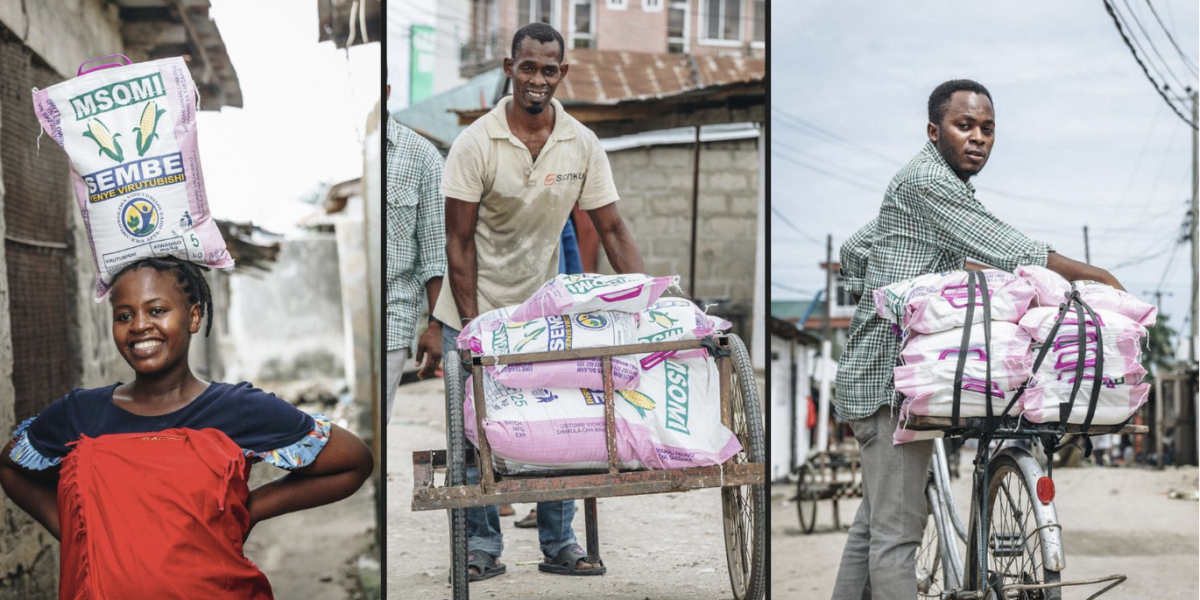
Cost per beneficiary drops 40% as regional fortification network expands across Tanzania, Kenya, and Ethiopia
Nakuru, Kenya
Sanku, one of East Africa’s largest nutrition delivery systems, has reached nearly 75 million people with fortified flour across the region, more than doubling its reach over the past year whilst simultaneously reducing the annual cost per person from $0.15 to $0.09.
The milestone, detailed in the organisation’s latest quarterly report covering January through March 2026, positions Sanku firmly on track to reach 100 million people by 2028 through an expanding network of small and large-scale millers operating across Tanzania, Kenya, and Ethiopia.
“Behind every number in this report are families eating better, children learning on fuller diets, and communities gaining access to a basic human right,” said Felix Brooks-church, Sanku Co-Founder and CEO. “These gains were driven by the systems we have invested in most: stronger Government enforcement, local nutrient premix production, trust in local talent, and a model that combines both small and large mills into one growing fortification network.”
Tanzania Leads Regional Expansion
Tanzania continues to drive Sanku’s largest growth, now reaching more than 53 million people through a network of 1,155 millers nationwide. The country’s performance this quarter underscores the resilience of localised production systems: whilst imported premix faced regional supply disruptions, Sanku’s nutrient premix factory in Tanzania maintained uninterrupted production, enabling millers to continue fortifying flour without pause.
Sanku’s flour bag factory in Tanzania produced a record 3.1 million flour bags bundled with premix during the quarter, helping millers reduce costs whilst keeping fortified flour affordable for families. Beyond commercial markets, Sanku has expanded school feeding partnerships, connecting local millers to 495 schools and providing fortified meals to more than 225,000 students across the country.
The Tanzania operation received significant institutional backing this quarter when Sanku President Mark Ocitti met with H.E. Dr. Jakaya Kikwete, former President of Tanzania and current Sanku Board Member. More than ten years ago, President Kikwete held a single Sanku Dosifier and challenged the organisation to take fortification beyond major cities and into every region of Tanzania. Today, thousands of Dosifiers are deployed nationwide.
“President Kikwete congratulated the team on its progress whilst emphasising that rapid expansion must be matched by equally strong evidence on nutritional outcomes,” the report notes, highlighting discussions on stronger Government enforcement and more rigorous systems for measuring impact at scale.
Kenya Tackles Counterfeit Premix Challenge
In Kenya, where Sanku’s network now includes 194 millers reaching more than 10 million people daily, the organisation focused on addressing one of the sector’s most persistent challenges: counterfeit and substandard premix.
Working with industry and Government, Sanku helped strengthen accountability across the fortification sector through the Premix Suppliers Association under the Cereal Millers Association, including the development of third-party audit standards for suppliers.
The organisation also partnered with Kenya’s National Public Health Institute to support a new digital monitoring system for food safety and fortification, a development that could significantly enhance regulatory oversight across the country’s milling sector.
At GSU Primary School in Nairobi, the practical impact of fortification is visible daily. Kitchen manager Maureen Nyaga prepares nearly 1,000 lunches and 500 dinners each day, with fortified maize flour supplied by Flour Fusion Millers, part of Sanku’s network. Research shows that better nutrition improves concentration, attendance, cognitive performance, and educational outcomes.
Ethiopia Expansion Accelerates Despite Forex Constraints
Ethiopia continued to demonstrate the resilience of Sanku’s localised production model this quarter, even as foreign exchange constraints limited access to imported fortification inputs across the region. By supplying high-quality premix in local currency, Sanku helped millers continue fortifying without interruption.
Sanku’s network in Ethiopia now includes 385 millers, reaching more than 9 million people daily. The organisation supported Ethiopia’s new maize fortification standard, advanced zinc proxy testing alongside Addis Ababa University and the Gates Foundation, and progressed construction of its nutrient premix factory in Addis Ababa, which is expected to localise production and supply much of the surrounding region when operational.
Dr. Ermias Habte, Sanku’s newly appointed General Manager for Ethiopia, brings deeply personal motivation to the role. As a child in Ethiopia, he witnessed the devastating famine of the 1980s, shaping his lifelong focus on food systems transformation. He is now leading the country’s expansion, building on Sanku’s success in Ethiopia’s wheat milling sector and overseeing the new premix factory launch.
Dina Food Processing in the Oromia region exemplifies Ethiopia’s expanding fortification capacity. The mill is already reaching more than 370,000 people with fortified wheat flour and is among the first millers preparing to voluntarily fortify maize flour, potentially leading the country’s next major nutrition shift. Founded in 2019, Dina also supplies flour to humanitarian partners, including the International Committee of the Red Cross and the World Food Programme.
Strategic Leadership Additions
As Sanku scales across Africa and beyond, recent additions to the Senior Leadership Team bring expertise in digital transformation and manufacturing systems critical to managing fortification at unprecedented scale.
Tom Mboya, named Africa CIO of the Year in 2021, joins as Director of Information Systems. Having led digital transformation at global companies and enterprise systems at Unga Holdings, one of East Africa’s largest flour producers, Mboya is building real-time systems that can predict failures before they happen, track fortification across thousands of mills, and use AI-driven insights to help scale toward one billion people with precision and accountability.
External Challenges and Strategic Resilience
The report acknowledges growing external pressures. “The conflict involving Iran has increased shipping, fuel, and supply costs across the region, especially in Ethiopia, and Sanku and our millers are feeling the impact,” Brooks-church noted. “Moments like this remind us that when prices rise and families struggle, nutrition matters more than ever.”
The organisation’s response strategy emphasises localised production capacity—Tanzania’s and Ethiopia’s premix factories—as critical buffers against global supply chain disruptions, reducing dependence on imported inputs whilst supporting regional manufacturing capacity.
Regional and Global Recognition
Sanku’s work continues to shape nutrition and food systems conversations regionally and globally. In Kenya, The Star newspaper featured the organisation’s partnership with small-scale millers, demonstrating how local industry can deliver fortified flour at scale. Globally, CEO Felix Brooks-church, in conversation with Prestige Online, reinforced that lasting impact comes from embedding solutions into everyday systems.
The World Food Programme spotlighted Sanku as a venture advancing progress toward the Sustainable Development Goals, featuring the organisation in the WFP SDGx community newsletter as part of its Innovator Accelerator portfolio.
Looking Forward
With nearly 75 million people reached and systems in place for continued expansion, Sanku’s trajectory toward 100 million by 2028 appears achievable. The organisation’s model—combining Government enforcement, local production, technical innovation, and partnerships spanning small and large-scale millers—offers a potentially replicable framework for nutrition security across developing regions.
The vision articulated by former President Kikwete and President Ocitti extends even further: scaling from a single Dosifier a decade ago to reaching one billion people over the next decade, transforming flour fortification from a pilot intervention into standard practice across Africa’s food systems.
For communities across Tanzania, Kenya, and Ethiopia, the promise is straightforward: that nutritious food transitions from privilege to guarantee, embedded in the everyday staples that families already consume.
—
For more information visit www.sanku.com