

Dar es Salaam, 3 September 2026 — For years, Tanzania’s agricultural story has followed a familiar script: rich soils, generous rainfall, hardworking farmers — and then a harvest that leaves the country as a raw commodity, only to return months later as an imported, processed product carrying someone else’s brand and several times the price. This week, at the twin exhibitions closing at the Mwalimu J. K. Nyerere Grounds in Dar es Salaam, that script was being openly rewritten.
The occasion was the 10th International Agriculture Expo in Africa, staged alongside the 3rd Africa Agriculture, Livestock and Poultry Expo — the first time parts of the latter have been held in Tanzania. Over two days, more than 1,000 Tanzanian companies shared the grounds with over 120 exhibitors from more than 35 countries, running business-to-business meetings intended to put producers face to face with buyers rather than leaving them to the mercy of middlemen.
At the centre of the conversation was a comparatively young instrument: the National Trade and Service Mark “Made in Tanzania,” unveiled just over a year ago, on 8 July 2025, by Zanzibar President Dr Hussein Mwinyi at the 49th Dar es Salaam International Trade Fair. Speaking at the Tanzania Trade Development Authority (TanTrade) stand — organised in partnership with TAB Group, led by founder and CEO Tahir Abdul Bari — TanTrade Director General Ephraim Balozi Mafuru made the case for why that mark now matters more than the slogans that came before it.
Beyond the Slogans
“For years we have been singing the same song — that Tanzania has many opportunities, that Tanzania has huge potential, that we have milk, that we have land,” Mafuru told exhibitors. “But at TanTrade we say: opportunity alone does not put food on the table. Opportunity alone does not give a child a lunch box to take to school.”
That bluntness set the tone for his broader argument: potential has to be organised, coordinated and backed by market information before it becomes income. Producers must meet quality standards and reach serious, productive buyers — not settle for middlemen, who Mafuru conceded still have a role, but should not be the ceiling on what a farmer earns.
He drew a distinction he believes most Tanzanians miss about TanTrade’s own mandate. Most people know the Saba Saba and Nane Nane exhibitions, he said, but TanTrade’s job runs deeper — coordinating exhibitions, arranging business meetings, and brokering the contract signings that turn a trade fair conversation into an actual deal. This expo, he said, folded all three into a single event.
Properly used, he argued, the “Made in Tanzania” mark does the work of a credibility shortcut in export markets that don’t yet know Tanzanian brands. “Our first message is Made in Tanzania,” he said. “So that you reach the market, get recognised, and are vouched for as a quality product — once endorsed by TanTrade that yours is a product carrying the Made in Tanzania mark, any market in the world will trust you.” He pointed to India’s experience as a model of what closer collaboration between producers, businesses and trade-support institutions can do for the competitiveness of home-grown goods abroad — and called for the same cooperation among Tanzanian businesses, trade associations and chambers of commerce.
None of it works, he added, without quality control that starts on the farm and doesn’t stop at the factory gate. “Quality has to be built in from production through to packaging — that is how we protect the value in what we make,” he said, urging manufacturers to use locally produced packaging as part of strengthening the domestic value chain rather than importing the last step of the process.
Mafuru situated the push within a wider political direction from Dodoma, crediting “sufficient direction” from the Sixth Phase Government under President Dr Samia Suluhu Hassan, with TanTrade’s role being implementation — expos like this one exist, in his framing, to let producers see the market, lift their productivity, and profit from what they grow. Since its unveiling, the mark has been folded into SME development programmes, regional Nane Nane exhibitions, and sector-specific sub-brands such as the Tanzania Honey Label. On the numbers, Mafuru said Tanzania currently earns more than USD 10 billion a year from exports, with the capacity — if producers, businesses and institutions pull together — to double that to USD 20 billion.
The Brands Making the Case
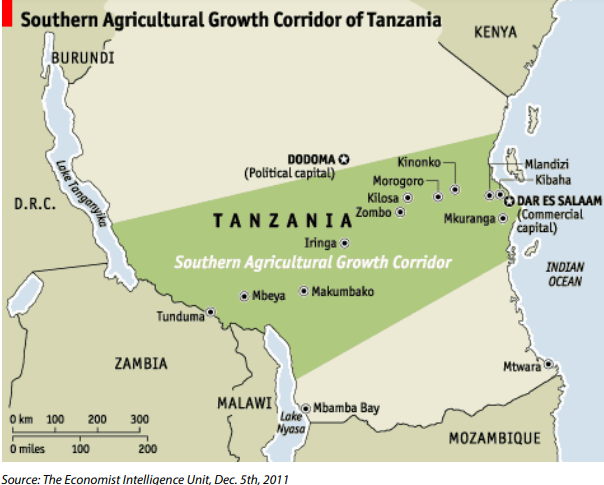
Away from the podium, the evidence for that ambition is already trading under real names — a shift the Agricultural Growth Corridor of Tanzania (AGCOT), present at the expo, describes as “Made in Tanzania” moving from a mark for raw commodities to a hallmark for certified, vertically integrated finished goods, guided by the Tanzania Development Vision 2050 (Dira 2050). AGCOT’s “Tanzania Harvest” initiative has been tracking the pattern:
- ASAS Powdered Milk (Iringa) — until recently, nearly all the powdered milk Tanzanians consumed was imported. Built on the Dairy Strategic Partnership, which links over 12,000 smallholder dairy farmers into ASAS’s supply chain, the company launched the country’s first domestic powdered milk production line in April 2025 — an industry milestone reported across regional dairy trade press and a direct hit against a long-standing import gap.
- Mababu Chocolate (Livy Africa), Kyela, Mbeya — founded by sisters Miriam and Naomi Mwasambili, Mababu turns premium Tanzanian cocoa into luxury chocolate at its Dar es Salaam processing facility, and now uses ASAS’s domestically produced powdered milk as an ingredient — closing a genuinely local, farm-to-finished-product loop. The range has grown to around thirty varieties, and Mababu was the only African chocolate maker at the 2023 African Food Systems Forum showcasing Tanzania-made fine chocolate.
- Tamu Tamu Tanzania (Ifunda, Iringa) — Tanzania spends an estimated USD 60–75 million a year importing South African apples, apple juice, cider and vinegar. Tamu Tamu is working against that bill directly, using local highland harvests to produce certified organic cold-pressed apple juices, jams, vinegars and ciders, marketed through its “The Taste of Tanzania” cider-tasting events in Iringa and Dar es Salaam.
- GBRI EatFresh (Njombe) — avocados once graded as unfit for export, and previously discarded or fed to pigs, are now cold-pressed locally into export-ready avocado oil fetching TZS 20,000 or more per kilogram. Founded by Hadija Jabiri, GBRI has grown from a fresh-vegetable export business into an oil processor sourcing from more than 10,000 smallholder farmers across Iringa, Njombe and neighbouring Burundi.
The Case for Staying Local
Ms Tullah Mloge, Head of Partnerships and Communications at the AGCOT Centre, framed the pattern behind these brands as the point of the whole exercise. “Tanzania is finally moving past the era of exporting raw agricultural commodities and buying them back as processed imports at several times the original price,” she said. “Through our coordinated ‘Tanzania Harvest’ initiative, we are proving to international retail markets that our rich highland soils can produce premium, world-class finished consumer goods.”
She singled out the ASAS-to-Mababu supply chain as the clearest proof that local value-chain integration works in practice, and pointed to Tamu Tamu’s organic apple orchards and GBRI’s avocado oil as the same model being replicated to chip away at national trade deficits — the apple import bill in one case, wasted “grade-two” fruit in the other. For Mloge, expanding local processing is the single greatest lever against value leakage, and the surest way to generate what she called thousands of dignified industrial jobs.
She tied the ambition to Tanzania’s Development Vision 2050 target: a competitive USD 100 billion agricultural economy, USD 20 billion in net agricultural exports, and 10 percent annual sector growth. “That transformation will not be achieved through raw crops,” she said, “but through high-value, locally manufactured brands carrying the pride of Tanzania to global shelves.”
Why It Matters
Taken together, the TanTrade platform and the AGCOT-tracked brands describe two halves of the same strategy: a national mark meant to earn trust for Tanzanian goods the moment they reach a shelf abroad, and a growing list of companies proving, product by product, that the raw material never had to leave the country unprocessed in the first place. The expo closes today, 3 September 2026, with Mafuru urging Tanzanians to visit the grounds and see for themselves the trade and investment opportunities running across the country’s agriculture, livestock and food value chains — and, implicitly, to decide whether the next imported jar of apple sauce or tin of powdered milk really needs to be imported at all.