

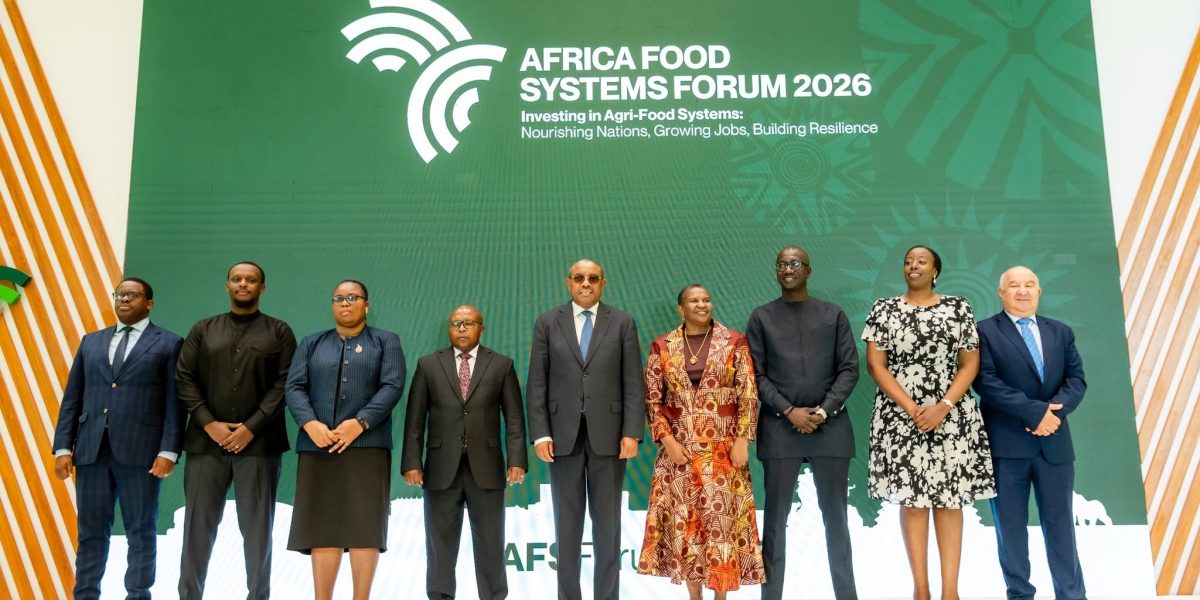
More than 5,000 leaders, six former presidents and one sitting head of state converge on Rwanda this September, as the continent asks whether two decades of promises can finally become investment, jobs and resilience
KIGALI, RWANDA: There is a particular kind of gathering that Africa has learned to hold with growing confidence: the kind where presidents share a stage with smallholder entrepreneurs, where a director-general of the FAO sits across the table from a 26-year-old agritech founder, and where the language of communiqués gives way, however briefly, to the language of deals. From 31st August to 5th September 2026, Kigali will host the twentieth such gathering.
The Africa Food Systems Forum (AFSF), for two decades the continent’s most consequential meeting point on food, agriculture and investment, returns for its milestone twentieth edition under a theme that reads less like a slogan and more like an instruction: “Investing in Africa’s Agri-Food Systems: Nourishing Nations, Growing Jobs, Building Resilience.”
More than 5,000 people are expected, including African and global leaders, policymakers, investors, scientists, entrepreneurs and young innovators drawn from over 50 countries. It is, by any measure, one of the largest annual convenings on the continent’s food future. And this year, the numbers carry a particular weight: twenty years is long enough to ask a harder question than “what was discussed?” It is long enough to ask “what changed?”
A President Opens, Six Former Presidents Reflect
His Excellency Paul Kagame, President of the Republic of Rwanda, will open the Forum, a fitting choice of host and opening speaker for an event built on the premise that food systems transformation is, at its core, a leadership challenge as much as a technical one.
But it is a different assembly that may prove the Forum’s most striking moment. Under the banner of the Council of the Wise, six former African heads of state and government will gather for a high-level conversation on leadership, resilience and the future of the continent’s food systems: men who once held the levers of national policy and are now free to speak with the candour that comes after office.
The Council includes H.E. Dr. Goodluck Ebele Azikiwe Jonathan, former President of Nigeria; H.E. Dr. Jakaya Mrisho Kikwete, former President of Tanzania; H.E. Mohamed Beavogui, former Prime Minister of Guinea; H.E. Mahamadou Issoufou, former President of Niger; H.E. Lionel Zinsou, former Prime Minister of Benin; and H.E. Hailemariam Dessalegn, former Prime Minister of Ethiopia and current Chair of the AGRA Board of Directors.
Their presence lands at a pointed moment. African governments today are contending with a convergence of pressures, among them food insecurity, climate shocks, demographic growth, youth unemployment and constrained access to capital, even as they push to build food systems that are more productive and more resilient. Few groups are better placed to speak to the distance between ambition and delivery than leaders who once had to govern that distance themselves.
The Six-Billion-Dollar Baseline
AFSF 2026 does not begin from zero. It begins from Dakar.
At AFSF 2025 in Senegal, six countries stood before the Forum and presented Country Legacy Programmes, national investment blueprints collectively targeting more than US$6 billion in mobilised investment for food systems transformation, youth employment and sustainable agri-food value chains. That edition also surfaced a pipeline of investment-ready projects, many led by young people and women, while its Agri-Food Investment Forum made the case, bluntly, for blended finance, de-risking mechanisms and greater domestic resource mobilisation if capital is to move at the scale the continent needs.
Kigali is where that momentum is meant to compound. AFSF 2026 will bring governments, development finance institutions, investors and the private sector into the same rooms to identify opportunities, strengthen investment pipelines and push implementation further across Africa’s food and agriculture value chains, turning the Dakar baseline into a Kigali down payment.
“Africa has the knowledge, the innovation and the entrepreneurial energy to transform how our continent produces, processes, trades and consumes food. What we need now is to match that ambition with investment and action at scale,” said Amath Pathé Sene, Managing Director of the Africa Food Systems Forum.
“As we mark 20 years, we are bringing leaders together in Kigali not simply to discuss the challenges before us, but to forge the partnerships, unlock the capital and advance the solutions that can nourish our nations, create jobs for our young people and build more resilient food systems for generations to come,” he added.
Who Else Is in the Room
The Council of the Wise and the sitting president will share the Forum’s platform with a roster that reads like a directory of global agri-food power. Dr. Akinwumi Adesina, former President of the African Development Bank, will be present, alongside Dr. Qu Dongyu, Director-General of the Food and Agriculture Organization of the United Nations, and Dr. Alvaro Lario, President of the International Fund for Agricultural Development.
Also expected are Alice Ruhweza, President of AGRA; Josefa Sacko, African Union Commissioner for Agriculture, Rural Development, Blue Economy and Sustainable Environment; and Ismahane Elouafi, Executive Managing Director of CGIAR: three of the institutions most directly shaping how capital and science reach African farms.
The list continues with Nardos Bekele Thomas, CEO of the African Union Development Agency (AUDA-NEPAD); Claver Gatete, United Nations Under-Secretary-General and Executive Secretary of the UN Economic Commission for Africa; and Silvia Maria Fonseca Silveira Massruha, President of Brazil’s Embrapa, a signal that AFSF’s gravitational pull now extends well beyond Africa’s own borders. They will be joined by senior government officials, development finance leaders, investors, researchers and private sector executives from across Africa and beyond.
Five Priorities, One Central Question
Strip away the ceremony, and AFSF 2026’s working agenda comes down to a single transition the Forum has set itself: moving Africa from political commitment to investment and implementation at scale. Five priorities will anchor the programme: investment and finance; food security and nutrition; climate resilience; youth and digital innovation; and trade, markets and value chains.
Each is a familiar theme to anyone who has followed African agriculture policy for the past decade. What distinguishes AFSF 2026’s treatment of them is the insistence on mechanism over rhetoric: the Forum will examine, concretely, how governments, development finance institutions, investors and the private sector can work together to unlock greater volumes of domestic and international capital for African agriculture and food systems.
That insistence takes physical form in the AFSF Deal Room, a dedicated space connecting African agribusinesses, entrepreneurs and innovators directly with investors and financial institutions, a marketplace, in effect, for identifying opportunities, mobilising capital and building the partnerships that turn a conference pledge into a signed term sheet.
Youth, Women and the Digital Frontier
If there is a generational undercurrent to AFSF 2026, it runs through the Forum’s treatment of youth, entrepreneurship and innovation. Sessions will examine how technology and digital tools can expand opportunity for Africa’s young population across agriculture and food value chains, from precision farming to digital market access, at a moment when the continent’s youth bulge is as often described as a jobs crisis as it is a demographic dividend.
The Forum will also spotlight the role of women in food production, processing, trade and household nutrition, examining how investment and stronger markets can create more inclusive opportunities across the value chain: recognition that food systems transformation that bypasses women bypasses the majority of Africa’s food producers.
Rwanda’s Moment on the Continental Stage
Hosting AFSF 2026 gives Rwanda a platform to showcase its own food systems transformation journey and positions Kigali as a meeting point for African and global leaders working at the intersection of food, agriculture and investment, a role the city has increasingly claimed across sectors in recent years.
The Forum’s gaze will also extend outward, to the milestones AFSF 2026 sits ahead of: implementation of the Comprehensive Africa Agriculture Development Programme (CAADP) and preparations for COP32 in Addis Ababa. AFSF 2026 will close with a Food Festival celebrating food, culture and innovation, alongside a closing communique linked to the Kampala CAADP Declaration, a deliberate stitching of celebration to accountability.
The Question Kigali Has to Answer
Twenty years of AFSF has produced no shortage of communiqués, commitments and country programmes. What it has not yet produced, at the scale the continent needs, is proof that commitment reliably becomes capital, and capital reliably becomes jobs. That is the gap AFSF 2026 has set itself against.
“After 20 years of progress, the question facing Africa is no longer whether transformation is possible, but whether the continent can mobilise the investment, partnerships and action required to deliver it. AFSF 2026 will bring those decisions to Kigali,” Sene said.
For the six former presidents taking their seats in the Council of the Wise, for the sitting president opening proceedings, and for the thousands of entrepreneurs, investors and innovators filling the halls between them, that is the real test of the Forum’s third decade: not another round of speeches, but a verdict on whether Africa’s food systems ambition can finally be made to pay.