

News Feature · Livestock & Dairy
36 Million Cattle.
Zero Dairy Self-Sufficiency.
Tanzania ranks second in Africa for the size of its cattle herd — and yet imports millions of litres of milk every year. Behind this paradox lies a story of culture, broken supply chains, genetics, and decades of misplaced investment.
When Tanzania’s Minister of Livestock and Fisheries, Dr. Ashatu Kijaji, recently addressed Parliament with news that the country had reduced its dairy import permits from 782 to 630 in a single financial year, it was presented as a triumph. And in one sense, it was. But the headline beneath the headline tells a different story: Tanzania still needed 10 million litres of imported dairy products in 2024/25, spending nearly Sh23 billion in foreign exchange on a commodity that theoretically roams across its own countryside in numbers unmatched anywhere on the continent except Ethiopia.
Tanzania has 36.6 million cattle — the second largest herd in all of Africa, representing 11 percent of the entire continental total and 1.4 percent of the global cattle population, according to the World Bank’s landmark 2024 Tanzania Economic Update. It has rolling grasslands, a favourable climate across its highland zones, and a tradition of cattle herding that stretches back millennia. And yet, per capita milk consumption stands at just 68.1 litres per year — barely one-third of the FAO’s recommended 200 litres annually. The nation that arguably has the most cattle per square kilometre of agricultural land in East Africa cannot produce enough milk for its own people.
How? The answer lies not in the numbers of animals, but in everything that happens — or fails to happen — between the cow and the consumer.
A Herd That Is Not a Dairy Herd
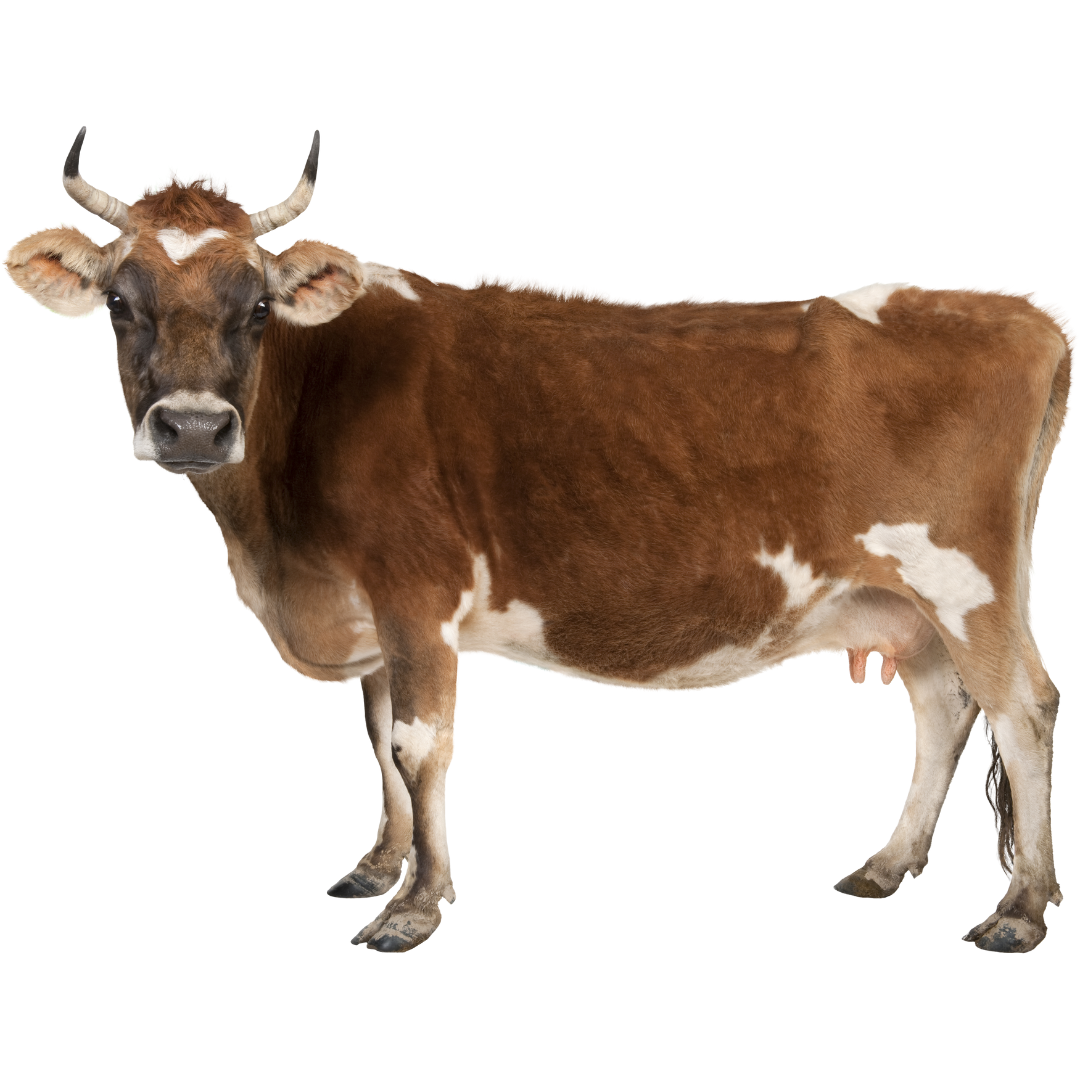
The first and most fundamental misunderstanding is statistical. Tanzania’s 36.6 million cattle are not dairy cattle in any commercial sense. The overwhelming majority — estimates consistently put the figure above 80 percent — are indigenous Zebu-type animals: the Tanzania Short Horn Zebu, the Boran, and various local variants. These animals are hardy, drought-resistant, and well-adapted to the country’s climatic extremes. They are not, however, milk producers in any meaningful volume.
A typical Zebu cow on communal rangeland produces between one and two litres of milk per day during lactation — enough to feed her calf, and occasionally a small surplus for the household. A Holstein or Friesian dairy cow, by contrast, produces 25 to 35 litres daily. Research by Lancaster University, published in the journal Nature Food, found that crossbreeding local Tanzanian cattle with improved European breeds can triple milk yields while still maintaining the animals’ heat tolerance — a scientifically proven pathway that the country has yet to pursue at any meaningful national scale.
There is no correlation between the size of cattle herds a country owns and its beef or dairy exports. Ethiopia, which has the largest cattle herd in Africa — more than double that of Tanzania — is only the fifth biggest beef producer on the continent.
— FAO, East Africa Livestock Assessment
Ethiopia’s example, documented by the FAO, underscores the point. Tanzania is no exception to this continental pattern: herd size and productive output are almost entirely disconnected across pastoralist-dominated livestock systems in Eastern Africa.
The Culture of the Living Bank Account
To understand why Tanzania’s cattle herd has not been mobilised as a dairy resource, you must first understand what cattle mean in Tanzanian society. Across pastoral and agro-pastoral communities — the Maasai of the northern corridor, the Sukuma of the lake zone (who alone hold an estimated 10 to 15 million head), the Gogo of the central plateau, the Hehe of Iringa — cattle are not a production asset. They are a savings account, an inheritance, a bride price, a social contract, and in many communities, a spiritual covenant.
A man’s wealth is measured in head of cattle. Milking a cow aggressively, or selling off animals to invest in feed or infrastructure, is economically and culturally irrational within this value system. The animals are preserved. They multiply. But their productive capacity — in milk, in meat, in market value — is deliberately under-exploited, because the herd itself is the asset, not what it produces.
This is not irrationality. For communities with limited access to formal financial services, land titles, or insurance products, a cattle herd is the most reliable store of value available. Development economists call it “livestock as insurance” — and the strategy is deeply rational in contexts where formal safety nets are absent. The challenge is that this logic, compounded across millions of households, creates a collective outcome that leaves the nation without a functioning dairy economy.
The Cold Chain That Was Never Built
Even among the smallholder farmers who do milk their cattle and want to sell, the infrastructure to support that transaction largely does not exist. Tanzania’s dairy herds are concentrated in specific geographic zones: the Southern Highlands of Iringa, Mbeya, and Njombe; the Northern highlands of Kilimanjaro and Arusha; the Lake Zone around Mwanza. Its processing plants and urban consumer markets are hundreds of kilometres away in Dar es Salaam, Dodoma, and the coastal cities.
Between those two points — the smallholder farmer with five litres of fresh milk at dawn and the urban consumer who wants it at noon — lies a cold chain that was never built. Raw milk in Tanzania spoils within four to six hours without refrigeration. The vast majority of rural milk collection points lack chilling equipment. Refrigerated transport is unavailable to smallholders at accessible cost. The result is post-harvest losses estimated at between 30 and 40 percent of all raw milk produced in the country — milk that is produced, but never consumed or sold.
The traditional sector — communal herders and smallholder farmers operating outside formal marketing systems — still accounts for more than 70 percent of all milk consumed in Tanzania, according to FAO data. Most of that consumption happens within the household or in informal local sales. It never enters a processing plant. It never reaches a city. And it is never counted in the official production figures that so dramatically understate what the sector actually produces.
What the Cities Want, Farmers Cannot Supply
Meanwhile, Tanzania’s urban populations are growing at some of the fastest rates in Sub-Saharan Africa. Dar es Salaam is now among the continent’s largest cities, and Dodoma — the political capital — is expanding rapidly as government infrastructure relocates. The middle class that has grown alongside this urbanisation has developed a taste for processed dairy: long-shelf-life UHT milk, flavoured yoghurt, butter, cream, cheese, and powdered milk for tea and cooking.
Domestic processors — chief among them Tanga Fresh, ASAS Dairies, and Tan Dairies — cannot supply this demand reliably. The reason is not lack of capacity alone, but lack of consistent raw milk supply at the volumes, quality standards, and supply chain reliability that commercial processing requires. Processors can source imported skimmed milk powder from the European Union, New Zealand, or increasingly India at predictable quality, competitive cost, and with indefinite shelf life. The rational commercial decision, absent a functioning domestic collection infrastructure, is to import.
In a significant development, ASAS Dairies recently commissioned a powdered milk production line with a daily processing capacity of 100,000 litres — the first domestic facility of its kind. Minister Kijaji cited this as a key driver of the recent import reduction. The investment is genuine progress. It is also a single facility in a country of 65 million people with one of the highest dairy import dependencies in Eastern Africa.
The Investment Gap That Made It Inevitable
At the structural level, Tanzania’s dairy paradox is a product of choices — largely the choice, repeated across successive budget cycles, to direct the overwhelming majority of agricultural public investment toward crop production: maize, rice, cashew, cotton, sesame, sunflower. The World Bank’s 2024 Tanzania Economic Update found that despite the livestock sector accounting for 27 percent of agricultural GDP and providing livelihoods for 33 percent of the national population (approximately 4.6 million households), public investment in the sector has been minimal relative to its contribution.
Disease compounds the productivity loss. The Ministry of Livestock and Fisheries has estimated that tick-borne diseases alone — East Coast Fever, Anaplasmosis, Babesiosis, and Heartwater — account for 72 percent of all cattle deaths in the country, representing losses of Sh150 billion annually. Foot and Mouth Disease, endemic in multiple regions, restricts live cattle exports and suppresses both market access and farmer investment incentives.
Signs of a Turn
There are genuine reasons for measured optimism. The Tanzanian government’s Dairy Development Roadmap sets an ambitious target of dairy self-sufficiency by 2030. The Tanzania Dairy Board has maintained active oversight and a permit system that tracks import flows with precision. Per capita milk consumption has risen — modestly, from 67.5 litres in 2023/24 to 68.1 litres in 2024/25 — and domestic processing volumes reached 90.4 million litres sold in the same period, worth Sh226 billion.
The dairy market as a whole is projected to grow at a compound annual rate of 7.8 percent through 2031, according to 6Wresearch, driven by urbanisation, rising incomes, and expanding supermarket and e-commerce distribution. Tanzania — alongside Egypt and Kenya — is already among the three largest dairy consumers on the African continent, representing a combined 30 percent of total continental dairy consumption, per IndexBox data.
That consumption base is an asset. The question is whether Tanzania will supply it from within its own borders — or continue spending foreign exchange to import what its own countryside could, in principle, provide.
The Roadmap to Resolution
The path from paradox to productivity is not mysterious. It has been mapped, modelled, and costed. What it requires is political commitment sustained across budget cycles — which is the one thing that has consistently failed to materialise at the necessary scale.
Breed improvement must come first. Crossbreeding programmes that introduce improved dairy genetics — whether through artificial insemination or the distribution of crossbred heifers — have been demonstrated to triple yields without sacrificing the climate resilience that indigenous breeds provide. The Lancaster University research shows this can be done using existing agricultural land, without cutting forests for new pasture and without relying on imported feed.
Cold chain infrastructure must follow. Milk collection centres with basic chilling equipment, located within viable collection radius of smallholder clusters, are the single most impactful intervention for reducing post-harvest losses. Kenya’s dairy cooperative model — anchored by institutions like New KCC and the Brookside network — demonstrates what is possible when collection and chilling infrastructure reaches the village level.
Cooperative structures must be built or strengthened to give smallholder farmers market access, bargaining power, and access to veterinary and extension services. The traditional sector produces most of Tanzania’s milk. Any strategy that excludes it will fail.
And public investment must reach the livestock sector in proportion to its actual contribution to the economy — not as a residual claim after crop sector allocations are made.
Tanzania does not have a livestock problem. It has a value chain problem — and value chains can be built.
— World Bank Tanzania Economic Update, June 2024
The Broader Meaning
Tanzania’s dairy paradox is not unique. It is a variant of a broader African agricultural challenge: the gap between resource endowment and productive output, sustained by cultural practices, infrastructure deficits, and policy neglect that compound each other across generations.
What makes Tanzania’s version especially striking is the sheer scale of the contradiction. 36.6 million cattle. 10 million litres of imported dairy. Sh23 billion in annual foreign exchange leaving the country for something the country theoretically has in abundance.
The animals are there. The land is there. The domestic market is there and growing. The science is settled. What remains is the political will to invest, and the institutional capacity to deliver — at the speed that Tanzania’s expanding urban population, and its strained foreign exchange position, increasingly demand.
The cow is in the field. The milk is on the shelf in Nairobi, Auckland, and Amsterdam. The question is whether Tanzania builds the road between them — or keeps paying for the detour.
World Bank Tanzania Economic Update, June 2024 — Harnessing the Opportunity for a Climate-Smart and Competitive Livestock Sector in Tanzania
The Citizen, Tanzania (May 2025) — Tanzania cuts dairy imports as local production rises — Parliamentary address by Minister Dr. Ashatu Kijaji
Lancaster University / Nature Food — Adopting high yield dairy cattle breeds and improving feed would allow Tanzania to increase milk production
FAO — Dairy industry in Tanzania and the prospect for small scale milk producers; Milk supply to urban centres in Tanzania
IndexBox, November 2025 — Africa’s Dairy Market to Reach 76M Tons and $80.6B by 2035
The Exchange Africa, June 2023 — With a big herd, Tanzania projects strong meat exports
Ministry of Livestock and Fisheries, United Republic of Tanzania — National Sample Census of Agriculture 2019/20; Dairy Development Roadmap
6Wresearch — Tanzania Dairy Products Market Report 2025–2031