

By Kilimokwanza.org
Tanzania’s agriculture budget for the 2026/2027 financial year has been built squarely on the Tanzania Agriculture Master Plan 2050, with the country’s network of agricultural growth corridors (AGCOT) positioned as a principal vehicle for delivering the transformation the plan envisages.
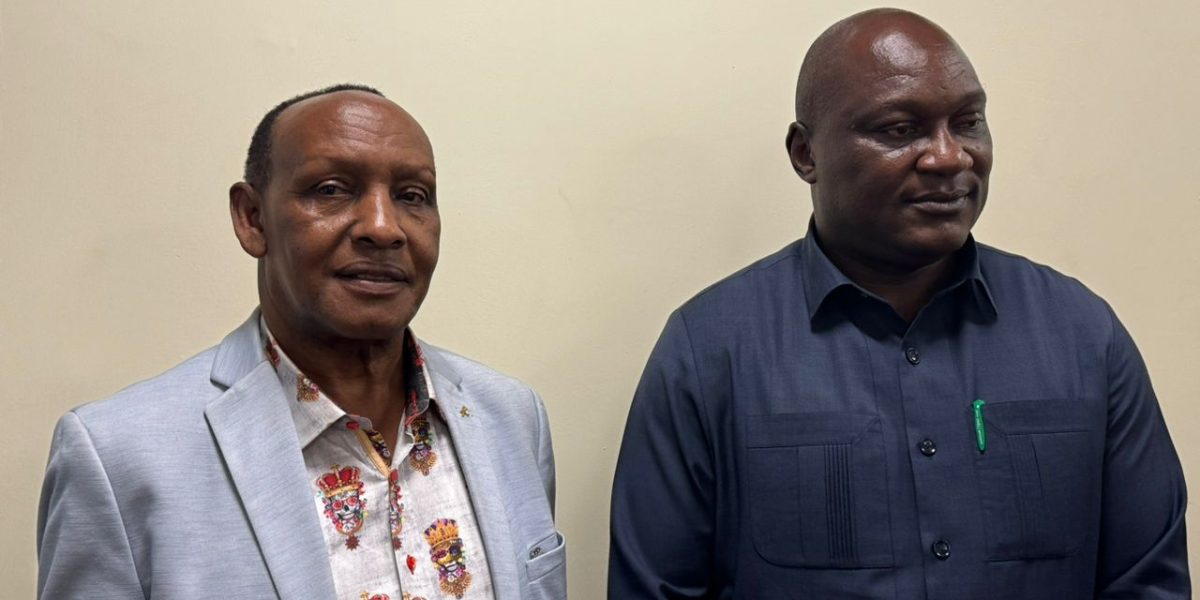
This emerges from the budget speech delivered before the National Assembly by the Minister for Agriculture, Hon. Daniel Godfrey Chongolo (MP), presenting the estimates of revenue and expenditure for the Ministry of Agriculture for 2026/2027. The Minister is supported by Deputy Minister Hon. David Ernest Silinde (MP) and Permanent Secretary Mr Gerald Geofrey Mweli.
A 2050 horizon, delivered through Agenda 10/30
The clearest statement of the Master Plan’s place in the budget comes in paragraph 290, where the Minister sets out the policy architecture underpinning the year’s plan and spending. The budget, he told Parliament, takes into account a suite of national instruments and:
…na Mpango Kabambe wa Mageuzi ya Kilimo 2050 (Tanzania Agriculture Master Plan 2050) itakayotekelezwa kupitia Agenda 10/30 na Mpango Mkakati wa Wizara ya Kilimo wa mwaka 2026/2027 – 2030/2031.
(“…and the Tanzania Agriculture Master Plan 2050, which will be implemented through Agenda 10/30 and the Ministry of Agriculture’s Strategic Plan for 2026/2027 – 2030/2031.”)
The plan is therefore not treated as a stand-alone document but as the long-range framework that the ministry’s medium-term strategy and its annual budget are designed to operationalise.
The Minister tied this directly to the country’s overarching development ambition. In paragraph 289, he framed the agriculture budget as carrying the government’s wider vision, describing it as “msingi na dira itakayoiwezesha Tanzania kufikia hadhi ya nchi ya kipato cha kati cha juu ifikapo mwaka 2050” — the foundation and vision that will enable Tanzania to attain upper-middle-income status by 2050.
The Master Plan among a wider set of instruments
The Agriculture Master Plan 2050 sits within a broad policy framework that the speech sets out in full. In paragraph 290, the Minister lists the national instruments the 2026/2027 plan and budget have taken into account, including:
- the National Development Vision 2050 (Dira ya Maendeleo ya Taifa 2050);
- the Fourth Five-Year National Development Plan, 2026/2027 – 2030/2031;
- the Annual National Development Plan for 2026/2027;
- the CCM Election Manifesto, 2025 – 2030;
- the address by President Dr Samia Suluhu Hassan at the opening of the 13th Parliament on 14 November 2025 in Dodoma;
- the National Agriculture Policy 2013, the National Irrigation Policy 2010, and the Cooperative Development Policy 2002.
The same anchoring appears in the review of the outgoing year. In paragraph 37, recounting implementation for 2025/2026, the Minister noted that the work had been guided by, among others, “Malengo ya Maendeleo Endelevu 2030; Mpango Kabambe wa Mageuzi ya Kilimo wa Mwaka 2050; Mkakati wa Ukuzaji wa Sekta ya Kilimo 2030” — the Sustainable Development Goals 2030, the Agriculture Transformation Master Plan 2050, and the Agricultural Sector Development Strategy 2030.
On the regional and international plane, paragraph 291 adds the Sustainable Development Goals (SDGs) and the Kampala Declaration on the Comprehensive Africa Agriculture Development Programme (CAADP 2026 – 2035), alongside cross-cutting concerns of gender, environment, nutrition, climate change, youth and the elimination of child labour in the sector.
The scale of the commitment is set out in paragraph 476: for 2026/2027 the Ministry of Agriculture is asking Parliament to approve a total of TZS 1,105,950,115,000 across Votes 43, 24 and 05 — covering the ministry itself, the National Irrigation Commission and the Cooperative Development Commission.
AGCOT: corridors as the engine of transformation
If the Master Plan supplies the destination, the Agricultural Growth Corridors of Tanzania (AGCOT) supply much of the route. The speech gives the corridors a prominent role in the ministry’s transformation agenda.
In paragraph 142, the Minister reported that the ministry, working with development partners, had planned to “kuendelea kuimarisha shoroba nne (4) za kuendeleza kilimo Tanzania (AGCOT) kulingana na ikolojia za kilimo” — to continue strengthening the four agricultural development corridors of Tanzania (AGCOT) in line with the country’s agro-ecological zones.
He then announced an expansion. In paragraph 143, the Minister informed the House that during 2025/2026 the Agricultural Transformation Office (ATO) had run and coordinated mobilisation meetings for three new corridors — Central, Northern and Mtwara:
…Ofisi ya Mageuzi ya Kilimo (ATO) imeendesha na kuratibu mikutano ya uhamasishaji wa uendelezaji wa shoroba mpya tatu (3) za Kati, Kaskazini na Mtwara.
The purpose of those meetings, he explained, was to build a shared understanding among Regional and District Commissioners, Regional Administrative Secretaries, council directors, councillors, the private sector and other stakeholders about the concept of agricultural corridors. Through them, the Minister said, the ATO had strengthened stakeholder participation, improved coordination at regional and local-government level, and worked to ensure the corridors become “kichocheo cha mageuzi ya kilimo nchini” — a catalyst for agricultural transformation in the country.
To draw in investment, the ministry has also prepared, through the ATO, two guiding documents in draft: an Investment Blue Print, covering investment, infrastructure and crop value-chain priorities, and an Investment Green Print, focused on environmentally sustainable investment (paragraph 144). Both are aimed at attracting private-sector capital, development partners and financial institutions into the corridors.
The takeaway
Taken together, the speech presents a coherent line of sight: a 2050 vision of upper-middle-income status, an Agriculture Master Plan 2050 to chart the course, Agenda 10/30 and a five-year ministerial strategy to translate it into action, and the AGCOT corridors — now expanding from four to seven — as the spatial engine through which investment and transformation are meant to reach the country’s farmers.
This article is based on the budget speech of the Minister for Agriculture, Hon. Daniel Godfrey Chongolo (MP), on the estimates of revenue and expenditure of the Ministry of Agriculture for 2026/2027. Quotations are reproduced in the original Kiswahili with English translations by Kilimokwanza.org.