

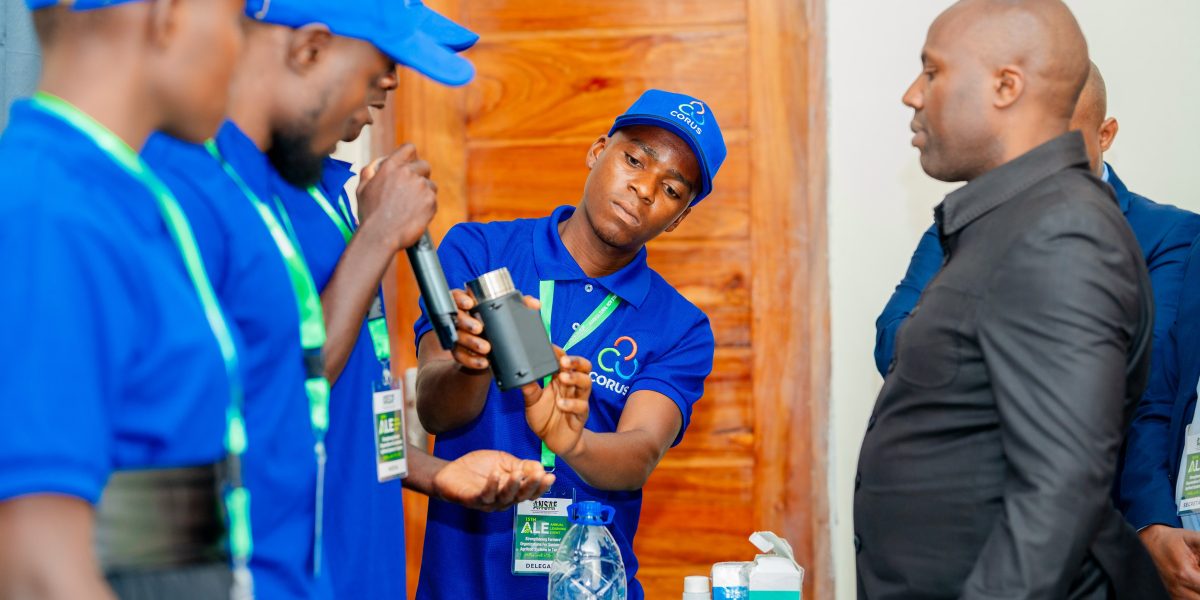
Government, development partners and farmer organisations point to stronger, youth-led groups as a route to commercialising smallholder agriculture, with production, finance and reliable markets at the heart of the discussion.
By Kilimokwanza.org Team
DODOMA, 18 November 2026 — The Government has called on smallholder farmers to move away from working in isolation and organise into groups and cooperatives that can strengthen production, improve access to credit and inputs, and secure more reliable markets.
The call at the opening of the Agricultural Non-State Actors Forum’s 15th Annual Learning Event places farmer organisation at the centre of a wider question: how can small farms become stronger commercial businesses without leaving young people behind?
Held at Edema Conference Hall in Dodoma on 18–19 November, the event brings together government, development partners, farmer organisations and private-sector actors under the theme, “Strengthening Farmers’ Organizations for Sustainable Agrifood Systems in Tanzania: Putting Youth at the Center.”
The cost of going it alone
For a smallholder, the production decision and the marketing decision are closely connected. Buying inputs in small quantities can be expensive. A limited harvest may not justify a buyer travelling to a distant village. A farmer who needs to sell immediately also has little room to negotiate.
Working together can change the scale of those conversations. Aggregated produce gives buyers a larger volume to consider, while coordinated purchasing can make input orders more attractive to suppliers. A group can also organise training around problems its members share, rather than leaving each farmer to search for support alone.
Organisation does not remove commercial risk. Prices can fall, crops can fail and buyers can delay payment. Its value lies in giving farmers a stronger platform from which to manage those risks, obtain information and negotiate the terms on which they trade.
In its account of the event, AGCOT Centre highlighted that only four per cent of farming households belong to a group. That figure illustrates the scale of the organisational challenge behind the push for stronger smallholder businesses.
From membership to useful services
The Government’s message linked collective organisation to practical benefits: production, credit, inputs and markets. The distinction matters. Membership becomes valuable when a farmer can identify what the organisation actually does for the farm.
A functioning group needs more than a register of names. Members need to understand how decisions are made, what they contribute and how income and costs are recorded. They also need clarity about who negotiates with buyers, who handles money and how disagreements are resolved.
These are operational questions with commercial consequences. A supplier or lender needs confidence that an organisation can keep records and meet its commitments. Farmers need the same confidence before entrusting it with their harvests or savings.
Access to finance should therefore be understood as an opportunity that better organisation can support, rather than an automatic entitlement that comes with joining a group. Any borrowing still needs a credible purpose, a repayment plan and terms members understand.
Putting youth at the centre of the business
The event’s focus on youth raises a challenge beyond attracting new members. Young people need meaningful roles in the services and enterprises that connect production to the market.
Those roles can include coordinating aggregation, maintaining records, linking producers with buyers and delivering services to farms. The question for an organisation is how to turn such capabilities into work that members value and a business can sustain.
Youth participation also needs room in decision-making. A group can recruit younger farmers while leaving its priorities and leadership unchanged. The stronger test is whether young members can influence the organisation’s direction and see a future in it.
AGCOT brings farmer-to-farmer learning into the discussion
The Agricultural Growth Corridors of Tanzania (AGCOT) is among the partners involved in the learning event. In its published event coverage, AGCOT Centre describes its Mkulima kwa Mkulima, or farmer-to-farmer, approach as a way to connect practical learning with stronger farmer organisations and commercial opportunities.
The approach draws on experience in the Ihemi and Kilombero clusters, with experienced producers sharing knowledge with other farmers. AGCOT’s account describes work involving certified potato seed, soil testing and market arrangements in avocado production.
The relevance to the Dodoma discussion is the connection between learning and organisation. Advice becomes more useful when farmers have a structure through which to test it together, obtain the required services and find a buyer for the resulting production.
The test comes after the meeting
The commercial case for cooperation will ultimately be judged at farm level. Can members buy the inputs they need on time? Can they produce to an agreed standard? Does working together improve their route to a dependable buyer?
For the institutions supporting farmer organisations, these questions provide a practical way to assess progress beyond attendance figures or the number of groups formed. For farmers, they determine whether collective action is worth the time, trust and resources it requires.
The message from ANSAF’s 15th Annual Learning Event is that stronger organisation can help smallholders enter commercial agriculture. Turning that message into lasting change will depend on organisations that deliver useful services, manage their affairs transparently and give young people a real stake in their future.
Related reading


Do you have a story or press release for African agriculture? Send it to kilimokwanza.africa@gmail.com or read how to submit.