

By Daud Mbanile – Ifakara Town Council Information Office
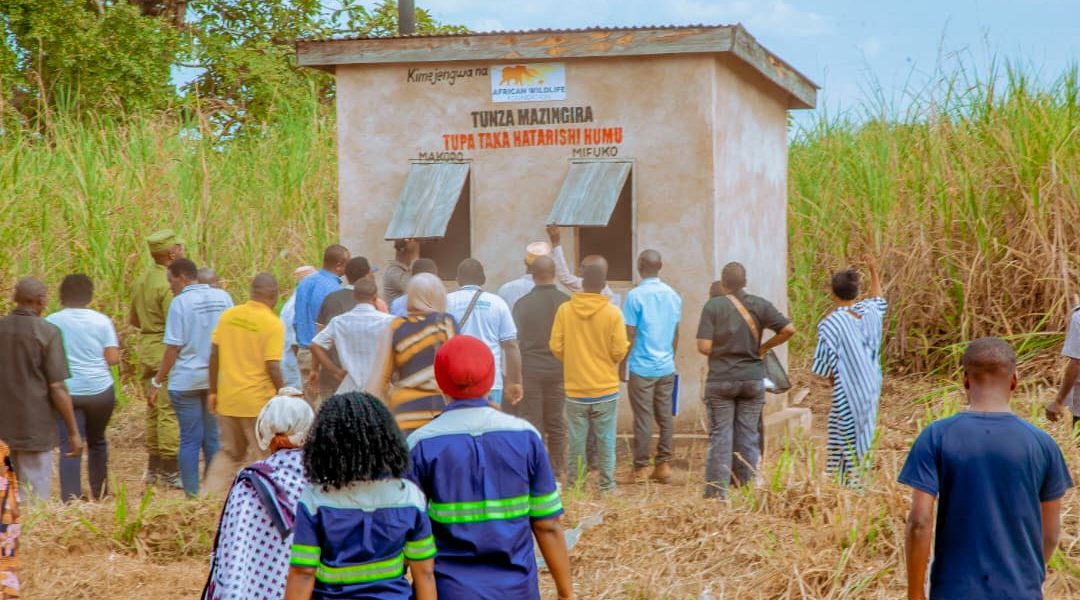
District Commissioner Dunstan Kyobya has intensified efforts to educate farmers on the hazards of reusing pesticide containers, conducting a visit to newly established collection centres in Kiswanya Village, Mwaya Ward, Mang’ula Division, Kilombero District.
The initiative forms part of a regional programme funded jointly by AGCOT Centre Limited, IUCN, and the Swedish Embassy in Tanzania—a system designed to remove hazardous packaging from household use and enable safe disposal whilst generating supplementary income for participating villages.
Multi-Stakeholder Support
The visit was attended by Dr. Yuda Mgeni, Deputy Director of Ifakara Town Council, alongside John Banga, AGCOT’s Morogoro Regional Manager, and project stakeholders representing the funding partners.
According to Banga, the scheme addresses a critical gap in agricultural practice. Used pesticide containers, after their initial purpose ends, are commonly repurposed for household storage—holding grain, cooking oil, and water. The chemical residue retained within the packaging poses significant health risks, particularly to children.
“The model protects community health whilst creating market opportunity,” Banga explained. “Collected packaging material is sold to recycling companies, generating income for villages. A farmer bringing five containers generates funds for the community. Across the district, this creates meaningful income streams from material that was once simply abandoned.”
Health and Environmental Priority
Dr. Yuda Mgeni stated that the initiative will serve as a foundation for scaling safe and productive agriculture across Ifakara Town Council, with extension officers continuing to provide ongoing education to ensure programme objectives are met.
Speaking during the visit, Kyobya emphasised that this education must extend across all farming areas within the council. He called on village leaders and agricultural officers to work in coordination, ensuring farmers understand both the dangers of reusing pesticide containers and the importance of proper waste segregation.
“This must reach every ward,” Kyobya directed. “Every agricultural extension officer in Ifakara Town Council must be teaching this. Every village leader must be reinforcing it. We cannot protect our people’s health with a pilot in one village. We scale it, or we fail.”
The commissioner also commended project stakeholders for their contribution to protecting public health and advancing productive agriculture.
Community Commitment
Residents of Kiswanya Village expressed gratitude to both the government and development partners for providing the education. They committed to abandoning household disposal practices and using the designated collection points for used pesticide packaging.
The collection centres, constructed on the AGCOT model, feature concrete structures with metal grating designed to safely segregate hazardous waste. Packaging material is cleaned and processed before sale to recycling firms, with proceeds returned to participating villages.
Expanding the Model
The programme reflects a strategic approach to integrating public health protection with livelihood improvement across East African farming communities. By establishing clear systems for hazardous waste collection and establishing economic incentives for participation, the initiative removes barriers to safe disposal practices.
Extension officers have been tasked with continued outreach to ensure farmers understand the health risks associated with pesticide container reuse and the mechanics of the collection system. Success depends on sustained coordination between district government, council administration, village leadership, and farming communities.
Project partners: AGCOT Centre, IUCN Tanzania, Swedish Embassy in Tanzania.
Kilimokwanza.org covers agriculture, development, and rural enterprise across East Africa.