

By Esther Myika
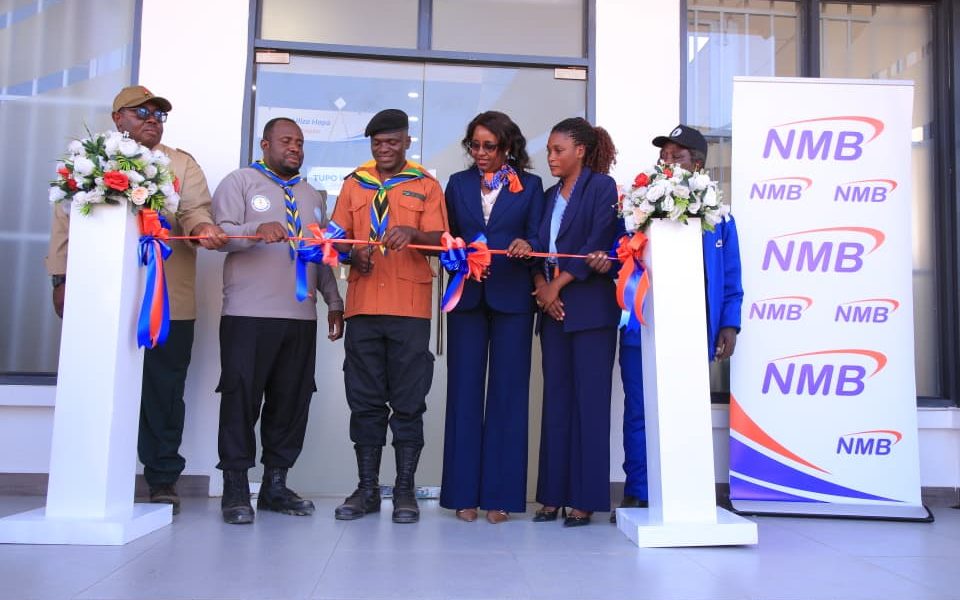
MOROGORO — Residents of Mvuha ward and the surrounding villages have been spared the tedious and costly journey of up to 80 kilometres into Morogoro town for banking, following the official launch of NMB Bank Plc’s new Mvuha branch. The opening brings formal financial services directly into a heavily agricultural area that has long sat on the wrong side of the country’s banking map.
Built at a cost of 296m/-, the branch becomes the 251st in NMB’s national network, which serves more than 10 million customers. It is positioned to serve ordinary residents, smallholder farmers, traders, civil servants and public institutions — many of whom previously had to surrender an entire working day to carry out a single transaction.
Speaking at the launch, NMB’s Central Zone Manager, Janeth Shango, said the building itself was only the starting point. The branch, she explained, would also serve as a centre for financial education, teaching residents how to budget, build savings, borrow productively for farming or trade, and use digital financial services safely. It is a recognition that bringing a bank to a community is one thing; helping people use it well is what turns access into higher incomes and a cushion against hard seasons.
The launch was officiated by the National Uhuru Torch Race Leader, Wazo Michael Mwang’onda, during the torch’s annual tour of the country. He commended NMB for aligning its expansion with national development goals and for continuing to push services into both town and countryside. “Keep reaching and serving Tanzanians wherever they are,” Mr Michael said. The Uhuru Torch, or Mwenge wa Uhuru, is one of Tanzania’s national symbols, first lit on the summit of Mount Kilimanjaro on 9 December 1961 as a symbol of freedom and light; each year it is carried in a relay across the regions and districts, pausing to recognise projects of national value — making its leader a fitting figure to mark the arrival of a bank in a long-isolated community.
Why an 80-kilometre gap matters
For city dwellers, banking is an afterthought handled on a phone or a short walk away. For a community like Mvuha — in a fertile but infrastructure-poor corner of the Morogoro region — an 80-kilometre round trip on rough rural roads was a real economic penalty. A farmer banking proceeds from a sesame or paddy harvest, or a teacher drawing a monthly salary, faced transport costs that could swallow a meaningful share of a day’s earnings, the security risk of carrying cash over long distances, and the loss of a full day’s work in the field or shop. By capturing those deposits locally, the branch allows savings to be recycled back into the Mvuha economy through tailored agricultural credit, turning saved travel time into local growth.
The bank behind the network
The scale of that promise rests on what NMB has become. The bank was established under the National Microfinance Bank Limited Incorporation Act of 1997, following the break-up of the old National Bank of Commerce, which was split into three entities. In its early years it could offer little more than payment services and savings accounts, with limited lending, before growing into a full-service retail bank.
The turning point came with privatisation. In 2005 the government sold a 49 per cent stake to a consortium led by the Netherlands’ Rabobank Group, and in 2008 it divested a further 21 per cent to the public through an initial public offering, listing the bank on the Dar es Salaam Stock Exchange. Today NMB ranks among Tanzania’s two largest commercial banks, competing for top honours on profitability, assets and customer base, and describes itself as the country’s largest lender by customer base and branch network. It is represented in every district of Tanzania, anchored by a wide network of branches, hundreds of ATMs and thousands of Wakala agents.
The Mvuha branch reflects NMB’s “branch-led, digitally driven” approach: even as it pushes hard into mobile banking through NMB Mkononi, physical branches remain the institutions that build the initial trust needed to draw unbanked rural communities into the formal financial system. For Mvuha’s residents, the change is immediate and concrete — the 80-kilometre trip to Morogoro is no longer the price of a banking transaction.