

Government, investors and service providers sign 58 commitments to speed up agricultural transformation in Morogoro. The Regional Administrative Secretary warns that the real test is poverty reduction.
MOROGORO, 6 November 2026. Agricultural stakeholders in the Kilombero Cluster of the SAGCOT Corridor have signed a new four-year Compact. It commits the public sector, private sector and service providers to coordinated action on agricultural transformation, investment and inclusive green growth.
At the same meeting, the Agricultural Growth Corridors of Tanzania (AGCOT) Centre urged agricultural stakeholders to do more to bring biochar technology to farmers. Non-governmental organisations in particular were asked to step up, as a practical way to improve soil health, retain nutrients and raise crop yields.
The Compact, titled Accelerating Agricultural Transformation, Investment and Inclusive Green Growth in Kilombero Cluster, 2027–2030, was signed at Morena Hotel in Morogoro during the Kilombero Cluster Compact Review Meeting. Participants assessed progress against the 2023 Compact and agreed priorities for the next four years.
The meeting was convened under the leadership of the Morogoro Regional Secretariat, in collaboration with AGCOT and the International Union for Conservation of Nature (IUCN). It brought together government institutions, local authorities, agribusiness investors, farmer organisations, development partners, conservation organisations such as Reforest Africa, and civil society.
“If We Forget Poverty, We Will Fail”
Delivering the Government’s statement, Morogoro Regional Administrative Secretary Dr Mussa Ali Musa placed poverty reduction at the centre of the Compact’s implementation priorities.
“Whatever we do must be poverty eradication – removing poverty,” he said.
“If we forget this matter of eradicating poverty, in my view, it will be one of the reasons for the failure of what we are preparing.”
Dr Musa told stakeholders from government and the private sector in all district councils of Morogoro Region to make sure every project and activity they carry out is aimed at reducing poverty. He also named infrastructure as a priority, particularly investment that improves productivity, market access and economic opportunity.
Biochar: Rebuilding Soils from Farm Waste
Mr John Banga, Head of Corridors at the AGCOT Centre, said biochar is among the technologies being promoted in the cluster. He urged partners to scale up awareness and distribution so that more farmers benefit.
Biochar is a charcoal-like material made by heating crop residues and other organic matter with little oxygen. Added to the soil, it helps hold nutrients and moisture and improves soil structure. That turns farm waste into a long-term investment in the land.
Mr Monsiapile Kajimbwa, Senior Landscape Partnership Manager at Reforest Africa, which supports forest landscape restoration in the Udzungwa Landscape, explained that biochar opens air spaces in the soil, allowing air to reach the roots of crops.
Mr Banga said the corridor model is what makes technologies like biochar reach farmers at scale:
“Agricultural growth corridors are fundamentally transforming how we drive rural economic development in Tanzania by replacing scattered, isolated interventions with concentrated, commercially viable geographic ecosystems. A corridor is far more than physical asphalt and electricity grids; it is the vital relational infrastructure that aligns government policy, de-risks private agribusiness capital, and connects smallholder farmer cooperatives directly to industrial off-takers, certified inputs and structured markets.”
58 Commitments Across Three Groups
The new Compact sets out 58 commitments: 23 for the public sector, 20 for the private sector and 15 for service providers. It marks a shift from reviewing past pledges to a renewed framework for implementation, investment and accountability.
Public sector:
- Improve the agricultural policy, regulatory and business environment.
- Facilitate investment in rural roads, electricity, irrigation, water supply, storage and processing.
- Expand access to agricultural finance.
- Strengthen research and extension, digitalisation, structured markets, food safety, farmer organisations, land and water governance, and climate-resilient production.
- Strengthen monitoring, transparent reporting and periodic joint assessments.
Private sector:
Participants referred to the Tanzania Development Vision 2050 (Dira 2050) ambition that around 70 per cent of investment will come from private sources. Private-sector participants commit to:
- strengthen commercial relationships with smallholders and support inclusive contract farming;
- expand structured markets;
- invest in post-harvest management, storage, cold chains, processing and value addition;
- develop sustainable dairy: improved breeds, animal health, pasture, milk collection, cooling and processing;
- provide decent employment and local skills development, and comply with environmental, social and governance standards.
Service providers:
- Support value-chain development, market and investment research, financial and business development services, training and extension.
- Strengthen Agricultural Marketing Cooperative Societies (AMCOS), cooperatives and other producer organisations, so farmers can negotiate fair commercial arrangements.
- Promote opportunities for women, youth, persons with disabilities and underserved groups.
Challenges Identified in the Review
The review examined achievements, gaps and persistent constraints since 2023. These included:
- complex regulatory compliance procedures;
- weak agricultural data management;
- inadequate rural infrastructure;
- limited access to finance;
- gaps in input distribution;
- unstructured markets;
- weak enforcement of livestock regulations.
Participants also highlighted seasonal falls in milk production linked to drought, and the low representation of women entrepreneurs in the 2023–2024 figures.
To tackle regulatory bottlenecks, stakeholders proposed a one-stop compliance centre to simplify procedures and reduce the cost of doing business.
Inclusive Green Growth at the Centre
With IUCN as a key partner, the 2027–2030 Compact explicitly integrates environmental sustainability into agricultural investment. It emphasises climate-smart agriculture, biodiversity conservation, sustainable land and water management, agroforestry and nature-based solutions. Biochar is one practical example.
All stakeholder groups undertake to promote responsible agricultural investment and apply AGCOT’s Inclusive Green Growth guiding tools. The Compact also identifies opportunities in climate finance, carbon markets, ecosystem restoration, renewable energy and improved agricultural waste management.
Five Actions to Turn Commitments into Results
Stakeholders agreed five priority actions:
- Monitoring and reporting: an annual commitment matrix and dashboard-style tools to track implementation.
- Targets and baselines: stakeholder-specific targets informed by council development plans and baseline data.
- Coordination: a permanent secretariat to maintain records, coordinate stakeholders and facilitate regular reviews.
- Performance evaluation: a mid-term evaluation with field visits, and action plans linked to measurable indicators.
- Local ownership: stronger private-sector leadership, and exploring how to extend the Compact approach beyond the Kilombero Valley.
The parties commit to fulfil their obligations in good faith and to report on progress annually.
About the Kilombero Cluster
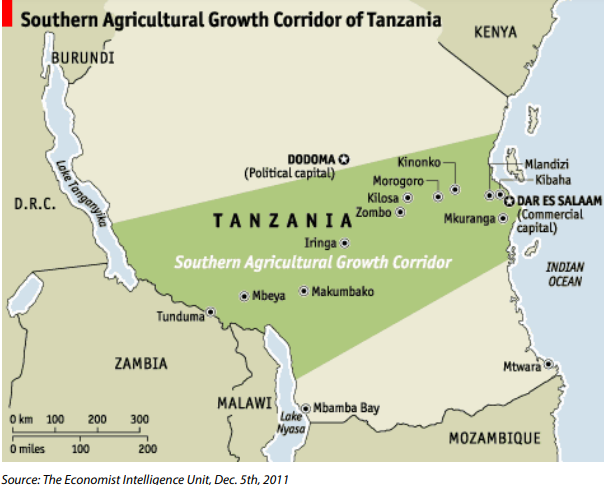
The Kilombero Cluster is one of the SAGCOT Corridor clusters. It covers the entire Morogoro Region and its nine Local Government Authorities: Kilombero District, Ifakara Town Council, Kilosa, Mvomero, Ulanga, Malinyi, Gairo, Morogoro District Council and Morogoro Municipal Council. It links the fertile Kilombero Valley to strategic transport routes towards Dar es Salaam, Pwani and the Southern Highlands.
Delivery Is the Real Test
The challenge now is to turn 58 commitments into specific actions, investment decisions, measurable targets and tangible benefits for farming communities. As Dr Musa made clear, the yardstick is poverty reduction.
The next chapter of the Kilombero Cluster Compact will be judged not by the number of commitments signed, but by the investments realised, the opportunities created, the natural resources protected and the improvements delivered to farmers’ livelihoods.
Commitments matter. Delivery matters more.
#AGCOT #KilomberoCluster #ClusterCompact #SAGCOTCorridor #Biochar #SoilHealth #InclusiveGreenGrowth #IUCN #ReforestAfrica #Morogoro #Dira2050
Do you have a story or press release for African agriculture? Send it to kilimokwanza.africa@gmail.com or read how to submit.