

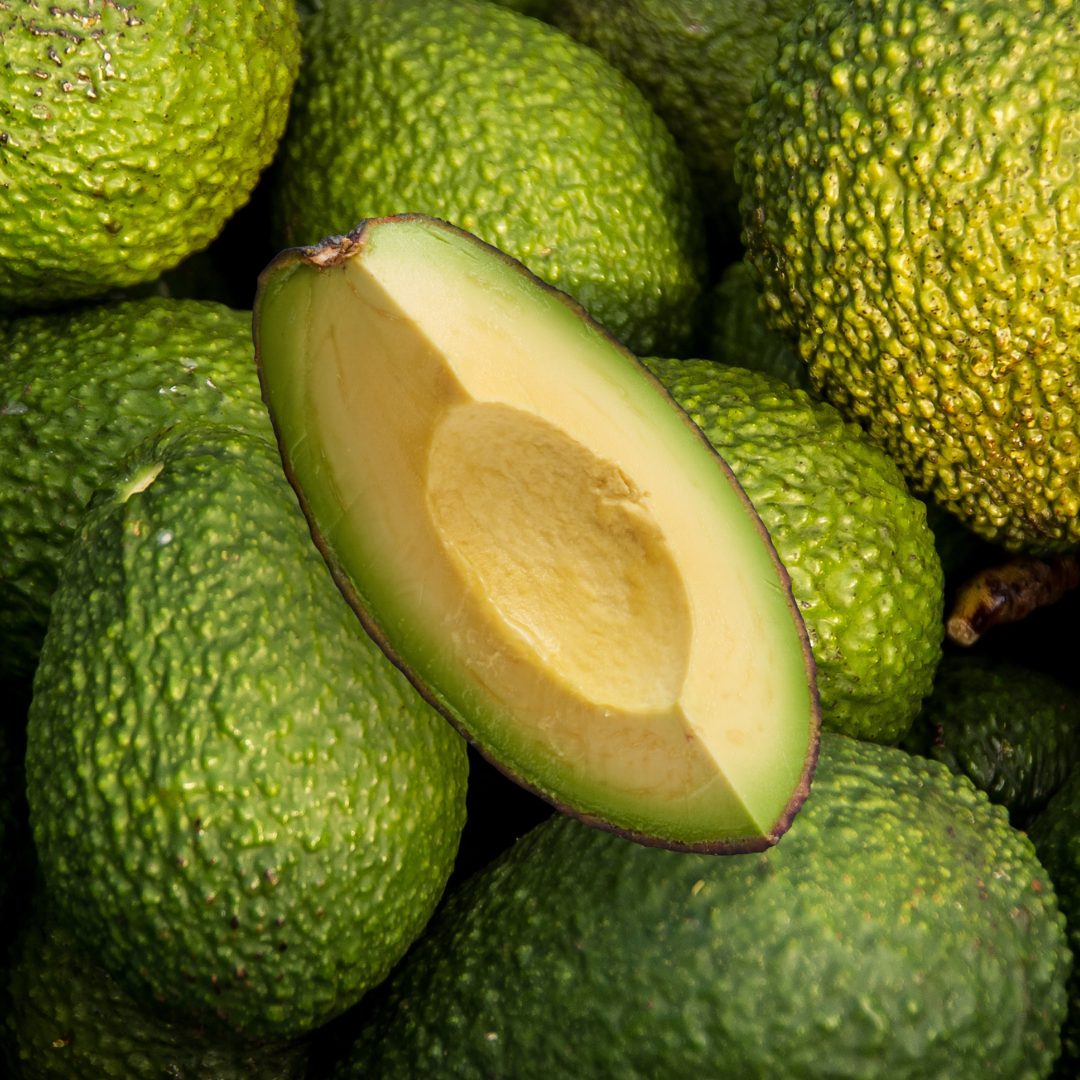
It began with a cardboard box, a Finnish potato enthusiast, and a small Tanzanian company knocking on cold doors in the Netherlands. A decade on, Tanzanian avocados are the backbone of India’s fastest-growing fresh-fruit import trade. This is the story of how a corridor, three institutions and a generation of smallholder farmers built an empire out of a single knock on a door.
By the Kilimokwanza Desk
April 2026
From a cardboard box: the knock that started it all
In 2015, the lush, rolling hills of Tanzania’s Southern Highlands were teasing a green goldmine that no one wanted to buy. Farmers had planted avocado seedlings by the thousand — many gifted by NGOs — but the story always ended at the farm gate. There was no market, no roadmap for export, and certainly no global reputation.
“We began in 2015 when avocados in the Southern Highlands simply didn’t have a market,” recalls Geoffrey Kirenga, CEO of the AGCOT Centre (formerly SAGCOT). “Farmers had the trees, but they weren’t told where the market was or what the international standards were. It was a crisis of untapped potential.”
The breakthrough, when it came, arrived improbably — by way of a potato. Mr. Eero Pissilä, a visitor exploring the SAGCOT Centre’s Round Potato Value Chain push in the Southern Highlands, discovered the abundant, high-quality avocados that local farmers were producing alongside their other crops. Recognising the commercial potential, he took it upon himself to find them an international market. His mission became the seed from which a new Tanzanian export company — Tanzanice Co. Ltd. — would grow.
What followed was a masterclass in boots-on-the-ground economic diplomacy. Tanzanice did not wait for the world to come to Tanzania. The company packed a single box of Southern Highland avocados and boarded a flight to the Netherlands — the gateway to European horticulture. In the boardrooms of Europe’s largest fruit distributors, Tanzania was not yet on the map.
“We introduced our avocados as a product from Tanzania — creamy, delicious, and of superior quality,” recalls Ms. Matilda Byanda of Tanzanice Co. Ltd. The initial reception was lukewarm. European buyers, unfamiliar with Tanzanian produce, worried about consistency and preferred the established neighbours they already knew.
Tanzanice did not retreat. For months, the company played a patient game of sample diplomacy — leaving boxes of fruit at different distributors, betting that the quality of the Southern Highland soil would eventually speak for itself. Eventually, one company agreed to a small pilot. The fruit was tested, launched into supermarkets, and handed over to the consumer for verdict. The response was immediate: the European palate loved the rich, buttery texture of Tanzanian Hass.
“From there, it just popped out,” Kirenga says of the aftermath. “Tanzania was suddenly known.” For the corridor CEO, the moment carried a particular resonance: a Tanzanian company, incubated inside the SAGCOT ecosystem and catalysed by a visiting potato enthusiast, had just put the country on the global horticultural map. “These are the literal fruits of the corridor’s labour,” he adds.
“We introduced our avocados as a product from Tanzania — creamy, delicious, and of superior quality. — Ms. Matilda Byanda, Tanzanice Co. Ltd.”
A decade on: from a single box to a national engine
Ten years after Tanzanice’s trip to the Netherlands, in the same cool uplands of Njombe where that first consignment was picked, Hass avocados once again command the hillsides — but now their journey no longer ends at European retail shelves. Increasingly, Tanzanian avocados are bound for Mumbai, Delhi and Bangalore, where a young, health-conscious middle class is quietly rewriting what India eats.
Tanzania has become the third-largest avocado producer in Africa, trailing only South Africa and Kenya, and India has become its No. 2 export market — accounting for roughly 30 percent of total shipments, second only to Europe at 40 percent. In just four years, the country’s avocado value chain has shifted from a fragmented, smallholder-led cottage trade into a coordinated, export-ready engine.
The question for producers, exporters, cooperatives and policymakers is no longer whether Tanzania can reach Indian shelves. It is how the country holds and deepens that position through 2030.
The numbers that tell the story
The scale of the shift is easiest to read in India’s own import ledger. In 2022, the first commercial consignment of Tanzanian avocados arrived on Indian soil. By 2025, India was bringing in more than 19,000 tonnes a year — with Tanzania supplying the lion’s share.
| Year | India’s avocado imports (tonnes) | Year-on-year change |
| 2022 | 1,871 | — |
| 2023 | 3,900 | +108% |
| 2024 | 9,212 | +136% |
| 2025 | 19,120 | +108% |
India’s total avocado imports by volume, 2022–2025. Source: industry data reported by Indian importers.
On the Tanzanian side, the picture is equally striking. National output has climbed from under 50,000 tonnes in 2020 to approximately 195,000 tonnes in the most recent season, according to figures cited by the Cereals and Other Produce Regulatory Authority (COPRA). Formal exports rose from 26,826 tonnes in 2022/23 to 35,627 tonnes in 2023/24, and the Ministry of Agriculture is targeting 40,000 tonnes for 2025/26. The Tanzania Horticultural Association (TAHA), under CEO Dr. Jacqueline Mkindi, has gone further, publishing a roadmap that envisages Tanzania reaching 1 million tonnes of avocado exports within five years.
“In four years the country’s avocado value chain has shifted from a fragmented, smallholder-led cottage trade into a coordinated, export-ready engine.”
The Indian door: phytosanitary diplomacy, 2020–2021
If 2015 opened Europe, the opening of India came five years later — and it travelled a very different route. The duty-free access Tanzanian exporters enjoy in India today did not appear by accident. It is the downstream benefit of several years of careful, and at times painstaking, regulatory groundwork.
The turning point came in 2020, when the SAGCOT Centre coordinated a comprehensive Pest Risk Analysis (PRA) alongside the Ministry of Agriculture, local avocado exporters, and other stakeholders. The PRA — a dense, technical dossier documenting the pest profile of Tanzanian avocado orchards and the mitigation protocols in place — was submitted to the quarantine authorities of four of the world’s largest potential avocado markets: India, South Africa, China and the United States.
Submitting the paperwork, however, was only the first step. Pushing it through the bureaucratic pipelines of foreign governments required what observers later described as phytosanitary diplomacy. In what became a masterclass in public-private facilitation, the SAGCOT Centre and the Tanzania Investment Centre (TIC) worked in tandem to introduce a strategic Indian investor to the Tanzanian avocado sector, linking him to local production and export opportunities.
That investor played an instrumental on-the-ground role — liaising directly with Indian authorities, following up on outstanding pest risk queries, and effectively bridging the gap between Tanzanian agricultural ambition and Indian import regulation. Where government-to-government exchanges can stall for months, a well-placed private intermediary kept the file moving.
The diplomatic and technical work culminated in 2021, when Tanzania secured the bilateral agreements that legally cleared the pathway for its avocados to enter the Indian market — with a parallel breakthrough into South Africa the same year. By marrying public-sector regulatory capacity with private-sector diplomatic leverage, Tanzania did more than open a trade corridor. It established a replicable blueprint for unlocking future markets across the horticultural value chain.
The institutional architecture behind every shipment
Every container of Tanzanian avocado that lands at Mundra or Nhava Sheva today carries, in effect, the quiet work of three institutions moving in step. The current state of the avocado trade is easier to understand as a partnership than as a hierarchy.
| Institution | Primary contribution to the India trade |
| COPRA | Cereals and Other Produce Regulatory Authority. Licenses exporters and agents, enforces trade rules, and handles government-to-government engagement on export standards and permits. |
| TAHA | Tanzania Horticultural Association. Trains farmers on Global GAP and post-harvest discipline, scouts new buyers in Mumbai and Delhi, and runs the HortiMarket digital platform linking producers to exporters. |
| TPHPA | Tanzania Plant Health and Pesticides Authority. Issues the Phytosanitary Certificates required by Indian customs and operates the laboratory infrastructure behind pest-free assurance. |
The three Tanzanian institutions whose coordination underpins market access in India.
COPRA, established under the Cereals and Other Produce Act and led by Director General Ms. Irene Mlola, oversees the avocado sector as part of its wider mandate covering all crops outside the traditional cash-crop boards. It has rolled out a nationwide buyer-and-agent registration regime intended to end ad-hoc farm-gate bargaining and bring transactions into designated buying centres. The 2025/26 avocado buying season was formally launched in Njombe in September 2025 under that framework.
TAHA complements this regulatory work with the technical muscle of an industry association — running extension programmes, driving Global GAP uptake (more than 6,000 farmers now certified, according to TAHA figures), and maintaining the buyer relationships that let Tanzanian fruit travel confidently into Indian retail. Its HortiMarket digital platform links smallholders, exporters and logistics providers to real-time price and demand signals.
TPHPA, under Director General Prof. Joseph Ndunguru, closes the loop at the border. Every export consignment requires its Phytosanitary Certificate. New laboratory capacity, capable of analysing roughly 2,000 samples a week, has been introduced to keep pace with export volumes and protect the pest-free reputation on which the whole corridor depends.
In 2026, the government issued the Mwongozo wa Uendelezaji wa Tasnia ya Parachichi — the National Avocado Guideline — which formally maps out the roles of thirteen different value-chain actors. Among its headline provisions is a hardened quality benchmark: a minimum Dry Matter content of 21 percent before any fruit can be presented for export. After a 2024/25 season in which immature fruit strained buyer confidence, the new discipline was overdue.
A short sea and a friendly tariff
Two advantages explain Tanzania’s current market position in India, and they compound each other.
The first is geography. Tanzanian ports sit unusually close to India’s western coastline. Sea freight to Mundra or Nhava Sheva typically runs 12 to 18 days in normal conditions, roughly half the time required from Peru, Chile or New Zealand. For a fruit whose commercial value is measured in days of remaining shelf life, that margin is decisive. There is one operational wrinkle worth naming honestly: much of the reefer traffic bound for India still moves through the Port of Mombasa, because Dar es Salaam does not yet host a dedicated weekly direct refrigerated service at the volumes Maersk and other lines require. Exporters from the Kilimanjaro region — less than 400 kilometres from Mombasa on the new road link — already route much of their fruit that way. Upgrades to Dar es Salaam’s reefer capacity, together with the long-term development of Mtwara and Tanga, will determine how much of that logistics value Tanzania can eventually retain domestically.
The second advantage is the preferential tariff arrangement that flowed from the 2021 bilateral framework, under which Tanzanian avocados enter India duty-free. Competing origins face a Basic Customs Duty of around 30 percent, lifted to roughly 33 percent once the Social Welfare Surcharge is applied. Kenyan avocados have historically faced that full tariff — a gap industry estimates suggest allows Tanzanian fruit to undercut Kenyan prices by close to 30 percent on landed cost. Importers who once juggled several origins across the calendar can now lean on a single, predictable source for most of the year.
A market catching up with itself
On the Indian side, the shift is less about any single policy moment and more about a demographic tide. Urban professionals in their twenties and thirties are eating differently from the generation before them. Avocados have moved from the import shelves of a few gourmet stores in South Mumbai to the produce aisles of mass-market chains and, crucially, to quick-commerce platforms where a customer in Bangalore or Pune can have two ripe fruits at the door in under fifteen minutes.
The category is still small by the standards of apples or bananas, but its growth rates are unusual. After volumes more than doubled annually in each of the past two years, analysts expect Indian avocado imports to grow by a steadier 15 to 20 percent in 2026 — a stabilisation rather than a slowdown. Distribution is extending from the six metros into tier-two cities, and fast-food and café chains have folded avocado into their menus, shortening the path from novelty to familiar ingredient.
Indian consumers have also adopted the fruit on their own terms — blending it into chutneys, spreading it on roti, folding it into smoothies — which has done more to normalise it than any international marketing push could have.
From the Highlands outward: the AGCOT corridors step up
While Njombe, Mbeya, Songwe and Iringa remain the heart of Tanzanian avocado production, the opportunity is no longer confined to SAGCOT alone. Under the broader Agricultural Growth Corridors of Tanzania (AGCOT) framework, each of the country’s four corridors now contributes in distinctive ways.
The Southern Corridor (SAGCOT) remains the anchor — home to the largest concentration of smallholder Hass producers, the densest network of pack-houses, and the country’s most advanced post-harvest handling infrastructure. It is also where the most interesting institutional experiments sit: SAGCOT’s Tajirika na Lusitu programme, launched in Lusitu village in Njombe Rural District, trains farmers in modern agronomy and then turns them into peer trainers for other regions under a farmer-to-farmer model. Block-farming schemes have extended the SAGCOT footprint further — 243 hectares under 600 farmers in Ruvuma, 81 hectares under 200 growers in Morogoro, and new blocks in Kigoma.
The Northern Corridor — anchored by Kilimanjaro and Arusha — provides a critical second production window. Its fertile volcanic soils and high altitudes yield Hass of export-grade quality, and its harvest calendar, running mainly from June to September, extends Tanzania’s overall supply window into months when the Southern Highlands are between cycles. It is this combined seasonality that lets Tanzania supply India for roughly nine months of the year.
The Central Corridor is emerging as an important aggregation and processing zone, with its position along the Central Line offering natural logistical advantages for consolidating fruit from multiple catchments. Highland pockets within the corridor are being assessed for suitable avocado micro-climates, expanding the national production base beyond the traditional two zones.
The Mtwara Corridor — with its deep-water port and access to Southern African trade routes — is well positioned to complement the existing Dar es Salaam and Tanga export channels, particularly as the sector seeks redundancy in its export logistics. Highland zones within Ruvuma also offer production potential that intersects with the corridor’s development agenda.
Taken together, the corridor-wide view is instructive. Tanzania’s avocado sector is no longer a single-region story. It is a national value chain being knit together across multiple agro-ecological zones, multiple ports and multiple cooperative systems — exactly the institutional breadth a mature export industry requires.
The smallholder at the centre
What distinguishes the Tanzanian offer is not only where the fruit is grown but how. Roughly nine in ten tonnes are produced by smallholder farmers, many managing between ten and one hundred trees on land that also carries coffee, banana or dairy. In highland districts of Mbeya, Njombe, Rungwe and Hai, avocado has become the most reliable source of cash income for many households, with a particular impact on women’s earnings and school-fee budgets.
That structure carries both promise and pressure. It gives Tanzania a credible sustainability narrative — a crop grown largely rain-fed, under mixed-crop systems, with lower ecological cost than industrial monocultures elsewhere. It is a story that resonates with the ethical end of the Indian premium segment. But it also means that consistency of grading, sizing and post-harvest handling depends on aggregating the work of thousands of independent growers.
This is where cooperative structures, producer associations and pack-house investments matter. Where AMCOS and farmer groups have matured, uniform grading has followed, and so has buyer trust. Where aggregation is weak, shipments are uneven — and reputation travels fast in a market as networked as Indian modern retail.
Growing pains: what could go wrong
The outlook is strong but not self-executing. Four pressures deserve honest attention.
Supply volatility and pricing discipline. Industry estimates put Indian weekly consumption at 14 to 15 containers. Yet in early 2026, weeks in which 25 to 30 containers landed at once triggered visible price crashes at the importer level. The lesson is uncomfortable but clear: in a market of this size, flooding destroys the very price premium exporters are chasing. Staggered shipping schedules, orderly marketing, and tighter coordination between Tanzanian exporters and Indian ripening partners will determine whether 2026 is remembered as a breakthrough or a cautionary tale.
Red Sea disruptions. According to TAHA, the rerouting of vessels around the Cape of Good Hope has extended transit from the customary 25–27 days to a punishing 45–50 days on some routes. This compresses shelf life and pushes premium buyers toward more expensive air freight. Diversifying carriers, strengthening Mtwara as an alternative port, and continuing reefer capacity investments at Dar es Salaam and Tanga are the obvious buffers.
New regional entrants. Rwanda, Burundi and Uganda are now placing avocados into the Indian market. Volumes remain modest, but Indian importers have begun noting that quality from the newer origins is frequently perceived as equal to or better than Tanzania’s. Reputation is hard-won and quickly ceded; this is a competitive pressure to take seriously rather than dismiss.
Quality consistency. The 21 percent Dry Matter benchmark introduced in the 2026 National Avocado Guideline is not bureaucratic box-ticking. Indian premium retailers specify tight size codes, dry-matter thresholds and residue tolerances, and TPHPA’s expanded laboratory capacity exists precisely to make those specifications auditable. Meeting them at scale will require continued Global GAP expansion, stronger extension across the corridors, and disciplined adherence to cold-treatment protocols — particularly around pests such as the false codling moth, which Indian quarantine authorities monitor closely.
What comes next: 2026–2030
The honest headline is that the next five years will be defined less by market entry and more by market maturity. Three priorities stand out.
The first is quality at scale. Tanzania’s reputation in India will be built consignment by consignment; every under-sized, under-ripe or poorly-handled container chips away at it. Continued investment in pack-houses, cold-chain corridors, and farmer training — alongside cooperative aggregation and the growing Global GAP base — is the single highest-return work the sector can do in the near term.
The second is brand narrative. Price alone is not a durable competitive position, as any commodity exporter eventually learns. The more interesting long-term play is to build Tanzania’s identity in India around what the country genuinely offers: highland-grown, smallholder-sourced, biodiversity-friendly fruit produced under a cooperative model that shares value with farming households. That is a story Indian premium buyers are demonstrably willing to pay for.
The third is value addition. Not every fruit is export-grade. Avocado oil production surged in 2026, with trade reports putting bulk virgin avocado oil prices at around US$6.30 per kilogram — much of it destined for India’s cosmetic and health-food segments. Even modest growth in domestic processing would lift sector-wide margins, absorb second-grade fruit profitably, and cushion farmers against the price swings that come with any fast-growing fresh-fruit trade.
“Tanzania has moved from being a backup supplier to India’s preferred source. The next chapter will be won on discipline, not just volume.”
Beyond the avocado: what one box opened
What began with a single cardboard box of Hass avocados in 2015 has become, a decade on, something larger than a single commodity. The door that Tanzanice Co. Ltd. pushed open in Europe — and that was later widened into India by the 2020 PRA and 2021 bilaterals — is now a gateway for a broader basket of Tanzanian produce.
Tanzanice itself, capitalising on the Hass breakthrough, has since expanded its export portfolio to include ginger, turmeric and passion fruit — each carrying the same Southern Highland provenance story that first persuaded European buyers. Other Tanzanian companies have followed the template. Potatoes — the crop that, by way of Mr. Pissilä’s original mission, accidentally midwifed the avocado breakthrough — are themselves transforming from a subsistence staple into a commercial category. For the AGCOT Centre, the pattern is the same each time: boots on the ground, sample diplomacy, patience, and the quality of the soil doing the final persuading.
“We work hard to convince investors, and when they come, our job is to make sure we give them the best products Tanzania has to offer,” Kirenga says. The avocado, in that sense, was never just an avocado. It was proof of concept — that the corridor model could take a Tanzanian product, any Tanzanian product, from a highland farm to a global shelf.
A corridor worth tending
For readers who have followed the AGCOT transformation for more than a decade, the Tanzania–India avocado corridor is a familiar kind of opportunity — one that will reward patient institutional work more than any single shipment or season. The comparative advantages are real: proximity, climate, a preferential tariff, a production base anchored in smallholder households, and a corridor system now expanding across all four AGCOT geographies. None of these is permanent. Trade agreements are renegotiated. Shipping routes shift. Consumer trends mature.
What endures, over time, is the quality of the underlying system — the pest risk analyses filed on time, the COPRA registers kept honestly, the TAHA extension officers who show up, the TPHPA certificates that are not waved through, the cooperatives that aggregate well, the pack-houses that grade with discipline. Tanzanice’s 2015 mission to the Netherlands showed what persistence could achieve when a Tanzanian company chose not to wait. The 2020 PRA and 2021 bilateral agreements showed what public and private actors can build together. The 2026 National Avocado Guideline and TAHA’s 1-million-tonne roadmap are the next commitments. The decade ahead will show whether Tanzania can sustain the discipline behind them.
Tanzania has earned its place at India’s table. The work ahead is to keep it — and to make sure the farmers in Njombe, Mbeya, Rungwe, Kilimanjaro, Morogoro and Ruvuma, whose trees were planted long before the markets were ready to buy them, share fully in what comes next.
— ENDS —