

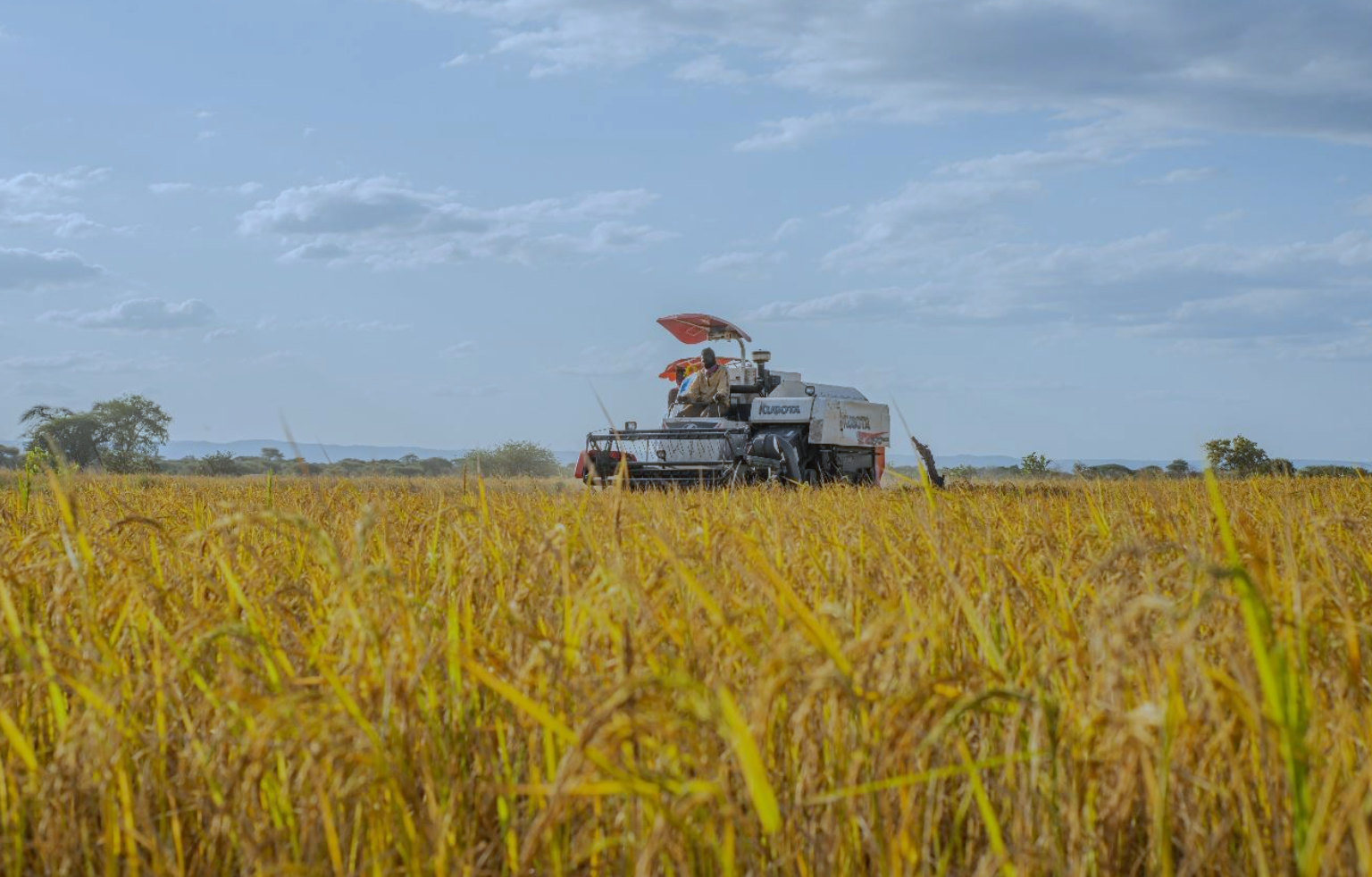
A long-form investigation into the genetic foundations, structural challenges, and transformative potential of the Tanzanian rice sub-value chain in the wake of China’s historic zero-tariff framework
By Kilimokwanza Editorial Team
Published May 9, 2026
Prologue: The Fragrance That Commands a Premium
In the bustling streets of Kariakoo Market in Dar es Salaam, where the cacophony of haggling voices mingles with the diesel fumes of daladala buses, a subtle olfactory distinction determines who eats well and who merely survives. Walk past the rice vendors’ stalls in the early morning, and you’ll notice something: certain sacks command prices that make imported Thai Jasmine look like a bargain. The rice inside has no fancy packaging, no branded labels, no certification marks from distant regulators. But lean close, and you’ll understand.
It smells like home.
The scent is unmistakable — a popcorn-like, almost floral aroma that rises from the grain even before cooking. This is Supa, Tanzania’s flagship aromatic rice variety, and its regional cousins Supa Katrin and Supa BC. For urban consumers in Dar es Salaam, Dodoma, and Mwanza, this fragrance is worth paying 30 to 40 percent more than the price of standard long-grain rice. For rural farmers in the Southern Highlands who cultivate it under rain-fed conditions on half-hectare plots, it represents the difference between subsistence and aspiration.
But this is a story that extends far beyond the narrow alleys of Kariakoo. As Tanzania grapples with the challenge of transforming its agricultural sector from a land-expansion model to an intensification-driven powerhouse, the aromatic rice sub-value chain has emerged as a microcosm of both the nation’s potential and its institutional bottlenecks. And in 2026, with China’s unprecedented zero-tariff policy opening the doors to one of the world’s most lucrative consumer markets, the question is no longer whether Tanzanian rice can compete globally — but whether Tanzania’s infrastructure, institutions, and farmers are ready to seize the moment.
Part I: The Biochemistry of Distinction
The Molecule That Built a Market
To understand why aromatic rice commands such a premium, you must first understand the science of scent. The characteristic fragrance that defines varieties like Supa, Thai Jasmine, and Indian Basmati derives from a single volatile compound: 2-acetyl-1-pyrroline, a molecule so distinctive that sensory scientists describe it as having a “popcorn-like” or “pandanus leaf-like” aroma. This compound is not an accident of nature but the result of a specific genetic mutation.
The biochemistry is elegant in its simplicity. In most rice varieties, an enzyme breaks down the precursor to 2-acetyl-1-pyrroline before it can accumulate in the grain. But in aromatic varieties, a mutation in the BADH2 gene — located on chromosome 8 — inhibits this enzyme, allowing the fragrance to build up. The higher the expression of the mutated gene, the stronger the aroma.
In Tanzania, this genetic trait has been refined through decades of farmer selection and, more recently, through targeted mutation induction programs. At the Zanzibar Agricultural Research Institute (ZARI), scientists employed nuclear techniques — specifically, radiation-induced mutation — to enhance the productivity of aromatic lines without sacrificing their scent. The result was SUPA BC, released in 2011, a variety capable of yields up to 7 tonnes per hectare, nearly double the 4 tonnes typical of traditional local varieties.
But biotechnology has its limits. SUPA BC, while high-yielding and fragrant, proved susceptible to the Rice Yellow Mottle Virus (RYMV), a disease capable of wiping out entire fields. Current breeding programs, supported by the International Atomic Energy Agency (IAEA) and the Food and Agriculture Organization (FAO), are now focused on integrating RYMV resistance into the SUPA BC background using molecular markers and continued mutation induction.
A Taxonomy of Tanzanian Fragrance
Not all aromatic rice is created equal. Within Tanzania’s production landscape, varieties are informally stratified by aroma intensity and market positioning:
| Variety | Aroma Intensity | Genetic Expression | Market Segment |
|---|---|---|---|
| SUPA KATRIN | Strongly Aromatic | High BADH2 Expression | Premium/High-Value Markets |
| SUPA BC | Strongly Aromatic | High BADH2 Expression | Commercial/Yield-Focused |
| BASMATI 370 | Moderately Aromatic | Medium Expression | Special Occasions (Pilau/Biryani) |
| SUKARI | Moderately Aromatic | Medium Expression | Urban Middle Class |
| TXD 306 (SARO 5) | Slightly Aromatic | Low Expression | Everyday Household Use |
| BR11 sub 1 | Slightly Aromatic | Low Expression | Climate-Resilient Hybrid |
This classification is not academic. It reflects the complex consumer preferences that drive Tanzania’s domestic rice market. Research conducted in Dar es Salaam has shown a direct correlation between aroma intensity and perceived taste, with consumers expressing a consistent willingness to pay premiums for locally grown aromatic varieties over cheaper imported alternatives — even when those imports carry the branding of Thai Jasmine or Vietnamese fragrant rice.
The preference is rooted in more than just chemistry. Tanzanian consumers associate local aromatic rice with freshness, large grain size, and a texture that holds up well in the traditional cooking methods used across East Africa. When you cook Supa, it doesn’t clump. It doesn’t turn mushy. And most importantly, it smells the way rice is supposed to smell.
Part II: From Subsistence to Scale — The Historical Arc of Tanzanian Rice Production
The Great Transition (1990–2026)
Tanzania’s rice sector has undergone a profound transformation over the past three decades, evolving from a state-managed industry dominated by large parastatal farms to a liberalized market where smallholder farmers produce 74 percent of the national output.
The pivotal moment came in the late 1990s with the privatization of the National Agricultural and Food Corporation (NAFCO) schemes. These large-scale irrigated estates, once the pride of Tanzania’s post-independence agricultural strategy, were sold off to private firms, transferring thousands of hectares of prime rice land into commercial hands. The result was a bifurcated production landscape: on one side, a handful of well-capitalized commercial operations in Mbeya, Morogoro, and the Coast regions; on the other, millions of smallholder farmers cultivating an average of 0.5 hectares under rain-fed conditions.
The numbers tell the story of a sector driven more by extensification than intensification. Between 2000 and 2010, rice production in Tanzania grew at an annual rate of 9.0 percent — but 8.5 percentage points of that growth came from expanding the area under cultivation, with only 0.5 percentage points attributable to yield improvements. In practical terms, this meant farmers were simply planting more land, not getting more rice per hectare.
But between 2011 and 2024, something shifted. Production growth slowed to 6.4 percent annually, but the composition of that growth changed: now, 3.3 percentage points came from yield improvements, while area expansion contributed 3.1 percentage points. The ratio had inverted. Tanzania was beginning, slowly, to intensify.
The Volatility Problem
This transition, however, has been anything but smooth. Tanzania’s average rice yield remains stubbornly low by global standards. In the 2021/22 season, yields collapsed to just 1.6 tonnes per hectare due to severely low rainfall — a stark reminder that 74 percent of Tanzania’s rice is still grown under rain-fed conditions, making the entire sector vulnerable to climatic shocks.
Compare this to Asia’s 4.4 tonnes per hectare, or even Africa’s continental average of 2.5 tonnes per hectare, and the productivity gap becomes glaring. The problem isn’t genetic potential — SUPA BC has demonstrated that 7 tonnes per hectare is achievable under optimal conditions. The problem is infrastructure: irrigation, improved seeds, fertilizers, and mechanization.
As of 2024, only 20 percent of Tanzania’s rice area is under irrigation. The remaining 74 percent is rain-fed, and 6 percent is produced by large-scale commercial farms with reliable water access. This imbalance explains why Tanzania’s rice production is less a function of agricultural science and more a gamble on the monsoon.
Regional Concentration and the Dar es Salaam Magnet
The geography of aromatic rice production mirrors the country’s broader economic patterns. The Southern Highlands, particularly Mbeya Region, account for approximately 12 percent of national production and serve as the primary supply source for Dar es Salaam’s premium rice market. Other major producing regions — Morogoro, Shinyanga, Tabora, Mwanza, and Rukwa — collectively contribute around 75 percent of total output.
But the demand side of the equation is even more concentrated. Dar es Salaam, with a population exceeding 7 million and Tanzania’s highest per capita GDP (approximately 1,741 USD compared to the national average of 1,471 USD), consumes an estimated 60 percent of all rice produced in the country. The city’s consumers have demonstrated a clear preference for aromatic varieties, creating a pull effect that shapes production decisions hundreds of kilometers away in Mbarali, Kyela, and Kilombero.
This urban-rural dynamic has created what economists call a “premium market corridor” — a supply chain that channels high-quality aromatic rice from the Southern Highlands to Dar es Salaam’s retail outlets, while lower-grade or broken rice is sold in secondary markets or consumed locally. It’s a system that works, but only for those with the connections, capital, and logistics to navigate it.
Part III: Inside the Value Chain — Where Value Is Made and Lost
The Fragmentation Tax
The Tanzanian rice value chain is a case study in structural inefficiency. From input suppliers to final consumers, the chain is characterized by a long sequence of actors, each taking a cut, each adding transaction costs, and collectively eroding the margins that should accrue to producers.
At the input stage, the story begins with a paradox: Tanzania’s Agricultural Research Institute (ARI) and Agricultural Seed Agency (ASA) have developed improved varieties like SARO 5, TXD 306, and SUPA BC, yet adoption rates among smallholders remain abysmally low. The reason is simple: there is no robust private distribution network to get these seeds into farmers’ hands. Most farmers rely on saved seeds or purchases from local markets, leading to genetic mixing in the field and degraded grain quality.
The lack of standardized input supply extends to fertilizers, where Tanzania’s usage rates are among the lowest in Africa. In Mbeya’s Mbarali District, a region famous for rice production, surveys have found that many farmers apply no fertilizer at all, relying instead on natural soil fertility — a strategy that works for a season or two but leads to declining yields over time.
At the production node, smallholder farmers dominate numerically but lack the bargaining power to extract value from their harvest. The typical transaction involves a collector or broker visiting the farm during harvest season, offering cash on the spot but paying based on non-standardized measurements — “tins” or “bags” that are often overfilled, shortchanging the farmer. Research from Kahama District shows that farmers’ share of the final retail price typically ranges between 34 and 40 percent, with the remaining 60 to 66 percent absorbed by middlemen, processors, transporters, and retailers.
At the processing stage, the value chain reaches its most critical juncture. Rice processing — or milling — is where paddy is transformed into marketable grain, and it’s also where the most value is lost. Most milling in Tanzania is performed by small and medium-sized processors using outdated machinery that results in high breakage rates (approximately 20 percent) and significant impurities.
Threshing and drying, which should occur under controlled conditions, often happen in open fields at the point of production, leading to post-harvest losses that can reach 50 percent in extreme cases. The rice that does make it to the mill is then processed on machines that haven’t been upgraded in decades, producing a final product that, while aromatic, lacks the “cleanness” and consistent grading of Asian rice.
The Collateral Gap
Underpinning all of this fragmentation is what researchers call the “collateral gap” — the absence of formal land institutions in rural Tanzania. Smallholder farmers, and even medium-scale processors, often lack formal title deeds, which prevents them from accessing institutional credit. Without credit, they cannot modernize equipment, expand operations, or invest in quality-enhancing infrastructure like color sorters and vacuum packaging.
There are exceptions. Commercial firms like Kapunga Rice Project (KPL) in Mbarali have successfully attracted equity and working capital for large-scale irrigation projects. But for the vast majority of the sector — the hundreds of thousands of smallholders who produce the bulk of Tanzania’s aromatic rice — credit remains elusive.
Policy Uncertainty and the Export Ban Legacy
Compounding these structural challenges is a history of erratic trade policies. Between 2016 and 2017, the Tanzanian government implemented an export ban on rice to prioritize domestic food security. The ban was imposed reactively, without reliable data on national food stocks, and it had the immediate effect of halving market prices, devastating both smallholders and commercial producers.
For rice traders who had already invested in export-oriented infrastructure — drying facilities, quality grading systems, phytosanitary certifications — the ban represented a catastrophic loss. It also sent a signal to regional markets like Kenya and Rwanda that Tanzania was not a reliable supplier, a reputation that persists even today.
Export permits and certifications from the Tanzania Bureau of Standards (TBS) can cost up to 15 percent of stock value, further discouraging long-term investment. Add to this the erratic power supplies and high electricity tariffs that plague rice mills, and it’s clear why Tanzania’s rice sector has struggled to move beyond domestic consumption.
Part IV: The China Window — A Unilateral Opening
May 1, 2026: A New Trade Architecture
On May 1, 2026, the global trade landscape for African agricultural products shifted fundamentally. China, in an unprecedented move, expanded its zero-tariff policy to cover 100 percent of tariff lines for 53 African nations, including Tanzania. This was not a negotiation. It was not a trade deal with reciprocal obligations. It was a unilateral policy decision by Beijing to eliminate import duties on African goods — duties that had previously ranged from 8 to 30 percent depending on the product.
For Tanzanian exporters of specialty agricultural products, the implications are transformative. Rice, which had faced tariffs of approximately 10 to 15 percent when entering China, can now be shipped duty-free. But the zero-tariff policy is only one component of a broader “Green Channel” framework designed to reduce customs clearance costs and time through digitalization of rules of origin and mutual recognition of inspection and quarantine standards.
The policy represents a strategic pivot by China. Rather than simply importing raw commodities — the historical pattern of China-Africa trade — Beijing is signaling its interest in branded, value-added goods. The goal, according to Chinese Ambassador to Tanzania Chen Mingjian, is to transition African exports from resource-based raw materials to products that can compete in China’s rapidly expanding middle-class consumer market.
The Demand Side: China’s Appetite for Aromatic Rice
China’s domestic rice market is the largest in the world, but it is also one of the most segmented. While the majority of Chinese consumers eat standard japonica or indica rice, there is a growing premium segment that demands fragrant, long-grain varieties — traditionally satisfied by Thai Jasmine and Indian Basmati.
This is where Tanzanian Supa enters the picture. The unique aromatic profile of Supa varieties — distinct from both Thai and Indian offerings — positions it as a specialty product in a market hungry for diversity. Chinese consumers, particularly in tier-one cities like Beijing, Shanghai, and Guangzhou, have demonstrated a willingness to pay premiums for high-quality, fragrant rice that offers a superior sensory profile.
The bilateral trade data underscores the potential. In 2025, total trade between Tanzania and China reached USD 11.28 billion, a 27 percent year-on-year increase. While rice exports were negligible in previous years due to tariff barriers and limited market access, the zero-tariff policy removes the primary financial impediment.
But tariffs were never the only barrier. The real challenge has always been technical compliance — specifically, meeting the rigorous sanitary and phytosanitary (SPS) standards mandated by China’s General Administration of Customs (GACC).
Part V: The GACC Gauntlet — Navigating China’s Food Safety Regime
Decree 248, Decree 280, and the Registration Imperative
Since 2022, GACC has enforced mandatory pre-registration for all overseas food production and processing enterprises through the CIFER (China Import Food Enterprise Registration) system. This is not a voluntary certification scheme. It is a legal requirement. No registration, no market access. Period.
The regulatory framework is currently transitioning from GACC Decree No. 248 to Decree No. 280, which took effect on June 1, 2026. Decree 280 introduces a more dynamic, risk-based management system for foreign food facilities, with different registration pathways depending on the level of risk associated with the product.
For grains and grain products like rice, the registration process must be handled through the exporting country’s competent authority. In Tanzania, this role is filled by the Tanzania Plant Health and Pesticides Authority (TPHPA), an institution established in 2020 under Act No. 04 to comply with requirements of the International Plant Protection Convention (IPPC) on sanitary and phytosanitary measures.
TPHPA’s mandate is comprehensive: it conducts field inspections, laboratory testing, and systems audits to verify that Tanzanian exporters meet Chinese import requirements. Every export consignment must be traceable to its farm of origin, with documentation covering production practices, inputs used, and pest management protocols. This level of traceability is unprecedented in Tanzania’s agricultural sector, where informal markets and unregistered farms have historically been the norm.
February 2026: The Breakthrough Moment
In February 2026, Tanzania achieved a major milestone when GACC granted market access to 408 agricultural exporters. This breakthrough was the result of a rigorous assessment of Tanzania’s capacity to implement SPS measures, including pesticide residue monitoring, food safety controls, and mandatory traceability systems.
The announcement was made at TPHPA headquarters in Ngaramtoni, Arusha, where Director General Professor Joseph Ndunguru hosted a high-level delegation and outlined the implications. “This is a transformative moment for Tanzanian agriculture,” Ndunguru stated. “We are no longer just exporting raw commodities. We are exporting quality, traceability, and compliance.”
The 408 registered companies span multiple agricultural sectors — avocados, sunflower seed cakes, tobacco, vanilla, and crucially, rice. For rice exporters, the GACC registration provides a legal pathway to enter the Chinese market, but it also imposes stringent ongoing obligations:
- Competent Authority Review: TPHPA must audit and endorse each facility annually.
- CIFER System Registration: Online application with legal documentation and facility details.
- Labeling Requirements: Each package must have Chinese and English labels conforming to GACC Announcement No. 27.
- Pesticide Management: Demonstration of compliance with Chinese Maximum Residue Limits (MRLs) as defined by GB 2763 standards.
- Phytosanitary Certificate: Issued for each specific shipment, certifying that the product is free from quarantine pests.
Any detection of live quarantine pests, prohibited materials (such as soil or animal carcasses), or non-compliance with labeling standards can result in the shipment being returned or destroyed. More critically, repeated violations by individual exporters can lead to suspension of Tanzania’s entire export authorization, affecting all 408 registered companies.
The TPHPA Infrastructure
The institutional credibility required to maintain this registration system is substantial. TPHPA has built robust surveillance systems for plant pests and diseases, employing PCR (polymerase chain reaction) technology for pathogen detection. In 2025, for example, TPHPA collected 5,664 samples to confirm the absence of Xylella fastidiosa, a bacterium that the European Union had flagged as a potential threat to Tanzania’s horticultural exports. The results confirmed the bacterium’s absence, allowing Tanzania to maintain market access to Europe — a demonstration of the kind of technical capacity GACC expects.
For rice exporters, the implications are clear: compliance is not a one-time hurdle but an ongoing institutional commitment. Farms must maintain detailed records, mills must meet hygiene standards, and logistics providers must ensure cold chain integrity from the Southern Highlands to the port of Dar es Salaam to the shipping containers bound for Shanghai.
Part VI: Global Benchmarks and the Competitiveness Question
Tanzania vs. The Aromatic Giants
To succeed in China, Tanzania must compete with the world’s aromatic rice powerhouses: Thailand, Vietnam, Pakistan, and India. This is not a competition Tanzania can win on price. Thai Jasmine, Vietnamese fragrant varieties, and Pakistani Super Kernel Basmati all benefit from decades of branding, established supply chains, and economies of scale that Tanzania cannot yet match.
But price is not the only axis of competition. The global rice market is increasingly segmented, with consumers willing to pay premiums for unique aromatic profiles, organic certification, and traceable origins. This is where Tanzania’s Supa varieties have a strategic advantage.
| Country | Flagship Variety | Competitive Advantage | Export Strategy |
|---|---|---|---|
| Thailand | Jasmine (Hom Mali) | High aroma, quality branding, GI protection | Premium pricing in Middle East, Europe, China |
| Vietnam | Fragrant varieties | Affordability, mechanization, drone farming | Bulk imports, price competitiveness |
| Pakistan | Basmati (Super Kernel) | Niche European/Middle East markets | Specialty grains, long-term contracts |
| India | Basmati & Sella Basmati | Scale, price leadership, varietal diversity | Dominant reference point in global market |
| Tanzania | Supa / Supa Katrin | Unique fragrance, large grains, local adaptation | Specialty niche, traceability |
Historical assessments using the Revealed Comparative Advantage (RCA) approach have shown that Tanzanian rice is generally less competitive within the East African Community compared to Asian imports. Between 2005 and 2022, the total Relative Export Advantage (RXA) for Tanzanian rice was calculated at 0.36 — significantly below the benchmark of 1.0 that indicates a comparative advantage.
The primary reason is not quality but cost structure. In 2019, Tanzania’s domestic rice price averaged USD 762 per ton, while the declining world market price hovered around USD 418 per ton. This “import-cost wedge” — the gap between domestic prices and world prices — reflects the inefficiencies embedded in Tanzania’s value chain: high post-harvest losses, obsolete milling equipment, fragmented logistics, and limited access to credit.
The zero-tariff policy effectively narrows this wedge by eliminating the tariff component (previously 10–15 percent), but it does not eliminate the underlying cost disadvantages. To compete on quality rather than price, Tanzanian exporters must focus on what economists call “vertical differentiation” — positioning Supa not as a cheaper alternative to Thai Jasmine but as a premium, traceable, uniquely African aromatic rice.
The Quality Gap
While Tanzanian rice is praised domestically for its taste and aroma, it often lacks the “cleanness” and consistent grading of Asian rice. Chinese consumers, especially in the premium prepackaged segment, demand breakage rates of less than 5 percent. Tanzanian aromatic rice, by contrast, often enters the market at a “20 percent broken” standard — acceptable for bulk sales but insufficient for high-end retail.
Bridging this gap requires investment in advanced milling technology: color sorters that remove discolored grains, de-stoners that eliminate mineral impurities, and vacuum packaging that preserves freshness during the 20–30 day shipping time to China. Some large-scale millers in Mbarali and Kahama have begun to make these investments, but they remain the exception rather than the rule.
Part VII: The Intensification Imperative — SRI and the Path to 7 Tonnes Per Hectare
The Monte Carlo Proof
The transition from a land-expansion model to an intensification-driven strategy is not just a policy goal — it’s an economic necessity. A Monte Carlo simulation study conducted in Tanzania compared the economic feasibility of traditional farming practices against the System of Rice Intensification (SRI), a methodology that emphasizes precise water management, wider plant spacing, and organic soil enrichment.
The results were stark. Traditional farming systems using local seeds had a 66 percent probability of generating negative net cash income (NCI) for the household. Even farmers who adopted improved seeds but stuck with traditional management practices had a 60 percent probability of negative returns. The culprit: high input costs (particularly fertilizers) relative to yields.
But farmers who adopted the full SRI package — improved seeds, precise water management, organic fertilization, and wider plant spacing — had a zero percent probability of negative returns. The average annual NCI for SRI adopters was not just positive; it was the highest among all farming systems tested.
| Farming System | Probability of Negative NCI | Average Annual NCI (USD) | Primary Constraint |
|---|---|---|---|
| Traditional (Local Seeds) | 66% | Low | Water & input management |
| Improved Seeds Only | 60% | Moderate | High input costs |
| Improved Seeds + Fertilizer | 21% | High | Input price volatility |
| Full SRI Adoption | 0% | Highest | High labor requirement |
SRI’s dominance is driven by significantly higher yields per unit area (often reaching 5–6 tonnes per hectare compared to 1.5–2 tonnes under traditional methods) and lower input costs relative to output. The challenge is labor intensity. SRI requires careful transplanting, precise water management, and regular weeding — activities that are difficult to scale without mechanization.
For the aromatic rice sub-value chain, SRI offers a dual benefit: it increases the supply of high-quality Supa paddy while ensuring the economic sustainability of smallholder farming households. If Tanzania is serious about competing in the Chinese market, SRI adoption is not optional — it’s foundational.
Part VIII: The Strategic Synthesis — What Needs to Happen Now
Industrial Upgrading and Foreign Direct Investment (FDI)
The zero-tariff policy is designed to catalyze FDI, particularly from Chinese companies seeking to establish processing and value-addition facilities in Tanzania. This “shared development model,” as it’s described in Chinese policy documents, envisions deep processing hubs and cold chain logistics that would serve both the domestic and export markets.
For Tanzanian rice, this could mean:
- Contract Farming Arrangements: Chinese firms partnering with Tanzanian AMCOS (Agricultural Marketing Cooperative Societies) to ensure consistent supply of high-quality paddy.
- Modern Milling Facilities: Investment in color sorters, graders, and vacuum packaging systems that meet Chinese retail standards.
- Cold Chain Logistics: Refrigerated warehousing and transport to maintain grain quality during the long shipping journey.
The government’s role in facilitating this investment is critical. Under the Agenda 10/30 framework, Tanzania aims to increase the agricultural sector’s growth rate from 4–5 percent to 10 percent by 2030, while expanding irrigated land from 600,000 hectares to 1.2 million hectares. The Ministry of Agriculture’s budget increased by 29.2 percent in the 2023/24 fiscal year, with a focus on productivity, irrigation, and youth/women participation.
Resilience and Food Security
By diversifying export markets beyond the EAC and SADC regions, Tanzania can reduce its exposure to regional trade shocks. The growth of the export sector can stimulate “agro-industrialization,” creating jobs in farming, processing, and logistics — particularly vital for the youth population currently entering the agricultural labor market.
But there is a delicate balance to strike. Tanzania must ensure that export-oriented production does not undermine domestic food security. The 2016–17 export ban was a reactive response to perceived shortages, but it highlighted the absence of reliable data on national food stocks. TPHPA and the Ministry of Agriculture need to develop real-time monitoring systems to track production, consumption, and stock levels — enabling evidence-based policy rather than panic-driven interventions.
Achieving Agenda 10/30
The aromatic rice sub-value chain is a critical component of Tanzania’s broader development strategy. Agenda 10/30 targets agricultural export earnings of USD 5 billion by 2030 (up from USD 3.54 billion in 2023/24). To reach this goal, every high-value subsector — rice, avocados, sunflower, tobacco, vanilla — must punch above its weight.
| Agenda 10/30 Target | 2023/24 Status | 2030 Goal | Role of Rice Sub-Sector |
|---|---|---|---|
| Agricultural Growth Rate | ~5.2% | 10% | Intensification through SRI |
| Export Earnings | USD 3.54 Billion | USD 5 Billion | Zero-tariff access to China |
| Irrigation Coverage | 600,000 Ha | 1,200,000 Ha | Shift from rain-fed Supa production |
| Fertilizer Use | Increasing | High Adoption | Balanced nutrient management |
Rice alone cannot carry Agenda 10/30, but it can serve as a proof of concept. If Tanzania can demonstrate that a fragmented, smallholder-dominated subsector can successfully navigate GACC registration, meet Chinese SPS standards, and compete in a premium market, the lessons learned will be transferable to other value chains.
Part IX: Recommendations for Stakeholders
For Producers and Cooperatives:
Adoption of Good Agricultural Practices (GAP) and SRI is essential to meet the yields and quality standards required for the Chinese market. AMCOS should establish direct sourcing models with exporters to ensure that farmers benefit from the zero-tariff price dividend. Traceability systems — farm-level record keeping, GPS-tagged fields, pesticide usage logs — must become standard practice.
For Millers and Processors:
Investment in modern milling equipment, including color sorters, de-stoners, and vacuum packaging, is necessary to compete with the high “cleanness” standards of Asian exporters. Mills should pursue GACC registration through TPHPA and implement HACCP (Hazard Analysis and Critical Control Points) protocols to ensure food safety compliance.
For Government and TPHPA:
Strengthening the SPS infrastructure and maintaining the integrity of the CIFER registration system is paramount. Periodic audits must ensure that the 408 registered companies continue to meet GACC standards to prevent market-wide bans. The government should also consider establishing a Price Stabilization Fund to protect farmers from catastrophic price collapses during export ban periods.
For Exporters:
Utilizing digital platforms like Alibaba, JD.com, or Pinduoduo to reach Chinese consumers directly can bypass several layers of intermediaries and increase profit margins. Exporters should also explore e-commerce partnerships with Chinese retailers to build brand recognition for Tanzanian Supa as a premium, traceable product.
Epilogue: The Scent of a Nation’s Future
On a cloudy afternoon in Mbarali District, where the Southern Highlands meet the Great Ruaha River, a smallholder farmer named Hadija Mkwama tends her half-hectare plot of Supa Katrin. She transplants seedlings with the precision of a watchmaker, spacing them 25 centimeters apart — the SRI method she learned from an extension officer two seasons ago. Her yields have doubled since then, from 2 tonnes per hectare to 4 tonnes, and the quality of her paddy now commands a premium at the local aggregation center.
Hadija doesn’t know much about GACC registration or zero-tariff policies. She doesn’t follow the intricacies of China-Africa trade frameworks or the biochemistry of 2-acetyl-1-pyrroline. But she knows this: when she harvests her rice and sells it to the cooperative, the price is better than it used to be. And when she walks through Mbarali town and sees the new milling facility being constructed — funded, she hears, by a Chinese investor — she wonders if her rice might someday travel farther than Dar es Salaam.
It might. Tanzania’s aromatic rice sub-value chain is entering a new era of global integration. The historical shift from subsistence to a productivity-focused model has laid the groundwork, but structural fragmentation and institutional bottlenecks remain. The China-Africa zero-tariff policy of 2026 provides the market “pull” necessary to overcome these barriers, offering a pathway to industrialization and standardized production.
If Tanzania can successfully navigate the rigorous GACC registration requirements, bridge the quality gap with Asian competitors, and implement SRI at scale, the unique fragrance and superior taste of Supa rice could transform the country into a premier hub for aromatic grain exports. This is not just a commercial opportunity. It is a strategic bridge toward achieving the nation’s 2030 development goals and securing the livelihoods of millions of smallholder farmers.
The scent of opportunity is in the air. The question is whether Tanzania is ready to harvest it.
Further Reading and Data Sources
This feature story draws on extensive research from multiple sources:
- Tanzania Agricultural Survey Results (2023/24) – FAO
- REPOA Policy Briefs on Rice Value Chain Competitiveness
- Farm to Market Alliance Quarterly Brief (December 2023)
- CARD (Coalition for African Rice Development) Tanzania Report (March 2026)
- USDA Foreign Agricultural Service Rice Outlook (December 2025)
- TPHPA Registration Announcements (February 2026)
- Kilimokwanza.org Agricultural Features Archive
- Academic studies on SRI adoption and rice genetics in East Africa