

FROM IMPORT DEPENDENCE TO SELF-SUFFICIENCY AND EXPORTS
DODOMA
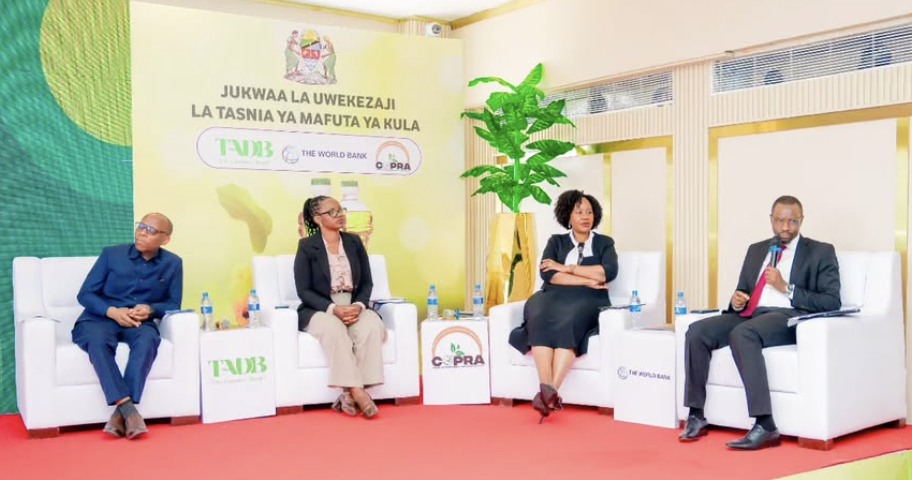
The inaugural panel discussion of the Edible Oil Industry Investment Forum has charted a pathway to free Tanzania’s economy from import dependency and position the nation as one of the world’s leading edible oil exporters by 2035.
The discussion, convened by senior officials from the Ministry of Agriculture, Ministry of Industry and Trade, the Cereals and Other Produce Regulatory Authority (COPRA), the Agricultural Growth Corridors of Tanzania (AGCOT), Tanzania Development Bank (TADB), and the Agricultural Transformation Office (ATO), has tackled the challenge of building a self-sufficient edible oil sector capable of competing in global markets with strong productivity credentials.
“Strategic measures are urgently needed to increase domestic production, attract investment-savvy partners and build Tanzania’s competitive advantage in olive and coconut oil industries,” said Dr. Yasinta Nzogela, Director of Crop Development at the Ministry of Agriculture.
A High-Ambition Strategy for Change
The discussion centred on the National Edible Oil Strategy 2026–2035, which outlines six pillars of implementation:
• Building production systems capable of yielding millions of tonnes annually by 2035
• Mobilising capital and financing for construction and distribution infrastructure
• Coordinating investment through blended finance and agricultural development channels
• Transforming Tanzania from import-dependent to a primary producer on the global stage
Engineer Patrick Kivanda, Assistant Director of Industrial Development at the Ministry of Industry and Trade, outlined how the proposed Edible Oil Regulations will drive supply-side productivity through:
• Streamlined pathways for domestic and export operations
• Strengthened business environment for small and large-scale investors
• Protection and development of a transparent, multi-tiered industry
Finance Mobilisation Accelerates
Levina Tobias, Head of Implementation and Results Delivery at the Agricultural Transformation Office (ATO), emphasised that government and banking sector resources are mobilising production capacity:
“Financial managers and banks now understand the economic potential and strategic importance of this sector. We are forging public-private partnerships to catalyse domestic investment with sound business models.”
Frank Mugeta Nyabundege, Chief Executive Officer of TADB, underscored government’s commitment to attracting investment:
“Our bank is preparing concessional lending facilities for edible oil producers. This initiative carries high strategic value for building a self-sufficient industry.”
Natural Resources at Scale
Irene M. Mlola, Director General of the Cereals and Other Produce Regulatory Authority (COPRA), emphasised the central role of regulatory standards in value chain development:
“Quality standards and compliance frameworks are not administrative burdens; they are competitive advantages. COPRA’s role is to ensure that every tonne of edible oil produced in Tanzania meets export-grade standards from the point of harvest through final packaging. This regulatory infrastructure is what enables processors to compete on global markets, and it is what protects consumers. Building this framework now—as production scales—is essential to Tanzania’s positioning as a credible exporter.”
Regulatory Standards as Competitive Advantage: COPRA’s Strategic Role
Embedded within this governance architecture is the Cereals and Other Produce Regulatory Authority (COPRA), operating under the Ministry of Agriculture. COPRA’s mandate extends across the entire value chain-from enabling seed certification through to export-grade processing standards. Rather than functioning as a bottleneck, COPRA is being positioned as a strategic enabler of value chain development.
The shift is conceptual. Historically, regulation was seen as a constraint on commercial activity. NEODS reframes regulation as a prerequisite for competitive export performance. If Tanzania is to supply regional and global markets by 2035, every tonne of domestically produced edible oil must meet internationally recognised food safety and quality standards from the point of harvest. Processors require certainty that the oils they refine will pass international testing. Exporters require certification that their products meet importing nations’ compliance requirements. Farmers require predictable, transparent standards that guide production practices.
COPRA’s role is to provide that regulatory clarity and transparency. By operationalising a robust quality assurance framework—testing protocols, residue monitoring, traceability systems, and export certification pipelines-COPRA transforms regulation from perceived obstruction into competitive advantage. Tanzanian edible oils, bearing COPRA certification, become a market signal of reliability and safety. This positioning is not incidental; it is central to the strategy of capturing export market share.
As NEODS enters Stage 1 (the enablers phase), COPRA is actively harmonising standards across oilseed crops (sunflower, palm, soybean, cotton seed) to create a unified regulatory framework. This harmonisation reduces the compliance burden for processors managing multiple feedstocks whilst ensuring that quality baselines remain consistent.
The Vision: Domestic Sufficiency and Global Competitiveness
The overarching strategy aims to build an industry that is self-sufficient, competitive and capable of serving domestic markets whilst supplying global buyers. At its core, Tanzania is positioning itself as a world-class edible oil producer.
Employment generation, national economic development and resource stewardship form the heart of the ambition. This discussion has not only affirmed the strategic importance of edible oils but has charted concrete pathways for Tanzania to capture this opportunity.
The Strategic Foundation: A Decade of Policy Evolution
This opportunity, however, did not emerge overnight. Tanzania’s pathway to edible oil self-sufficiency and export competitiveness is the product of a decade of strategic iteration, policy experimentation, and institutional learning.
Between 2016 and 2020, Tanzania pursued a sunflower-sector-specific development strategy. Whilst this approach demonstrated the viability of local oilseed production—with expanded acreage and improved yields—it revealed fundamental limitations. The nation’s edible oil deficit persisted, and foreign exchange continued to drain through import payments. The constraint was not farming; it was strategy.
In 2019, a critical inflection point occurred. A progress review of the sunflower sector, conducted by Dalberg in partnership with the Policy Analysis Group (PAG), the Agricultural Non-State Actors Forum (ANSAF), the Agricultural Markets Development Trust (AMDT), and the Tanzania Development Bank (TADB), identified the systemic barriers preventing import substitution. The findings were unambiguous: a crop-specific approach could never achieve the scale required. Tanzania needed to orchestrate an integrated industrialisation framework encompassing multiple oilseeds (sunflower, palm, soybean, cotton seed), coordinated refining infrastructure across multiple zones, regulatory harmonisation spanning three ministries, and sustained fiscal protection against dumped, subsidised imports.
That analysis catalysed the National Edible Oil Development Strategy (NEODS)—a framework now integrated into the Second Agricultural Sector Development Programme (ASDP II) for the period 2023/24–2029/30. The financial scale signals seriousness: ASDP II commands TZS 68.8 trillion in budgetary commitment, representing a doubling of agricultural investment compared to the predecessor phase.
The Convening Architecture: AGCOT’s Role in Strategic Alignment
However, analysis alone does not drive strategic change. The intellectual pivot from the narrow Sunflower Development Strategy to the comprehensive National Edible Oil Strategy required institutional facilitation—structured convening of disparate stakeholders, alignment of competing interests, and transformation of analysis into consensus.
This convening function was performed by the Agricultural Growth Corridors of Tanzania (AGCOT). Working in collaboration with the Ministry of Agriculture through the Tanzania Agricultural Input Support Programme (TAISP), AGCOT convened a critical online stakeholder meeting that officially initiated the strategy’s review. This was not a routine consultation; it was a structured platform designed to broaden initiative scope and secure sector-wide buy-in.
The convening achieved multiple critical outcomes. First, it successfully transitioned the initiative from the former Sunflower Development Strategy into a more comprehensive framework encompassing both sunflower and palm oil—and by extension, the entire multi-crop edible oil value chain. Second, through this structured platform, AGCOT secured full stakeholder consensus regarding the necessity of the broader strategic approach. Processors, farmer organisations, financial institutions, and government officials who might have had competing interests converged around a shared understanding that import substitution required integrated, multi-crop industrialisation.
Third, AGCOT’s convening directly resulted in the establishment of a dedicated technical committee tasked with guiding the strategy’s ongoing drafting and development. This committee became the intellectual engine driving NEODS forward—translating analysis into operational frameworks, defining implementation components, and sequencing the phased rollout that now characterises ASDP II.
AGCOT’s convening role was pivotal. Without this facilitation, the Dalberg analysis might have remained a valuable but isolated research output. Instead, AGCOT’s platform transformed analysis into institutional consensus and consensus into formal strategy. The Agricultural Growth Corridors’ proven track record of multi-stakeholder coordination—developed across years of work in commodity value chains—was directly applied to accelerate the policy pivot that NEODS required.
Institutional Architecture and Coordinated Delivery
NEODS operates through a sophisticated governance hierarchy designed to translate national policy into ward-level results. At the apex, the National Agricultural Sector Stakeholders Meeting (NASSM), chaired by the Prime Minister, provides highest-level policy orientation. Below this sits the Agricultural Steering Committee (ASC), which oversees strategic alignment of all oilseed interventions. Implementation coordination flows through the Technical Committee of Directors (TCD) and Thematic Working Groups (TWGs), which harmonise granular planning across the Ministry of Agriculture, the Ministry of Industry and Trade, and the Ministry of Finance. The ASDP II National Coordination Unit (NCU) serves as the daily secretariat, resolving inter-ministry bottlenecks and ensuring compliance with agreed milestones.
Critically, the Agricultural Growth Corridors of Tanzania (AGCOT) functions as the operational delivery vehicle for value chain coordination and anchor farm expansion. Having proven its capacity to organise multi-stakeholder platforms and facilitate private-public engagement in commodity value chains, AGCOT now serves as the implementation partner translating NEODS strategy into field-level results. The AGCOT corridor approach—organising farmers, processors, and financial institutions within defined geographical zones—provides the institutional scaffolding through which the anchor farm model is being replicated across the Southern, Lake, and Eastern regions.
This governance sophistication is not bureaucratic excess; it is the foundational infrastructure for policy predictability. Private investors require certainty that tax regimes will not shift quarterly, that seed certification pipelines will not become ad hoc bottlenecks, and that import tariff protection will remain durable across electoral cycles.
Component-Based Implementation and the “Unclogging” Sequence
ASDP II is structured around four implementation components, each with distinct timelines and deliverables:
Component 1: Sustainable Water and Land Management targets the expansion of irrigated oilseed production from 727,280 hectares to 1.2 million hectares by 2030, with large-scale earth dam infrastructure to mitigate climate vulnerability.
Component 2: Production and Productivity Enhancement aims to scale certified seed production from 1,058 metric tonnes to 200,000 metric tonnes annually and increase fertiliser use to 1 million metric tonnes, ensuring farmers access high-yield, climate-resilient varieties.
Component 3: Commercialisation and Value Addition accelerates the Tanzania Agro-Industrialisation Development Flagship (TAIDF), establishing agro-processing industrial parks in the Southern zones (Mbeya, Iringa), Lake zone (Kagera, Kigoma), and Eastern zone (Morogoro, Coast). These hubs centralise refining operations and achieve the economies of scale required to compete domestically and internationally.
Component 4: Sector Enablers and Coordination addresses the regulatory de-bottlenecking and institutional formalisation that must precede production scaling. As of 2025, NEODS has entered Stage 1 Implementation, colloquially termed “unclogging the pipe”—a strategic focus on Component 4.
This sequencing, though it may appear to deprioritise production, reflects sophisticated policy reasoning. A “market pull” (Component 3—factories demanding oil) cannot be sustained if regulatory and institutional pipes remain clogged by bureaucratic friction. The seed certification pipeline must be accelerated. Trade and tax policy must be harmonised across ministries. Processor associations must be formalised to aggregate farmer supply reliably. Only after these constraints are removed can Components 1, 2, and 3 scale with confidence that supporting infrastructure is operational.
The Proof of Concept: Farm For the Future, Iringa
This strategy is not theoretical. Evidence of its efficacy exists in concrete form at the Farm For the Future (FFF), an anchor farm in Mazombe, Iringa Region. Operating under the AGCOT (Agricultural Growth Corridors of Tanzania) model, FFF has transformed 480 hectares into an irrigation scheme servicing over 600 smallholder farmers. The earth dam supplies 480 million litres of water annually, enabling year-round cultivation. Yields on participating farms have jumped from 1.5 tonnes per hectare to 4.0 tonnes per hectare—a 167% increase representing structural, not marginal, transformation.
The FFF model demonstrates the power of integrated infrastructure: large-scale water harvesting, drip irrigation networks, mechanised equipment hire, and structured contracts linking farmers to processors. It also embodies NEODS’s sustainability commitments, complying fully with the Inclusive Green Growth (IGG) Guiding Tool, which ensures water stewardship, land tenure safeguards, and gender-inclusive labour practices. Over 1,500 copies of the IGG tool have been distributed to standardise sustainable commercial conduct across the sector.
FFF is being replicated. Similar anchor farms are being operationalised across the Southern, Lake, and Eastern zones, each designed to service 400–800 smallholder families and aggregate supply at the scale required for industrial processing.
The Fiscal Spine: Tariffs, Exemptions, and Multi-Year Certainty
Underpinning the entire strategy is a fiscal framework that creates space for local industry whilst deterring speculative import flooding. The Finance Acts of 2018 and 2019 established import tariffs on refined edible oils, creating a price penalty on foreign products. The immediate impact was measurable: domestic refineries operating at 40–50% capacity utilisation moved toward 65–70% utilisation within 12 months of tariff introduction.
But tariffs alone are insufficient. The strategy encompasses VAT exemptions on climate-smart equipment (irrigation systems, greenhouse materials, mechanised harvesters) to lower the cost of agricultural modernisation. Multi-year tariff certainty—rather than annual adjustments—provides investors with confidence to commit capital to domestic refining infrastructure. Export-focused refineries are being positioned to produce oils meeting international food safety standards, preparing for the transition from domestic protection to global competitiveness.
Addressing Systemic Risks
As NEODS progresses toward its 2030 and 2035 targets, the strategy explicitly acknowledges and mitigates several systemic vulnerabilities. Policy predictability is secured through institutionalised public-private dialogue via the Agricultural Sector Consultative Group (ASCG) and PAG, making major policy changes subject to advance consultation. Climate vulnerability is addressed through widespread adoption of Climate-Smart Agriculture technologies, particularly the large-scale earth dam and irrigation models piloted in AGCOT corridors. Land tenure and social safeguards are embedded through gender-disaggregated data collection and formal land use planning to prevent exclusion of women and youth from value chain participation. Data integrity is maintained through the Agricultural Routine Data System (ARDS), ensuring that policy adjustments are evidence-based and aligned with actual industrial capacity.
The Historical Precedent: Dairy as Proof of Concept
That NEODS exists reflects, in part, Tanzania’s success with dairy. Between 2017/18 and 2022/23, Tanzania reduced its milk import bill by 11%—from $9 million to $4.8 million—through targeted domestic productivity gains. Dairy demonstrated that import substitution works when pursued systematically: localised infrastructure investment (milk collection points, cold chain networks) combined with consistent fiscal protection (import tariffs on powdered milk and dairy products) and production-side support (veterinary extension, breed improvement, feed formulation). The dairy model proved that Tanzania could break an import dependency through coordinated value chain development.
Edible oils represents the application of this proven model at industrial scale. The logic is identical; the magnitude is larger and the complexity greater, but the fundamental approach—combining infrastructure investment, regulatory harmonisation, fiscal protection, and production-side support—is time-tested.
The Investment Signal: A Market Ready for Acceleration
The forum convened this week because Stage 1 (the enablers phase) is nearing completion. Component 4 milestones are being met. The pipes are being unclogged. This means Components 1, 2, and 3 can accelerate with confidence that supporting infrastructure and regulatory predictability are in place.
The signal to investors—both domestic and international—is explicit: Tanzania has closed the policy uncertainty window. The regulatory pathway is clear. The institutional framework is formalised. Anchor farms are demonstrating proof of concept at scale. Financial institutions are mobilising concessional lending. The moment to commit is now.
The ambition is unambiguous: domestic self-sufficiency by 2030 and export leadership by 2035. Tanzania is positioning itself to become a top-three edible oil exporter in East Africa and, eventually, a significant regional and global supplier. This is not rhetorical aspiration; it is backed by ASDP II strategy and TZS 68.8 trillion in national budgetary commitment.
.