

From The EDITOR: When the 9th Africa Agri Expo and the 3rd Future Food, Livestock and Poultry Expo (FLIP) open their doors on 2nd and 3rd September 2026 at the Mwalimu J.K. Nyerere Trade Fair Grounds in Dar es Salaam, they will do so against a backdrop of numbers too large for Tanzania’s agricultural and livestock sectors to ignore.
The African Development Bank projects that the continent’s food and agriculture market will leap from $280 billion today to $1 trillion a year by 2030. Africa’s poultry feed market alone is set to grow from $14.48 billion in 2025 to $17.45 billion by 2030 — a rise driven by urbanisation, a growing middle class, and the trade openings created by the African Continental Free Trade Area (AfCFTA). For a country whose livestock sector already accounts for 12% of national GDP and 42% of agricultural GDP, this is not a distant opportunity. It is the market Tanzania is already standing in.
A Platform Built for This Moment
FLIP 2026 is positioning itself as more than a trade show — organisers describe it as “a growth accelerator platform that drives business expansion through powerful networking and collaboration.” The event’s estimated reach reflects that ambition: 10,000 targeted visitors, 1,000 food, livestock and poultry-related companies, 750 senior conference attendees, 125 exhibitors and sponsors, 75 expert speakers, and delegations from 35 countries.
The exhibition floor will span the full value chain that Tanzania’s own transformation agenda depends on — animal feed and nutrition, veterinary pharmaceuticals, breeding and genetics, milking and dairy processing equipment, poultry and livestock housing systems, farm management software and IoT, food processing and packaging machinery, cold chain and refrigeration, and agricultural machinery. These are not abstract categories. They are the specific gaps that determine whether a Tanzanian smallholder’s harvest reaches market intact, or whether a dairy cooperative can process milk fast enough to meet urban demand.
Why Tanzania, Specifically
The case for Tanzania as host is built on fundamentals rather than sentiment. The country’s poultry feed market is projected to reach $352 million by 2030. Tanzania holds one of the continent’s largest livestock herds, on a continent that is home to roughly one-third of the world’s livestock — and national meat production is expected to grow by 1.4 million tonnes by 2032. Government programmes already in motion, including the Bottom-Up Economic Transformation Agenda, the National Dairy Development Project, and the Tanzania Livestock Insurance Programme (KLIP), signal a state actively building the policy scaffolding this growth requires.
Layered onto this is a demand story that will not reverse: a growing population with evolving diets is driving rising demand for protein across Tanzania’s dairy, poultry and livestock sector, while Africa’s food processing sector as a whole is on track to reach approximately $36 billion, propelled by urbanisation and rising middle-class incomes.
A Conference Agenda Matched to the Stakes
The two-day conference programme mirrors this scale of ambition. Day One moves from an inaugural session featuring Hon. Dr. Bashiru Ally Kakurwa, Minister for Livestock and Fisheries, and Shri Bishwadip Dey, High Commissioner of India to Tanzania — both confirmed as Guests of Honour — through sessions on mechanisation and precision irrigation, next-generation agri-inputs, agricultural investment financing, and livestock health and nutrition.
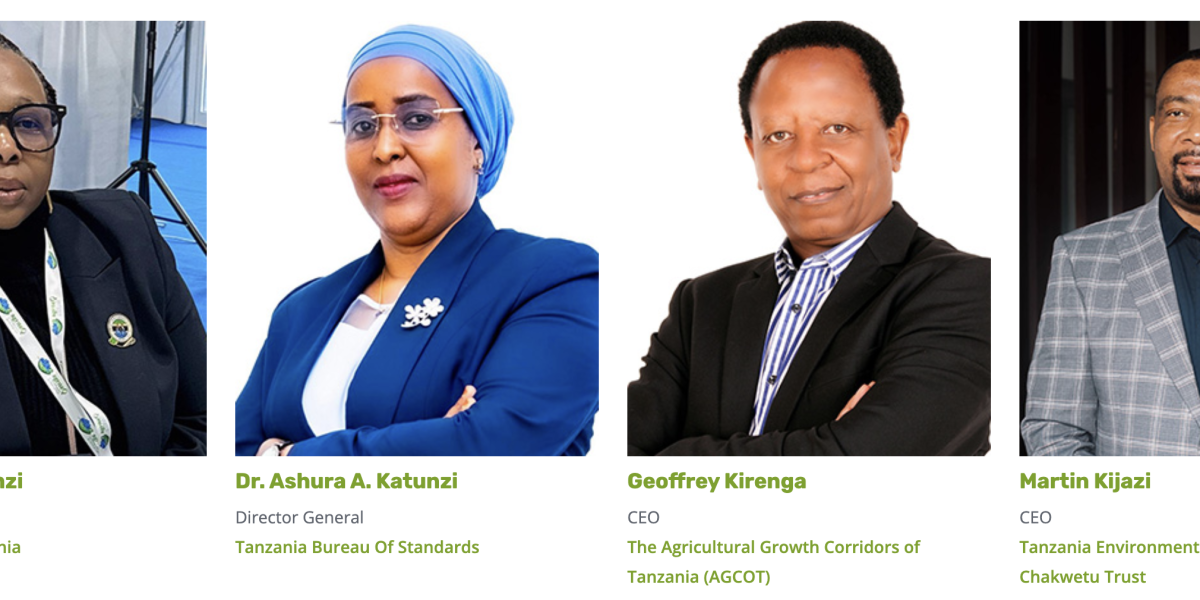
Day Two turns to resilience and the road ahead: international and local perspectives on Tanzania’s agricultural potential, veterinary and dairy systems, sustainable value chains, food security, and — fittingly — the role of youth and women in driving the sector’s next phase. The Agricultural Growth Corridors of Tanzania (AGCOT) features prominently across this agenda, with CEO Geoffrey Kirenga speaking in Session 6 and moderating the food-security panel in Session 9, placing the organisation squarely among the institutions shaping the conversation.
The confirmed speaker roster underlines just how wide that conversation runs. Alongside Kirenga and the Guests of Honour, the platform brings together regulators such as Dr. Ashura A. Katunzi of the Tanzania Bureau of Standards and Bahati Yakobo Midenge of the Tanzania Medicines and Medical Devices Authority; trade and investment voices including Oscar Kissanga of the Tanzania National Chamber of Commerce and Jonathan Nkwabi, Director of Trade and Promotion at TanTrade; research leadership from Dr. Sophia Kashenge-Killenga of TARI and Innocensia John of the University of Dar es Salaam; value-chain heads such as Beatrice J. Banzi of the Tea Board of Tanzania and Geofrey Edward Rwiza of the Rice Council of Tanzania; and livestock and veterinary specialists from the International Livestock Research Institute, TVLA and TASAVO. International input comes from T.Stanes and Company, AFAP, Millat Tractors and PJ Margo, while Women in Social Entrepreneurship and the Tanzania Youth Alliance for Food Systems ensure the next generation has a seat at the table too.
The Opportunity in the Room
What makes this Expo worth Tanzania’s full attention is not any single session or statistic, but the concentration of decision-makers it assembles in one place: government ministers, regulators, financiers, equipment manufacturers, research institutions and farmer organisations, all working from the same premise — that Africa’s agri-food and livestock sectors are entering a period of structural growth, and that the institutions who show up now will shape how that growth is captured.
For Tanzania, a country already positioned with one of the continent’s largest livestock herds and a government actively investing in the enabling infrastructure, the 9th Africa Agri Expo and 3rd FLIP is less an event to attend than a market to claim.