

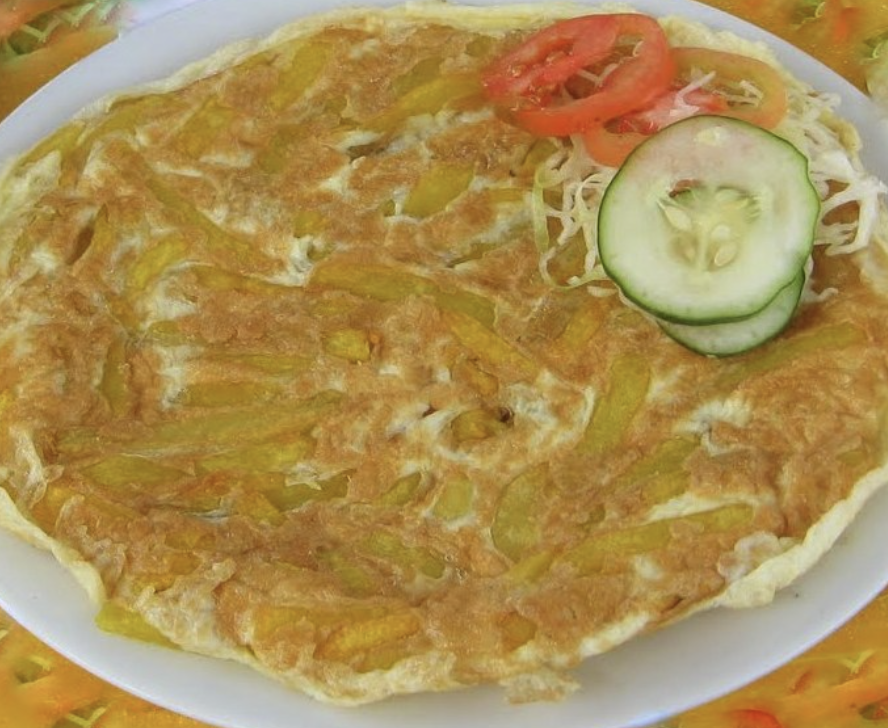
“Chipsi mayai, chips mishkaki, chips kuku, chips mwitu, bajias, viazi karai, mukimo, atakilt wat — one tuber, a continent of flavours.”
A Comprehensive Socio-Economic and Culinary Analysis of the Irish Potato in African Societies
By Anthony Muchoki
The historical trajectory of the potato, scientifically classified as Solanum tuberosum, represents one of the most profound botanical migrations in human history. From its origins in the high-altitude plateaus of the Andean Mountains to its current status as a primary catalyst for food security and urban entrepreneurship across the African continent, the potato has transcended its status as a mere starch. In the contemporary African context, the “rise and rise” of the potato is not merely an agricultural phenomenon but a socio-cultural revolution that has reshaped urban street food, influenced tribal culinary identities, and provided a resilient caloric buffer against the unpredictability of climate change and economic volatility. This report provides an exhaustive analysis of this transformation, tracing the crop from its colonial introduction to its central role in the vibrant street food cultures of cities like Dar es Salaam and Nairobi, and its deep integration into the traditional diets of diverse ethnic communities.
The Andean Genesis and the European Catalyst
The biological foundation of the “Irish” white potato is rooted in the Titicaca Plateau, an expansive high-altitude region spanning parts of modern-day Peru and Bolivia.1 Archaeological records indicate that communities migrated to the South American continent approximately 7,000 years before the appearance of wild potato plants, which first sprouted around Lake Titicaca at altitudes exceeding 3,800 metres.2 Between 3,000 and 7,000 years ago, these early civilisations domesticated the tuber, utilising its ability to flourish in thin, oxygen-poor air and acidic soils where other crops, such as maize, struggled to achieve maturity.2 For the Inca civilisation, the potato was the “people’s food,” deeply embedded in Andean culture and serving as the primary fuel for the massive armies that sustained the empire.2 They pioneered preservation techniques like the creation of chuño — a freeze-dried potato product resembling gnocchi — which provided a long-term food security insurance policy.2
The transition of the potato from an Andean staple to a global commodity was initiated by the Spanish conquistadors in the 1530s.2 While the Spanish were initially indifferent to the “vegetative gold” they discovered, being preoccupied with the search for physical gold and silver, they soon recognised the tuber’s practicality as a standard supply item for their ships.1 Observations of Andean locals revealed a population that appeared strong and healthy despite a diet centred on the patata.4 Furthermore, Spanish sailors noticed that consuming potatoes prevented the onset of scurvy, a discovery that would later be understood through the lens of the crop’s high vitamin C content.1
By the late 16th century, the potato had reached European soil, but its acceptance was hindered by profound cultural and botanical suspicions. As a member of the Solanaceae, or nightshade, family, the potato was viewed through a lens of fear, associated with black magic, poisoning, and leprosy.1 Its method of propagation — planting pieces of the tuber rather than seeds — clashed with established European agricultural norms, leading many to relegate the crop to animal fodder.1 However, the economic and climatic realities of 17th-century Europe necessitated a shift. The potato proved to be a more reliable crop than wheat, which frequently suffered in damp climates that prevented proper ripening.1 In Germany, Frederick the Great ordered his subjects to plant and eat potatoes as a deterrent to recurrent famines, while in Ireland, the potato found an ideal environment in the cool, moist, and misty climate of the western counties.1
| Historical Milestone | Timeline | Key Significance |
| Initial Domestication | 6000 BC – 4000 BC | Cultivation begins around Lake Titicaca, Peru/Bolivia.2 |
| Spanish Encounter | 1530s AD | Conquistadors observe potato use by Inca populations.3 |
| European Introduction | Late 1500s AD | Potatoes reach Spain and England as curious novelties.2 |
| Acceptance in Ireland | 1600s – 1700s | Potato becomes the primary staple for the Irish peasantry.5 |
| The Great Famine | 1845 – 1852 | Phytophthora infestans blight decimates the Irish crop.5 |
The special relationship between Ireland and the potato was defined by both unprecedented growth and catastrophic tragedy. By the 1800s, the Irish peasantry consumed a daily average of ten potatoes per person, supplying 80 per cent of their caloric intake.1 This dependency facilitated a population explosion, with the island’s population doubling to 8.15 million by 1841.2 The subsequent arrival of Phytophthora infestans, or late blight, in 1845 led to the Great Famine, a cataclysm that resulted in over a million deaths and a massive exodus of the Irish people to North America and Australia.1 It was this deep historical association that eventually gave rise to the term “Irish potato” as the crop was disseminated globally through British and European colonial networks into Africa.6
Colonial Dissemination and the African Highland Adaptation
The introduction of Solanum tuberosum to Africa was not a singular event but a multi-vectored infusion driven by colonial administrators, missionaries, and explorers during the late 19th and early 20th centuries.6 While indigenous root crops such as the yam had been cultivated for millennia, the Irish potato was introduced primarily as a food source for European settlers, soldiers, and colonial outposts.6
In East Africa, British farmers and colonial officials introduced the potato to Kenya and Uganda during the 1880s.6 By 1909, European farmers in the Kenyan highlands were already exporting potatoes to South Africa.9 The crop’s growth was significantly accelerated by the logistical demands of the World Wars. During the First World War, the British colonial government encouraged potato cultivation to feed troops stationed in East Africa, an initiative that sponsored the first formal imports of potato seeds for variety trials and research purposes.9 Following 1918, African farmers began to adopt the crop for home consumption and local trade, finding that it thrived on land recently cleared of forest in the cool, moist highland regions.9
In Central Africa, the experience of the Nso people in the Northwest Region of Cameroon provides a compelling case study of “African initiative” in adopting the potato.7 Missionaries and explorers introduced the Irish potato to Nso before 1914, and by the 1930s, the crop had begun to gain significant traction.7 Initially considered a subsistence crop dominated by female labour, the potato eventually transitioned into a major revenue-generating cash crop.7 This shift demonstrated the willingness of local farmers to move away from traditional colonial cash crops in favour of versatile food crops that offered both sustenance and income.7
| Country | Approximate Introduction | Primary Actors | Initial Primary Use |
| Kenya | 1880s | British farmers and colonial officials | Export and military supply.9 |
| Cameroon (Nso) | Pre-1914 | Missionaries and explorers | Subsistence and female-led farming.7 |
| Ethiopia | Late 19th century | European explorers and agricultural stations | Highland staple adaptation.6 |
| South Africa | 17th–18th century | Dutch and British settlers | Settlement food supply.6 |
The biological success of the potato in Africa is largely due to its adaptability to highland ecology. Regions such as the Ethiopian Highlands, the Kenyan Rift Valley, and the volcanic highlands of Rwanda and Cameroon provided the cool temperatures and moist soil necessary for the tuber to reach its potential.6 Unlike many cereal crops, the potato offers a high yield per unit of land and a short crop cycle, often maturing in less than three months.10 This speed of production has made it a crucial component of modern Crop Intensification Programmes in countries like Rwanda, where it is prioritised for its ability to improve the welfare of smallholder farmers and enhance national food security.10
The Urban Gastronomy of the African City: The Street Food Revolution
The most visible manifestation of the “rise and rise” of the potato in Africa is its absolute dominance in the urban street food ecosystem. As African cities underwent rapid expansion in the late 20th century, a new demographic of workers, students, and commuters created a massive demand for affordable, high-calorie, and portable meals.13 This socio-economic shift birthed a unique culinary innovation centred on the potato, characterised by the fusion of global “chips” culture with local ingredients and flavours.
Chipsi Mayai: The Tanzanian National Omelette
In the streets of Dar es Salaam, Arusha, and Mwanza, the dish known as chipsi mayai (Swahili for “chips and eggs”) has emerged as a cultural icon.13 Invented in the 1980s in the informal food stands of Dar es Salaam, chipsi mayai — often referred to by the slang term zege — is the unofficial national dish of Tanzania.13 The dish represents a perfect marriage of simplicity and innovation: French fries (chipsi) are fried in a large black wok of bubbling oil, after which beaten eggs are poured over them to create a golden, crispy-edged omelette that binds the fries together into a hearty, disc-shaped meal.13
The cultural footprint of chipsi mayai is vast. It is available in every corner of Tanzania, from the most remote villages to the bustling campus of the University of Dar es Salaam.14 The dish is typically made to order at mama lishe eateries or roadside kiosks where vendors cook over open charcoal stoves.13 It is almost universally served with kachumbari — a fresh salsa of tomatoes, onions, and lime juice — which provides a sharp, acidic contrast to the richness of the fried potatoes and eggs.14 For many Tanzanians, chipsi mayai is more than a meal; it is a symbol of resourcefulness and the warmth of everyday street life.13
Chips Mishkaki and Chips Kuku: The Pairing of Protein and Tuber
The potato’s urban conquest is further defined by its role as the essential accompaniment to grilled meats. Mishkaki, the Swahili term for marinated meat skewers, is a cornerstone of the East African street food experience.18 While the meat — beef, lamb, or chicken — is the star, it is rarely consumed without a side of chips.18 The term “chips mishkaki” refers to a plate of these sizzling, charcoal-grilled skewers served alongside a generous portion of fries.19 The marinade for mishkaki is a complex blend of ginger, garlic, lemon juice, cumin, coriander, and chilli, reflecting the deep historical influence of Arabic and Indian trade on the Swahili coast.18
Similarly, “chips kuku” (chips and chicken) has become a staple fast-food option across the region.17 In cities like Nairobi and Dar es Salaam, kuku choma (grilled chicken) or fried chicken is paired with chips to create a satisfying, protein-heavy meal.17 A modern variation, kuku na chipsi masala, has gained popularity in Tanzanian homes and restaurants, where the chicken and fries are tossed together in a flavourful masala sauce made with curry powder, paprika, and ginger.22 This adaptation highlights the evolution of potato dishes from simple street snacks to sophisticated, multi-layered culinary experiences that reflect the cosmopolitan nature of African urban centres.22
Kenyan Variations: Chips Mwitu, Bajias, and Viazi Karai
In Kenya, the potato has been adapted into several distinct street food forms that reflect both budget constraints and cultural heritage. “Chips mwitu,” or “wild fries,” are budget-friendly French fries prepared in roadside kiosks, often served with vinegar, chilli, and tomato sauce.23 These are the staple of the urban commuter, providing a quick and inexpensive caloric boost.23
More complex are viazi karai and Kenyan bajias, which demonstrate the enduring influence of the Indian community that arrived in East Africa to work on the railway.24 Viazi karai consists of boiled potatoes coated in a spiced batter — often featuring gram flour and turmeric — and deep-fried until they achieve a bright yellow, crispy exterior.24 Kenyan bajias follow a similar principle but involve thinly sliced potatoes seasoned with turmeric, cumin, ginger, and coriander before being battered and fried.24 These dishes are particularly prominent in coastal cities like Mombasa, where they are served hot with various chutneys and hot sauces, marking a culinary intersection of African, Indian, and European influences.24
| Dish Name | Location | Description | Key Cultural Influence |
| Chipsi Mayai | Tanzania | French fry and egg omelette (zege) | Urban street food innovation.13 |
| Viazi Karai | Kenya (coast) | Boiled, battered, and deep-fried potatoes | Indian Ocean trade networks.24 |
| Kenyan Bajias | Kenya | Sliced, seasoned, and battered fried potatoes | Indian railway workers’ legacy.24 |
| Chips Mwitu | Kenya | Roadside kiosk budget fries | Low-income urban survival.23 |
| Chips Mishkaki | East Africa | Fries served with marinated meat skewers | Swahili/Arabic culinary fusion.18 |
Regional and Tribal Culinary Cartography: The Cultural Integration of the Potato
Beyond the urban street food scene, the Irish potato has been woven into the traditional culinary fabrics of diverse African tribes and ethnic groups, often replacing or supplementing older root staples like yams, cassava, and plantains.
The Kikuyu of Kenya: Irio and the Agrarian Identity
For the Kikuyu people of central Kenya, the potato is the essential component of irio, a dish so fundamental that its name simply means “food.”26 Irio (also known as mukimo) is a nutritious mash that traditionally combines potatoes with green peas and maize.26 The potatoes act as the binding agent, mashed with the peas to create a smooth, pale green purée, while the maize kernels provide a sweet, textured contrast.28
The cultural significance of irio is rooted in the Kikuyu’s history as a farming community.27 Traditionally, the harvest was celebrated by combining available vegetables and beans into this simple but nutritious dish.27 On special occasions, the recipe is elevated with the addition of pumpkin leaves, spinach, or boiled green bananas, transforming it into a meal fit for a king.27 Irio is traditionally eaten with the right hand and used to scoop up stews or nyama choma, serving as a comforting side dish that has sustained generations of Kenyan families.28
Ethiopia: Atakilt Wat and the Religious Fasting Cycle
In Ethiopia, the potato’s role is intrinsically linked to the Orthodox Tewahedo Church’s liturgical calendar, which dictates frequent periods of “fasting” where animal products are prohibited.30 During these periods, atakilt wat — a vegetable stew made of cabbage, potatoes, and carrots — becomes a primary dietary staple.32
Unlike the more famous, spicy doro wat (chicken stew), atakilt wat is typically prepared as an alicha wat, a milder dish seasoned with turmeric, ginger, garlic, and onions.30 The potatoes are slow-cooked until tender and have absorbed the subtle aromatics of the spices and the niter kibbeh (spiced clarified butter), or vegetable oil in vegan versions.31 This dish is always served on injera, the large, spongy sourdough flatbread made from teff flour, which is used to scoop up the stew in a communal dining experience that exemplifies Ethiopian hospitality and social cohesion.33
Cameroon: Hot Pot Potatoes and the Nso Tuh Kun
The culinary landscape of Cameroon features the “potato hot pot” (also known as African stewed potatoes), a steaming one-pot dish where potatoes are simmered in a tomato-based sauce with fresh herbs, carrots, green beans, and bell peppers.35 This is a traditional Sunday lunch meal, designed to feed a large crowd and foster a relaxed atmosphere of family bonding.35
Among the Nso people of the Bui Division, the potato has a specialised place in the dish tuh kun, which consists of boiled potatoes either pounded or cooked alongside beans.7 The Nso have integrated the potato so deeply into their economy that it has become a “booster” to their rural livelihoods, with approximately 70 per cent of the population in the Bui Division depending on agriculture — particularly Irish potato cultivation — for their primary income.7 The revenue from these potatoes has historically been used to sponsor children through university and pay for healthcare, demonstrating the tuber’s role as a vehicle for social advancement.7
Nigeria: The Yam-Potato Synergy
In West Africa, specifically Nigeria, the Irish potato exists in a dynamic relationship with the yam, the region’s traditional “king of crops.”37 While the yam remains the primary starch for ceremonial use, the Irish potato has carved out a niche in “potato pottage” or “porridge,” where it is cooked in a rich sauce of palm oil, tomatoes, onions, and fish.37
In the southern regions, “potato fufu” has emerged as a faster, more convenient alternative to the laborious process of pounding yams.37 The potatoes are boiled and then mashed into a completely smooth, dough-like consistency, serving as a “swallow” to be eaten with traditional soups like egusi or afang.38 Among the Hausa in the north, potatoes are increasingly integrated into traditional snacks like dan wake (bean flour dumplings) or served with yaji (a spicy peanut-based suya pepper), illustrating the crop’s ability to permeate even the most established cereal-based culinary traditions.41
| Traditional Dish | Primary Ethnic/Regional Group | Key Characteristics |
| Irio / Mukimo | Kikuyu (Kenya) | Mashed potatoes with peas and maize.26 |
| Atakilt Wat | Amhara/Tigray (Ethiopia) | Cabbage and potato stew (alicha style).32 |
| Tuh Kun | Nso (Cameroon) | Boiled/pounded potatoes with beans.7 |
| Potato Pottage | Southern Nigeria | One-pot stew with palm oil and fish.38 |
| Potato Fufu | Nigeria/West Africa | Smoothly mashed potato “swallow.”39 |
The Agronomy of Choice: Seed Systems and the Shangi Monopoly
The meteoric rise of the potato in Africa is as much a result of agricultural pragmatism as it is of culinary preference. In Kenya, a single variety known as “Shangi” has achieved near-mythical dominance, accounting for approximately 80 per cent of the production area.43 The name “Shangi” is derived from shangilia, a Swahili word for celebration, yet its grip on the Kenyan farmer is often described in terms usually reserved for addictive substances.44
The “Shangi phenomenon” is driven by its exceptional adaptability and speed.45 Unlike many modern varieties, Shangi matures in as little as 75 to 90 days, allowing farmers to harvest up to three times a year.44 More importantly, it has a very short dormancy period; within three to four weeks of harvest, the tuber begins to sprout again, allowing farmers to replant immediately without the need for expensive, certified seed.43 This “self-sustaining” cycle is crucial in a region where formal seed systems are often inadequate and farmers must recycle their own crops.44
However, the dominance of Shangi presents a paradox. It is neither the highest-yielding nor the most disease-resistant variety, and it is highly susceptible to late blight.44 For industrial processors, Shangi is often considered “useless” because its deep “eyes” result in significant waste during mechanical peeling, and its inconsistent chemistry can cause fries to brown unpredictably.44 Consequently, a “dual reality” has emerged in the Kenyan market: the informal sector (street vendors and open-air markets) is locked into Shangi, while the formal sector (hotels, restaurants, and industrial processors) seeks out varieties like “Markies” or “Wanjiku” for their superior processing qualities and high dry matter content.45
In Rwanda, the potato landscape is defined by varieties like “Kinigi,” which is highly sought after for its sweet flavour and suitability for the fertile volcanic soils of the highlands.11 The Rwandan government’s focus on the potato as a “priority crop” for national food security has made it the country’s most important crop after plantains, with per capita consumption reaching an impressive 76 kg annually.10
| Variety Name | Origin/Context | Key Traits | Market Segment |
| Shangi | Kenya (farmer selection) | 75–90-day maturity; very short dormancy | Informal markets, street food.46 |
| Markies | Netherlands/International | High dry matter; crisp texture | Industrial processing (French fries).46 |
| Wanjiku | Kenya (KALRO) | High yield; disease resistance | Formal retail and table use.46 |
| Kinigi | Rwanda (traditional) | Sweet variety; high-altitude resilient | Domestic and regional household use.11 |
| Mondial | South Africa (waxy) | High moisture; firm shape retention | Boiling, slapchips, salads.48 |
The physiological classification of potatoes further dictates their culinary application. In South Africa, Potatoes SA classifies tubers into three categories: Waxy, Waxy-Floury, and Floury.48 Waxy potatoes like “Mondial” have high moisture and low starch content, meaning they stay firm during boiling and are ideal for salads or slapchips (the softer, vinegar-soaked fries popular in South Africa).48 Floury varieties like “Darius” have high starch content and are preferred for mashing or making crispy chips.48 Waxy-floury varieties like “BP1” or “Valor” are versatile, all-purpose potatoes that retain their shape well and are suitable for most African home-cooking applications.48
The Native Potato: Africa’s Hidden Genetic Heritage
While the “Irish” potato (S. tuberosum) is a colonial import, Africa possesses an ancient heritage of indigenous “native potatoes” that are often overlooked in global agricultural discourse. These include the Hausa potato (Solenostemon rotundifolius) and the Livingstone potato (Plectranthus esculentus).8 Unlike the Irish potato, which is a nightshade, these native tubers are members of the Lamiaceae, or mint, family.8
The cultural usage of native potatoes is characterised by its resilience and gendered labour. They are overwhelmingly a “women’s crop,” with women responsible for producing, collecting, and processing the tubers on smallholder farms.8 These tubers serve as a vital food-security insurance policy because they can be dried and stored for use during times of shortage, and some varieties can even be eaten raw.8
Nutritionally, native African potatoes are arguably superior to the commercial Irish potato. They contain between 5 per cent and 13 per cent protein on a dry weight basis, which is significantly higher than the 5 per cent found in commercial varieties.8 Furthermore, they are rich in essential amino acids (such as lysine and leucine), iron, and calcium, providing a large percentage of the daily nutritional requirements for rural populations.8
| Nutritional Component | Irish Potato (S. tuberosum) | Native African Potato (P. esculentus) |
| Protein (dry weight) | Approx. 5% | 5%–13%8 |
| Starch content | High | Moderate to high |
| Key minerals | Potassium, Vitamin C | Iron, Calcium, Vitamin A8 |
| Flavour profile | Neutral/bland | Bland to sweet/minty8 |
| Taxonomy | Solanaceae (nightshade) | Lamiaceae (mint family)8 |
Despite these benefits, native potatoes remain “hidden in plain sight.” Most urban Africans have never heard of them, and they have received little support from research or extension organisations.8 Their flavour profiles are unique; while the Livingstone potato has a pleasant minty taste, the Hausa potato is notably sweeter, with some likening it to a sweet potato or parsnip.8 In Burkina Faso, the Hausa potato (known as fabourama) is milled into flour and used to make popular breakfast gruels, highlighting its potential for broader industrial application.8
Socio-Economic Dynamics: Urbanisation, Poverty, and the Middleman
The “rise and rise” of the potato in Africa is intrinsically linked to the continent’s socio-economic evolution. In developing nations where resource deprivation is a persistent challenge, the potato has been designated as a “crop for food security” by the Food and Agriculture Organisation (FAO).12 Its ability to combat hunger and malnutrition while providing employment and income is a recurring theme in modern agricultural policy.12
The drivers of potato consumption are multifaceted. Urbanisation is the primary catalyst; as the rate of urban growth increases, so does the demand for convenience foods like fries and chips.51 This is accompanied by lifestyle changes and the expansion of the tourism and fast-food industries, which rely on a steady supply of potatoes for their menus.10 In South Africa, per capita consumption increased from 31 kg in 2007 to 37 kg in 2023, with 40 to 50 per cent of potatoes purchased through urban and peri-urban fresh produce markets.51
However, the potato value chain is often dominated by “reckless middlemen” — brokers who control the flow of tubers from rural farms to urban markets.44 In Kenya, these middlemen exert a monopolistic influence, often refusing to buy any variety other than Shangi because of its established market demand.44 This creates a stranglehold on farmers who may wish to plant higher-yielding or more disease-resistant varieties like “Wanjiku” but are deterred by the lack of a guaranteed buyer.44 Breaking this cycle requires investment in rural infrastructure, cold storage, and formal contracts between farmers and processors.46
Tanzania offers a compelling model of what a coordinated institutional response can achieve. The country’s Southern Highlands — spanning the Njombe, Mbeya, Iringa, and Songwe regions — hold some of the most fertile potato-growing land on the continent, yet for years yields languished at 3 to 7 tonnes per hectare, held back by recycled seed stock, post-harvest losses of 20 to 30 per cent, and the infamous lumbesa: an oversized, non-standard bag that middlemen used to systematically underpay farmers at the point of sale. The SAGCOT Centre (now AGCOT) convened public and private stakeholders into the Potato Strategic Partnership, a coordinated push that brought Dutch expertise and capital into the sector. A 2016 MoU between the Tanzanian and Dutch governments saw five Dutch companies register 30 new high-yielding varieties, while a Potato Centre of Excellence — established on 30 hectares — achieved a record yield of 59 metric tonnes per hectare. Seed multiplication was taken up by private companies including Tanzanice, HZPC, Silverlands, and Mtanga Foods, working alongside government bodies TARI and TOSCI; and thousands of smallholders were trained in the construction of low-cost Diffused Light Stores to reduce seed losses between seasons.
The transformation was institutionalised on two complementary tracks. At the policy level, stakeholders established the Potato Council of Tanzania (PCT), officially registered under BRELA and backed by the Embassy of the Netherlands, to coordinate the domestic industry, suppress the lumbesa, and align the country with the East African Community Seed Potato Trade Strategy for cross-border market access. At the grassroots level, AGCOT deployed the peer-to-peer “Mkulima kwa Mkulima” (Farmer-to-Farmer) model: through the “Tajirika na Lusitu” campaign, lead farmers from the Lusitu Agribusiness Group in Njombe fanned out across Mbeya, Dodoma, Rukwa, Kigoma, and Ruvuma, teaching neighbours to treat potato farming as a commercial enterprise. The results, best illustrated by the Isowelo AMCOS cooperative in the Ihemi Cluster, were transformative — average yields rose from 3 to 4 tonnes per acre to 8 to 15 tonnes per acre, and in a single season the cooperative shipped 2,500 metric tonnes of export-grade potatoes to Kenya, the Comoros, and Zanzibar. The revenue that followed allowed member farmers to replace mud-walled homes with brick, educate their children, and expand their landholdings — a vivid illustration of the potato’s capacity to function not merely as a food crop but as a vehicle for structural economic uplift.
Evolutionary Perspectives: The Tuber and Human Development
A significant second-order insight derived from anthropological research suggests that the consumption of cooked tubers — such as the ancestors of the potato — may have played a critical role in human evolution nearly two million years ago.8 According to the “cooking hypothesis” proposed by anthropologists like Richard Wrangham, the transition to consuming cooked starch allowed early humans to absorb calories more easily, which in turn prompted the evolution of larger brains, smaller teeth, and modern limb proportions.8
Because tubers needed to be kept in a specific location for protection and preparation, they are credited with initiating “home life” and male-female bonding in sedentary settings.8 While it is difficult to determine the exact species involved, researchers suggest that native African potatoes — members of the mint family — along with yams and tiger nuts, are leading candidates for the tubers that pivoted the trajectory of humankind.8 This evolutionary perspective underscores the potato’s role not just as a contemporary crop, but as a biological foundation of the human experience.
Future Trajectories and the “Potato Republic”
The future of the potato in Africa lies in building a “potato republic” — a diversified agricultural system where each variety has a specific place.46 This vision involves the development of “Shangi 2.0,” a biotech-enhanced version of the popular variety engineered with resistance to late blight.46 Such an innovation could deliver hundreds of millions of shillings in annual benefits by raising yields and cutting fungicide costs, all while maintaining the short dormancy and speed that farmers depend on.46
Simultaneously, the scaling of formal processing capacity is essential to unlock the value of varieties like “Markies,” which can fetch significantly higher prices than open-market table potatoes.46 In Kenya, farmers under contract for processing-grade potatoes have seen their incomes jump from KES 4,800 per acre to over KES 440,000 per acre.46 This economic transformation, coupled with climate-smart farming practices and improved seed systems, suggests that the potato will continue to be the cornerstone of African agriculture for decades to come.
Conclusion: The Tuber as a Catalyst for African Modernity
The analysis of the Irish potato in Africa reveals a crop that is much more than a botanical introduction; it is a catalyst for social, economic, and culinary modernity. From its roots in the Andes to its status as the unofficial national dish of Tanzania in the form of chipsi mayai, the potato has demonstrated an unparalleled ability to integrate into diverse cultural settings. It has provided a nutritious alternative for the Kikuyu, a fasting staple for the Ethiopian Church, and a revenue booster for the Nso of Cameroon.
The “rise and rise” of the potato is a testament to African innovation — the “African initiative” of farmers to adapt and optimise a foreign crop for local survival. While challenges such as the Shangi monopoly and the marginalisation of native tubers persist, the potato’s role in ensuring food security and driving urban economies is indisputable. As Africa continues to urbanise and its population grows, the humble tuber will remain at the heart of the plate and the market — a resilient symbol of transformation and a vital fuel for the continent’s future.
- Potato History: Washington State Potato Kid’s, accessed April 4, 2026, https://www.potatoes.com/potatokids/potato-history
- History — Irish Potato Federation, accessed April 4, 2026, https://irishpotatofederation.ie/history/
- The Introduction of the Potato into Ireland, accessed April 4, 2026, https://historyireland.com/the-introduction-of-the-potato-into-ireland/
- The Irish Potato — An Essential Part of Who We Are — A Letter From Ireland, accessed April 4, 2026, https://www.aletterfromireland.com/irish-potato/
- History of The Irish Potato — World Potato Congress 2022, accessed April 4, 2026, https://wpc2022ireland.com/history-of-the-potato/
- History of Potato in Kenya, accessed April 4, 2026, https://wpc2026kenya.com/history/
- IRISH POTATO FARMING IN NSO 1936–2014: A … — DICAMES, accessed April 4, 2026, https://dicames.online/jspui/bitstream/20.500.12177/4361/1/ENS_20_0273.pdf
- Chapter 15: Native Potatoes — Read “Lost Crops of Africa: Volume II …, accessed April 4, 2026, https://www.nationalacademies.org/read/11763/chapter/17
- History and Overview — World Potato Atlas, accessed April 4, 2026, https://beagle-flute-7j84.squarespace.com/s/Kenya_Potato_230201.pdf
- Socio-economic and Institutional Factors Influencing the Potato …, accessed April 4, 2026, https://popups.uliege.be/2295-8010/index.php?id=604
- Rwanda’s Irish Potato Sector: A Path to Sustainable Growth — The African Dreams, accessed April 4, 2026, https://theafricandreams.com/rwandas-irish-potato-sector/
- Full article: Effects of potato farming on small farmers’ food security in volcanic highlands of Rwanda — Taylor & Francis, accessed April 4, 2026, https://www.tandfonline.com/doi/full/10.1080/23311886.2025.2467226
- Chips Mayai — Beryl Shereshewsky, accessed April 4, 2026, https://www.beryl.nyc/index.php/2025/12/25/chips-mayai/
- Chipsi mayai — Wikipedia, accessed April 4, 2026, https://en.wikipedia.org/wiki/Chipsi_mayai
- Chipsi Mayai — Eggs.ca, accessed April 4, 2026, https://eggs.ca/recipes/chipsi-mayai/
- Chipsi Mayai | Traditional Egg Dish From Tanzania — TasteAtlas, accessed April 4, 2026, https://www.tasteatlas.com/chipsi-mayai
- The Best Kuku Choma & Chipsi Mayai at University of Dar es Salaam | Must-Try Spot for Food Lovers — YouTube, accessed April 4, 2026, https://www.youtube.com/watch?v=bUupnis5MnQ
- Lamb Mishkaki — The Flavorful Charcoal-Grilled Delight of East Africa | Oba Farms, accessed April 4, 2026, https://www.obafarms.net/s/stories/lamb-mishkaki-the-flavorful-charcoal-grilled-delight-of-east-africa
- Monster Mishkaki Kebabs at Ali’s Restaurant, Dar Es Salaam — Migrationology, accessed April 4, 2026, https://migrationology.com/mishkaki-tanzania-alis-restaurant/
- Chips Mishkaki #chakula #mapishi #jinsiyakupika #streetfood #tanzania — YouTube, accessed April 4, 2026, https://www.youtube.com/watch?v=0KGIaQvNt2c
- CHICKEN MISHKAKI RECIPE // Delicious Grilled Chicken Skewers at Home // Mishkaki Ya Kuku — Don Imran Family Kitchen, accessed April 4, 2026, https://donimranfamilykitchen.wordpress.com/2020/10/24/chicken-mishkaki-recipe-delicious-grilled-chicken-skewers-at-home-mishkaki-ya-kuku/
- Kuku na Chipsi Masala: A Classic Tanzanian Dish with a Modern Twist — Kilimo Kwanza, accessed April 4, 2026, https://kilimokwanza.org/kuku-na-chipsi-masala-a-classic-tanzanian-dish-with-a-modern-twist/
- 10 Best Kenyan Street Foods You Must Try Before You Leave | InstaPilau, accessed April 4, 2026, https://instapilau.com/blog/10-best-kenyan-street-foods-you-must-try-before-you-leave/
- 4 Best Potato Dishes in Africa — TasteAtlas, accessed April 4, 2026, https://www.tasteatlas.com/best-rated-potato-dishes-in-africa
- Mishkaki Recipe | East African Beef Skewers | Mombasa Street Food Nyama Choma recipe — YouTube, accessed April 4, 2026, https://www.youtube.com/watch?v=GLrVo5jqumE
- IRIO (AFRICAN MASHED POTATOES) — Chef Lola’s Kitchen, accessed April 4, 2026, https://cheflolaskitchen.com/african-irio-mashed-potatoes-corn-and-peas/
- Irio, Kenyan Style — Mayuri’s Jikoni, accessed April 4, 2026, https://mayuris-jikoni.com/2023/02/26/irio-kenyan-style/
- Kenyan Irio (Mashed Potatoes, Peas and Corn) — International Cuisine, accessed April 4, 2026, https://www.internationalcuisine.com/kenyan-irio/
- Oldways Kenyan Vegetable Mashed Potatoes — OLDWAYS — Cultural Food Traditions, accessed April 4, 2026, https://oldwayspt.org/recipe/oldways-kenyan-vegetable-mashed-potatoes/
- Ethiopian cuisine — Wikipedia, accessed April 4, 2026, https://en.wikipedia.org/wiki/Ethiopian_cuisine
- Atakilt Wat — Ethiopian Cabbage Potato Carrots. Vegan Gluten-free Recipe, accessed April 4, 2026, https://www.veganricha.com/atakilt-wat-ethiopian-cabbage-potato/
- Ethiopian Berbere | Old Norse World Cuisine, accessed April 4, 2026, https://www.oldnorsechef.com/ethiopian-berbere
- Atakilt Wat | Traditional Stew From Ethiopia — TasteAtlas, accessed April 4, 2026, https://www.tasteatlas.com/atakilt-wat
- Atakilt Wat Recipe (Ethiopian Cabbage Potato Carrots), accessed April 4, 2026, https://www.yummytummyaarthi.com/ethiopian-cabbage-potato-carrots-atakilt-wat/
- Cameroon Hot Pot Potatoes — AFROVITALITYEATS, accessed April 4, 2026, https://afrovitalityeats.com/cameroon-hot-pot-potatoes/
- 21 Traditional Cameroonian Foods to Feed your Soul — Immaculate Bites, accessed April 4, 2026, https://www.africanbites.com/cameroon-food/
- Nigerian Potato Recipes Archive, accessed April 4, 2026, https://www.allnigerianrecipes.com/potato/
- Nigerian cuisine — Wikipedia, accessed April 4, 2026, https://en.wikipedia.org/wiki/Nigerian_cuisine
- “Potato Mash” is to the Western World as “Foufou” is to West Africans | Kwanzaa Culinarians, accessed April 4, 2026, https://kwanzaaculinarians.com/2012/12/10/potato-foufou-west-africa/
- Nigerian Dishes: 21 Traditional Foods to Transport You to Africa — Remitly, accessed April 4, 2026, https://www.remitly.com/blog/lifestyle-culture/nigerian-dishes/
- Hausa Foods | How To Make Nigerian Foods, accessed April 4, 2026, https://allnigerianfoods.com/hausa-foods/
- What is Yoruba, Igbo & Hausa Food? Nigerian Cuisine | iLeOja, accessed April 4, 2026, https://ileoja.ca/what-is-yoruba-igbo-and-hausa-food-a-comparison/
- Gender analysis is not only about gender: reshaping the potato breeding priorities to increase varietal adoption in Kenya — PMC, accessed April 4, 2026, https://pmc.ncbi.nlm.nih.gov/articles/PMC11659081/
- WHY IS SHANGI POTATO VARIETY POPULAR IN KENYA? — NPCK, accessed April 4, 2026, https://npck.org/why-is-shangi-potato-variety-popular-in-kenya/
- The rise of new potato varieties and the unstoppable Shangi: Kenya’s addictive potato, accessed April 4, 2026, https://potatoes.news/the-rise-of-new-potato-varieties-and-the-unstoppable-shangi-kenyas-addictive-potato/
- The Tale of Two Tubers: How Markies and Shangi Are Reshaping Kenya’s Potato Future, accessed April 4, 2026, https://kilimokwanza.org/the-tale-of-two-tubers-how-markies-and-shangi-are-reshaping-kenyas-potato-future/
- African-style potatoes — Agrovent, accessed April 4, 2026, https://agrovent.com/blog/african-style-potatoes/
- Understanding potatoes and potato processing, accessed April 4, 2026, https://www.potatoes.co.za/understanding-potatoes-and-potato-processing/
- Types of Potato Cultivars in South Africa — Potato Varieties — RegenZ, accessed April 4, 2026, https://www.regenz.co.za/blog/types-of-potatoes-in-south-africa
- Potato varieties South Africa, accessed April 4, 2026, https://www.africanpotatoesexporters.com/post/potato-varieties-south-africa
- The South African potato industry: Domestic and regional market …, accessed April 4, 2026, https://www.potatoes.co.za/sa-potato-industry-domestic-and-regional-market-trends/
- Impact of potato business on household food security: An empirical study from Tigray regional state, Ethiopia, accessed April 4, 2026, https://www.jarts.info/index.php/jarts/article/download/kobra-2025011410818/1145