

By Anthony Muchoki
February 1, 2026
In the bustling port of Mombasa, containers bearing the label ‘Made in Kenya’ have long been outnumbered by those arriving from Shanghai. For decades, that asymmetry has felt less like trade and more like a sentence ,raw materials flowing east, finished goods flowing west, and Africa perpetually on the losing end of a transaction it helped fuel.
But come May 1, 2026, that calculus may finally begin to shift. Not through aid. Not through concessional loans tied to conditionalities. Through a single, sweeping policy: China’s decision to eliminate tariffs on all goods from 53 African nations with which it maintains diplomatic relations ,covering 100 percent of tariff lines, effective the first day of May.
For East Africa ,home to dynamic, fast-rising economies like Kenya, Tanzania, Uganda, Rwanda, and Ethiopia ,this is not merely a trade adjustment. It is an invitation, long overdue, to rewrite the region’s economic story.
Beyond Raw Materials: The Long Wait for Industrialization
The arithmetic of China-Africa trade has long told a sobering story. In 2025, bilateral trade between China and the continent reached a record $348 billion ,a 17.7 percent increase on the previous year. Yet of that sum, $225 billion represented Chinese exports to Africa, while African imports into China totaled just $123 billion. The resulting trade deficit of $102 billion ,a 64.5 percent year-on-year surge ,was the starkest it had ever been.
Dig deeper, and the picture becomes more telling. In 2023, mineral resources made up roughly 40 percent of China’s imports from African least-developed countries. Coffee, sesame, hides, raw ores ,the structure of African exports to China has mirrored, uncomfortably, the extractive patterns of an earlier colonial era.
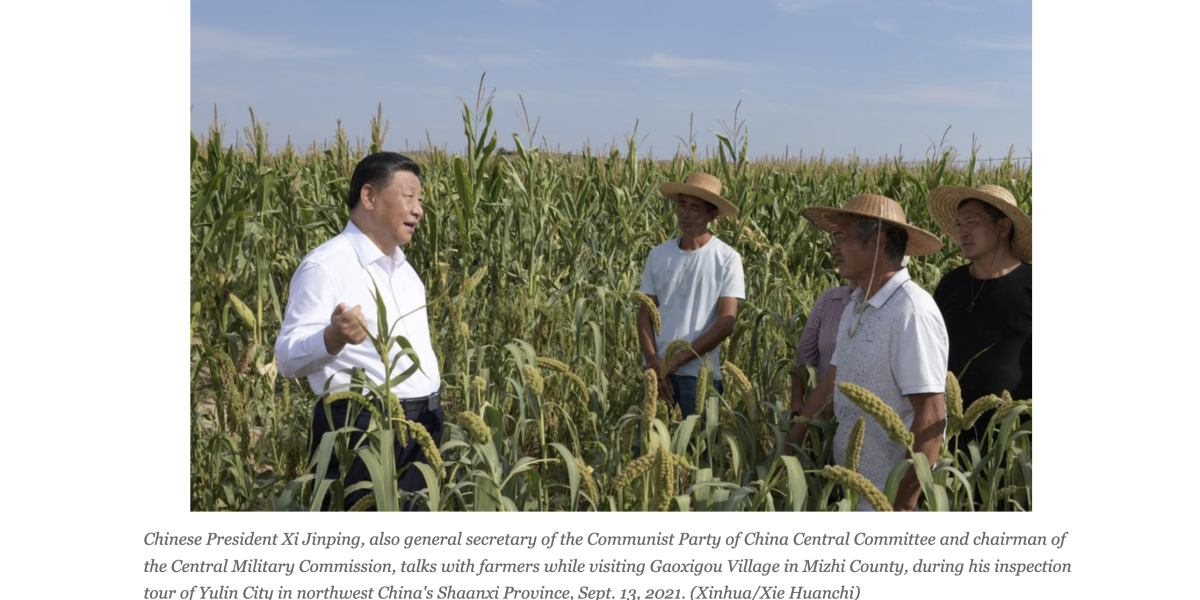
China’s zero-tariff policy, announced by President Xi Jinping in a message to the 39th African Union Summit in Addis Ababa on February 14, 2026, changes this equation ,at least on paper. For the first time, a Kenyan textile manufacturer, a Tanzanian cashew processor, a Ugandan pharmaceutical startup, or a Rwandan specialty tea exporter can ship value-added goods to China’s 1.4 billion consumers without facing tariff walls that previously eroded every competitive advantage they tried to build.
“This isn’t about exporting more raw cobalt. It’s about creating conditions for Africa to move up the value chain ,processing minerals, packaging agricultural goods, assembling components ,before they leave our shores.” ,Kelvin Chisanga, Zambian social economist
East Africa is uniquely positioned to respond. Kenya’s special economic zones in Mombasa and Naivasha, Tanzania’s ports being developed under the Belt and Road Initiative, and Rwanda’s digital infrastructure investments have laid foundations that tariff removal can now help activate. When President William Ruto declared ‘This is the time for Africa to transform its raw materials,’ he was speaking directly to this moment in history.
A Different Kind of Offer: The AGOA Shadow
The timing of Beijing’s announcement was not accidental. It came against the backdrop of a sharply shifting global trade landscape ,one in which the United States, under President Donald Trump, has imposed steep tariffs on trading partners across the developing world, including 15 percent on European Union goods and additional levies on several African and Asian nations. Africa, long courted by Washington as a strategic partner, found itself staring at an increasingly uncertain future for the African Growth and Opportunity Act (AGOA).
AGOA has been a lifeline ,but a fragile one. Ethiopia and Mali have both lost AGOA benefits due to geopolitical realignments. Its sunset clauses and periodic congressional reviews introduce a horizon of uncertainty that investors, planning multi-year production facilities, can ill afford.
China’s approach offers a different model. It is, as Beijing frames it, unilateral and unconditional ,not a reciprocal free-trade arrangement requiring complex negotiations, but a straightforward grant of market access with no political strings attached. UN Secretary-General António Guterres praised the move at the AU summit, calling on other major economies to follow suit, and warning that Africa ‘cannot be penalized by trade policies that are restrictive and by tariffs that do not allow African products to be competitive.’
For exporters planning a $10 million cashew-processing plant in Tanzania or a garment factory in Ethiopia, the distinction matters enormously. A two-year congressional review cycle is a gamble. A decade-long trade policy feels, by comparison, like a contract.
“AGOA felt like a gift that could be taken away at any moment. China’s policy feels like a contract. That changes everything about how businesses plan.” ,Ms Jane Kamau, a Nairobi-based trade analyst
Analysts note that China will forgo approximately $1.4 billion in annual tariff revenue under the new arrangement ,a significant economic concession that underscores the policy’s strategic seriousness. This is not a gesture. It is a bet.
Sector by Sector: Where East Africa Can Win
Agriculture ,From Farm to Fork in Shanghai
East Africa’s agricultural potential is immense, and the Chinese market has already begun to taste it. Kenya alone has exported over 3,000 tons of fresh avocados to China since mid-2023, directly benefiting more than 3,200 smallholder farmers. In January 2026, Kenya and China reached a preliminary early harvest trade agreement granting 98.2 percent of Kenyan goods duty-free access ,a precursor to the sweeping May announcement.
With zero tariffs now extended across the board, products like Tanzanian coffee, Ugandan vanilla, Ethiopian honey, Rwandan specialty teas, and Kenyan horticultural exports could access Chinese supermarkets at genuinely competitive prices. A ‘green lane’ fast-tracking customs and quarantine procedures for agricultural goods further reduces spoilage risks and logistical delays that have historically punished perishable exports.
Chinese imports of African coffee surged by 70.4 percent in the first quarter of last year alone. Cocoa bean imports rose by 56.8 percent over the same period. The appetite is real. What has been missing is the infrastructure of access.
Manufacturing ,Light Industry, Heavy Opportunity
Textiles, leather goods, assembled electronics ,sectors where East Africa has quietly built manufacturing capacity ,stand to gain the most from tariff elimination. A shirt made in Dar es Salaam previously faced duties of up to 25 percent upon entering China. Under the new regime, it competes on equal footing with Vietnamese or Bangladeshi imports. That is a seismic shift for an industry just finding its footing.
The Zambia-China Economic and Trade Cooperation Zone already demonstrates what is possible: a complete copper industry chain from mining to smelting and processing, capturing value that once departed the continent as raw ore. Tanzania’s East Africa Commercial and Logistics Center, built by Chinese enterprises, has attracted over 430 small and medium-sized enterprises and is expected to generate more than 20,000 local jobs once fully operational. These are not abstractions. They are prototypes.
Green Minerals ,Processing at Home
East Africa sits atop critical reserves for the global energy transition: Tanzania’s graphite deposits, Kenya’s rare earths, Uganda’s copper. China’s zero-tariff policy specifically encourages the export of processed mineral goods ,not just raw ore. This creates, for the first time, a genuine incentive to build refineries and battery-component processing plants locally, capturing substantially more value before shipment.
‘Why ship rocks when we can ship components?’ a senior Dar es Salaam mining official asked last year. The answer, until now, was that the tariff structure made processing uneconomical. That excuse is about to expire.
The Challenges: Standards, Logistics, and the Structural Deficit
Optimism, in East Africa, has a long history of outrunning execution. This moment demands both ,and a clear-eyed accounting of the obstacles that zero tariffs alone cannot dissolve.
Chinese consumers and regulators operate within a stringent quality, packaging, and certification framework. East African producers ,particularly smallholders and small-scale manufacturers ,will require substantial support to meet these standards. A tariff of zero percent means nothing if your product cannot clear sanitary and phytosanitary inspection at Tianjin or Guangzhou.
Logistics remain a perennial constraint. Cold-chain infrastructure across the region is inadequate for the scale of perishable exports the policy envisions. Port throughput at Mombasa and Dar es Salaam, while improving, must continue to expand. Maritime corridors through the Red Sea-Gulf of Aden-Indian Ocean axis carry their own geopolitical risks, as recent years have demonstrated.
Perhaps most importantly, the trade imbalance will not correct itself. Analysts at the African Export-Import Bank (Afreximbank) have been unambiguous: tariff removal lowers one barrier to market access, but export diversification and industrial upgrading are the heavier lifts. Without regional coordination through the East African Community ,harmonized standards, unified export strategies, collective bargaining ,countries risk competing against each other for marginal Chinese demand rather than presenting a continent capable of supply-chain scale.
A Continental Vision: AfCFTA Meets the Dragon
China’s zero-tariff policy does not exist in isolation. It aligns ,deliberately, one suspects ,with the logic of the African Continental Free Trade Area (AfCFTA), which envisions pan-African supply chains capable of competing on the global stage. By offering continent-wide access to the Chinese market (excluding only Eswatini, which maintains diplomatic ties with Taiwan), Beijing actively incentivizes the kind of regional integration that AfCFTA champions on paper.
A blouse assembled in Nairobi using Tanzanian cotton, Ugandan thread, and Rwandan packaging can now enter China duty-free. That is not just a trade statistic. It is a blueprint for regional interdependence ,the kind that builds resilience, distributes prosperity, and creates shared stakes in each other’s success.
Rwanda’s President Paul Kagame, long an AfCFTA champion, captured the synergy succinctly: ‘This will accelerate the AfCFTA and export diversification.’ The message to East Africa is unambiguous ,collaborate or watch the opportunity dissolve.
The Human Story: Farmers, Workers, Entrepreneurs
Behind the macroeconomics are faces and livelihoods that policy papers rarely linger on. In Kilimanjaro’s coffee cooperatives, farmers watching global prices oscillate with every commodity cycle could finally access a stable, high-volume market hungry for quality. In Dar es Salaam’s emerging industrial parks, young engineers designing solar components could find their first export customer in Shenzhen or Dongguan. In Kigali’s tech hubs, software developers building precision agriculture platforms could partner with Chinese firms scaling similar tools across Asia.
‘This policy doesn’t just move goods,’ said a young Tanzanian entrepreneur who imports Chinese machinery to upgrade her cashew-processing line. ‘It moves possibility.’
That is the real test of this policy ,not the trade statistics it generates in year one, but whether possibility, this time, is finally converted into permanence.
The Road to May 1: What East Africa Must Do Now
With implementation less than three months away, preparation cannot wait for the inaugural containers. The window is narrow. The following imperatives are not aspirational ,they are urgent.
Governments across the region must accelerate certification programs that help exporters meet China’s quality and phytosanitary requirements. Trade facilitation desks within ministries of trade must be activated and staffed ,capable of guiding businesses through the documentation, logistics, and market intelligence they need to compete. Chinese-funded industrial parks in Tanzania, Ethiopia, Nigeria, and Ghana must be leveraged as co-location hubs, combining production, processing, and export services under one institutional roof.
Most critically, the East African Community must operationalize a unified export strategy. The AfCFTA Secretariat and the EAC must work in concert ,harmonizing standards, eliminating internal non-tariff barriers, and presenting to Chinese buyers not a collection of small, disconnected suppliers, but a region capable of delivering at scale. Investments in skills development ,quality control, digital trade platforms, supply-chain management ,are not peripheral. They are foundational.
An Open Door, Not a Guarantee
China’s zero-tariff policy is not a silver bullet. It will not automatically industrialize East Africa, reverse decades of commodity dependence, or erase a $102 billion trade deficit by the end of the decade. Trade policy, however ambitious, is only ever an enabling condition ,not an outcome.
But it is something rarer in today’s fragmented, tariff-weaponized world: a genuine, large-scale opportunity offered without political preconditions. For a region long accustomed to aid with strings, loans with conditions, and market access subject to Washington’s annual mood, that distinction matters.
The ports are ready. The products exist. The farmers are waiting. The policy, come May 1, will be set.
Now ,and there is urgency in this word ,the work begins. East Africa has walked to many open doors in its history. The question that defines this generation is whether it will walk through this one.
Anthony Muchoki is the founder of Kilimokwanza.org, East Africa’s leading agricultural digital platform.