

DODOMA, Tanzania — Tanzania has unveiled a detailed framework that could transform how one of the continent’s most important protein crops is grown.
The Cereals and Other Produce Regulatory Authority (COPRA), under Tanzania’s Ministry of Agriculture, has released its “Sustainable Production Guidelines for Soybean Crops” — a comprehensive manual designed for extension officers and farmers that addresses everything from soil preparation to worker safety, from pest management to post-harvest handling.
The Productivity Gap
The numbers tell a stark story. Tanzania’s current soybean yields average just 0.7 tons per hectare — far below the potential of 2.2 tons per hectare that proper agronomic practices could deliver. This productivity gap represents not just lost income for farmers, but missed opportunities for food security and nutrition in a country where the crop plays a vital role in both human diets and livestock feed.
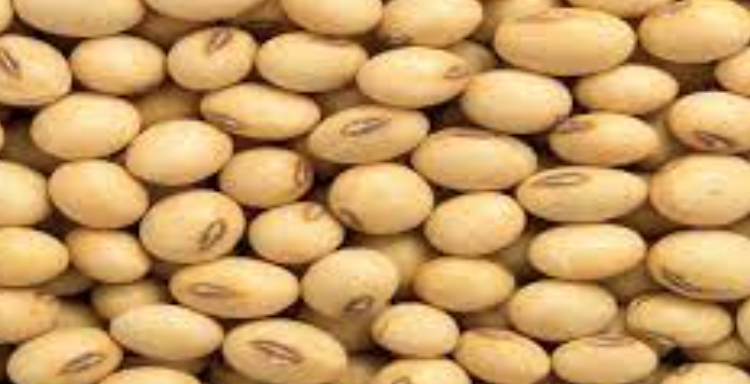
Soybean seeds contain 35-40% protein and 18-20% oil, making them invaluable for food processing, cooking oil production, and animal feed manufacturing. Beyond nutrition, soybeans fix nitrogen in the soil, reducing fertilizer dependency and improving soil fertility for subsequent crops.
Professor Sifuni Mchome, Chairman of COPRA’s Board of Directors, frames the challenge clearly in his foreword: “Despite its importance, the yield of this crop is still low… along with low yield, the quality and safety of the crop are also low, due to various reasons including insufficient use of sustainable production practices.”
A Holistic Approach to Sustainable Production
What distinguishes COPRA’s guidelines from typical agricultural extension materials is their comprehensive scope. The document doesn’t simply tell farmers when to plant or how much fertilizer to apply. Instead, it presents soybean cultivation as an interconnected system where environmental stewardship, economic viability, and social responsibility converge.
The guidelines identify Tanzania’s primary soybean-growing regions — Mbeya, Songwe, Ruvuma, Iringa, Njombe, Rukwa, Katavi, and Morogoro — while noting potential expansion into Lindi, Mtwara, Tanga, Manyara, Arusha, Mara, Kilimanjaro, Kagera, and Kigoma regions.
For each zone, the manual provides specific guidance on suitable varieties. Six certified soybean varieties are recommended, each adapted to different altitudes and regional conditions: Uyole Soya-1, Uyole Soya-3, Uyole Soya-4, SC Semeki, SC Signal, and SC Saxon. These varieties yield between 1.5 and 3.0 tons per hectare and demonstrate resistance to common diseases like frog-eye leaf spot and red leaf blotch.
Environmental Stewardship as Foundation
The guidelines place conservation agriculture at the core of sustainable soybean production. Farmers are encouraged to adopt crop rotation systems, alternating soybeans with cereals to break pest and disease cycles while improving soil structure. The use of cover crops and mulching is emphasized to conserve soil moisture, suppress weeds, and prevent erosion.
In areas with steep slopes, the manual recommends contour farming, terracing, and grass strips to prevent soil loss. For flood-prone regions, proper drainage systems are deemed essential infrastructure.
Water resource management receives particular attention. Farmers must maintain a 60-meter buffer zone from water sources to prevent contamination. Those requiring irrigation must obtain proper permits from relevant authorities and use water efficiently through methods like drip irrigation.
Soil health management combines traditional and modern approaches. While the guidelines recommend organic inputs like compost and green manure, they also provide guidance on using commercial fertilizers based on soil testing results. For soybeans, nitrogen application should be minimal since the crop fixes its own nitrogen through symbiotic relationships with soil bacteria.
Integrated Pest Management: Beyond the Spray Pump
Perhaps nowhere is the manual’s holistic philosophy more evident than in its treatment of pest and disease management. Rather than defaulting to chemical solutions, the guidelines advocate for Integrated Pest Management (IPM) — a strategy that combines multiple control methods to minimize pesticide reliance.
Farmers are instructed to scout their fields at least once weekly during critical growth stages, increasing to 2-3 times weekly during flowering and pod formation when pests like pod borers become most problematic. The manual provides detailed identification guides for common threats including thrips, whiteflies, aphids, pod borers, and armyworms, along with diseases such as anthracnose, bacterial blight, powdery mildew, and Mungbean Yellow Mosaic Virus.
Control strategies start with cultural practices: removing infected plants, using certified disease-resistant seeds, maintaining field sanitation, and crop rotation. Pheromone traps and yellow sticky traps help monitor and reduce pest populations. Only when pest pressure exceeds economic thresholds should pesticides be considered.
When chemical control becomes necessary, the guidelines are exhaustive in their safety protocols. Extension officers and farmers receive detailed instruction on proper pesticide selection, mixing, application timing, protective equipment requirements, and environmental safeguards.
Illustrations show the complete personal protective equipment required: gloves, respirators, protective eyewear, coveralls, boots, and aprons. The manual emphasizes leaving 1-2 meter buffer zones around fields during spraying to prevent pesticide drift into water sources or neighboring properties.
Proper nozzle selection receives dedicated attention, with tables explaining when to use hollow cone nozzles versus flat fan nozzles, impact deflectors, or atomizers depending on the pesticide type and target pest.
Post-Harvest Management: Where Quality is Won or Lost
Agricultural extension services often focus intensively on field production while giving short shrift to post-harvest handling. COPRA’s guidelines correct this imbalance by dedicating substantial content to harvest timing, drying, cleaning, grading, packaging, transport, and storage.
Farmers learn to identify maturity indicators: when 80% of pods turn brown and plants begin drying, soybeans are ready for harvest. The recommended moisture content at harvest is 15-16%, which must be reduced to 12-14% through proper drying before storage.
Three quality grades are defined based on maximum allowable limits for broken seeds, diseased seeds, insect damage, sand and stones, seeds from other crops, and animal contamination. Grade 1 soybeans must be at least 98% clean with no more than 0.5% trash, 2% broken seeds, and 1% diseased seeds. Even Grade 3 soybeans must meet minimum standards: 90% cleanliness, maximum 10% broken seeds, 5% diseased seeds.
Packaging materials must be food-safe, clean, strong, and properly sealed. During transport, vehicles must be clean and dry, loads must be covered with tarpaulins, and soybeans should never share transport with petroleum products, pesticides, or other chemicals.
Storage facilities must be clean, dry, well-ventilated, and protected from moisture, pests, and animals. Packaged soybeans should be elevated on pallets to prevent ground moisture absorption. Regular inspections check for package tears, pest infestations, moisture changes, and storage facility leaks.
Traceability: From Farm to Fork and Back Again
In an era of increasing food safety concerns and market demands for transparency, the guidelines introduce farmers to traceability systems — the ability to track produce through all stages of the value chain, from farm to consumer and back.
For many smallholder farmers, “traceability” might seem like sophisticated terminology reserved for large commercial operations. The COPRA manual demystifies the concept, presenting it as achievable through simple record-keeping.
Farmers are encouraged to maintain notebooks documenting: farm location and size, planting dates, seed varieties and sources, fertilizer types and application dates, pesticide use with specific details on type, timing, rates, and safety equipment used, harvest dates and yields, and grading and packaging information.
The manual provides a sample record form that even minimally literate farmers can complete with assistance from extension officers. This documentation serves multiple purposes: enabling performance assessment over seasons, facilitating planning and improvement, allowing rapid response if product safety issues arise, and building consumer confidence in production practices.
For fertilizer traceability specifically, farmers should retain information from packaging labels including brand, fertilizer type, nutrient analysis, manufacturing and expiry dates, and manufacturer name. Similarly for seeds, records should document supplier names, planting dates, and previous crops on the land.
Worker Welfare: Not an Afterthought
In a section that distinguishes these guidelines from many agricultural extension materials, COPRA dedicates substantial content to worker welfare, health, and safety — grounding these requirements in Tanzania’s Occupational Health and Safety Act No. 5 of 2003.
First aid kits must be available on farms, positioned in safe locations and stocked with complete supplies. Only workers who have received proper training may administer first aid, and all incidents must be recorded with details on the injured person’s name, date, problem, and treatment provided.
Workers with open wounds or cuts cannot be assigned to tasks involving direct contact with produce such as harvesting, packaging, or grading. Clean toilet facilities must be constructed in farm areas, positioned away from water sources to prevent contamination, and equipped with water and soap.
The guidelines explicitly prohibit child labor, especially in hazardous activities, emphasizing children’s right to attend school. Gender equity receives attention as well, with requirements for equal employment opportunities and protection of maternity and nursing mothers’ rights.
Workers who apply pesticides must receive complete protective equipment, which must be inspected weekly and washed with soap and clean water after each use. Working hours should comply with labor laws (8 hours per day) except where special legal agreements exist. Annual health checks are mandatory for all workers, including testing for pesticide residues in those who handle agrochemicals.
Implementation Strategy
The manual acknowledges that knowledge alone doesn’t guarantee adoption. Successful implementation requires coordination among multiple stakeholders: the Ministry of Agriculture, Sokoine University of Agriculture (SUA), the Tropical Pesticides Research Institute (TPRI), the Tanzania Fertilizer Regulatory Authority (TFRA), and the Tanzania Plant Health and Pesticides Authority (TPHPA).
Extension officers — the crucial link between technical knowledge and farmer practice — are positioned as the primary users of the guidelines. Their role extends beyond information delivery to facilitating adoption, monitoring implementation, documenting challenges, and providing feedback for continuous improvement.
Irene M. Mlola, COPRA’s Managing Director, acknowledges this collaborative foundation in her acknowledgments: “This step was achieved through in-depth consultations between experts and various stakeholders in the agriculture sector, coordinated by the Cereals and Other Produce Regulatory Authority.”
The Mechanization Connection
As Tanzania releases these guidelines while hosting the Africa Conference on Sustainable Agricultural Mechanization, the connection becomes clear. Sustainable production and mechanization are not separate agendas but complementary strategies.
Many practices in the COPRA guidelines become more feasible with appropriate mechanization: precise seed placement at recommended depths and spacing, timely land preparation and planting, efficient harvesting at optimal moisture content, proper threshing that minimizes seed damage, and effective cleaning and grading to meet quality standards.
Conversely, mechanization without sustainable agronomic practices risks accelerating soil degradation, pest resistance, and environmental contamination. The two must advance together.
Sessions at the ongoing mechanization conference directly address this integration. Presentations on “Precision and Conservation Agriculture” explore how mechanization can support rather than undermine soil health. Panels on “Innovative Technical and Business Solutions for SAM in Africa” examine business models that make mechanization accessible to smallholders while ensuring environmental sustainability.
Market Implications
The emphasis on quality grading and traceability in COPRA’s guidelines reflects Tanzania’s ambitions for soybean market development. Domestic processing industries require consistent quality supplies. Export markets increasingly demand documented production practices and traceability systems.
By establishing clear quality standards — three grades with specific tolerance limits for defects, contamination, and moisture content — the guidelines create a framework for market development where quality is recognized and rewarded through differentiated pricing.
The traceability systems, while simple, position Tanzanian farmers to meet evolving market requirements. Consumers, processors, and exporters increasingly want to know production histories: Were recommended pesticides used appropriately? Were buffer zones maintained near water sources? Were workers treated fairly?
Challenges Ahead
Publishing comprehensive guidelines is one thing; achieving widespread adoption is another. Tanzania’s soybean farmers face numerous implementation challenges:
Many smallholders lack access to certified seeds, soil testing services, appropriate mechanization, storage facilities that meet the recommended standards, and markets that reward quality with price premiums.
Extension services, while improving, remain thinly stretched. The ratio of extension officers to farmers is far below optimal levels in most regions. Providing the intensive support needed for farmers to adopt new practices requires sustained investment.
Input supply systems, particularly for specific items like appropriate nozzles for different pesticide types or proper protective equipment, may not reach remote farming areas.
Yet the existence of clear, comprehensive, nationally-endorsed guidelines is itself significant progress. Farmers and extension workers now have an authoritative reference that synthesizes technical knowledge, regulatory requirements, and practical implementation strategies.
Looking Forward
As Africa’s agricultural leaders discuss mechanization strategies this week in Dar es Salaam, Tanzania is demonstrating that transformation requires detailed attention to agronomic practices, environmental sustainability, quality standards, and farmer welfare — not just machinery.
The sustainable soybean production guidelines represent a model that could be replicated for other crops and in other countries. They show what comprehensive agricultural extension looks like in an era demanding productivity increases, environmental protection, food safety assurance, and social responsibility simultaneously.
Professor Mchome’s expectation, stated in his foreword, sets an ambitious but achievable goal: “It is COPRA’s expectation that this Manual will be a basic reference for farmers and agricultural stakeholders, and that its implementation will contribute significantly to promoting sustainable production of soybeans.”
Whether these expectations are met will depend on investments in extension services, input supply systems, storage infrastructure, and market development. But the foundation has been laid.
For Tanzania’s soybean farmers — and potentially for smallholder producers across Africa — the path from 0.7 tons per hectare to 2.2 tons per hectare, from inconsistent quality to certified standards, from conventional practices to sustainable systems, has been mapped.
Now comes the harder work of walking that path.
The complete Sustainable Production Guidelines for Soybean Crops (Swahili: Uzalishaji Endelevu wa Zao la Soya) is available from COPRA