

FOR IMMEDIATE RELEASE
March 1st, 2026 | Dar es Salaam, Tanzania
Tanzania Activates Northern, Central, and Mtwara Agricultural Corridors in Biggest Agri Push Since SAGCOT
First-phase consultations spanning 17 regions across three new corridors mark the most significant expansion of Tanzania’s agricultural transformation agenda since SAGCOT simultaneously launched at Dar es Salaam and Davos in 2010. Corridor Blueprints and Greenprints are on track for completion by March 2026, aiming to build a $100 billion agricultural economy by 2050 as per the Agriculture Master Plan 2050 ambitions.
Dar es Salaam, TANZANIA,
Tanzania has completed the first phase of a landmark nationwide policy sensitisation exercise that formally activates three new agricultural growth corridors, Northern, Central and Mtwara, under a single national framework coordinated by the Agriculture Transformation Office (ATO) in collaboration with AGCOT Centre. Spanning 17 regions, the consultations lay the first critical foundation of the sub-national framework for a $100 billion agricultural economy by 2050, as envisioned by the National Development Vision 2050 (Dira 2050). The rollout builds on SAGCOT’s proven track record of mobilising USD 6.34 billion in investment and marks the most significant expansion of the country’s agricultural transformation agenda since the Southern Agricultural Growth Corridor was simultaneously launched in Dar es Salaam and at the World Economic Forum in Davos in 2010 under kilimo kwanza initiative. Corridor Blueprints and Greenprints, modelled on SAGCOT’s own Blueprint and Greenprint, are expected by the end of March 2026.
The consultations, held from February 10 to 24, 2026, across Arusha, Singida, Mwanza, and Mtwara, transition the Agricultural Growth Corridors of Tanzania (AGCOT) framework, Flagship No. 7 of the national Agriculture Master Plan (AMP) 2050, from planning into full national operations. The initiative is led jointly by ATO, the AGCOT Centre, the President’s Office –Regional Administration and Local Government (PO-RALG), the Ministry of Agriculture, and the Ministry of Livestock and Fisheries.
“These consultations are not simply policy announcements; they represent the beginning of a generational shift. By unifying the Northern, Central, and Mtwara corridors under a single national framework, Tanzania is moving from fragmented interventions to an integrated transformation strategy. The goal is clear: build a $100 billion agricultural economy that positions Tanzania as Africa’s breadbasket.”
, Geoffrey Kirenga, CEO, AGCOT Centre
A Proven Model: SAGCOT’s Decade of Impact
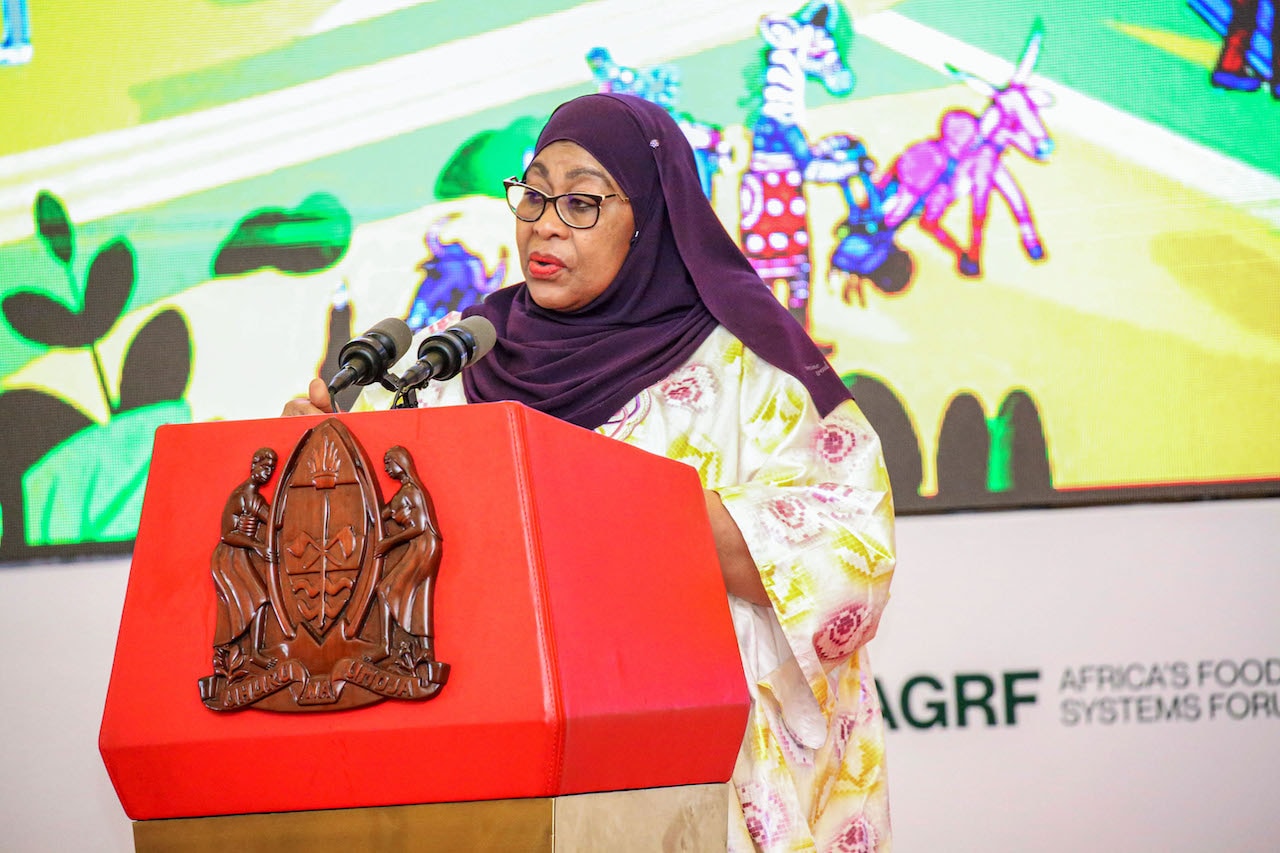
The national expansion follows a directive issued by H.E. President Samia Suluhu Hassan on March 17, 2023, during the Africa Food Systems Platform at State House. The decision responded to a long-standing request from stakeholders across multiple regions to replicate the highly successful Southern Agricultural Growth Corridor of Tanzania (SAGCOT) model nationwide, in line with the needs of a more vibrant and coordinated private sector.
Between 2010 and 2024, SAGCOT exceeded expectations:
| SAGCOT Achievement (2010–2024) | Result |
| Cumulative investment (private and public) mobilised | USD 6.34 billion (111% of target, 5 years early) |
| Smallholder farmers empowered | Over 1 million |
| Hectares under climate-smart agriculture | 1.3 million |
| Jobs created | 253,000+ |
| Private sector investment | USD 1.32 billion |
| Share of national food production | 65% |
Of the USD 6.34 billion mobilised, USD 5.02 billion (79.2%) from the public sector was directed towards backbone infrastructure, energy, roads, and rural electrification, while USD 1.32 billion (20.8%) from the private sector was directed towards agribusinesses, processing facilities, and value-chain development. SAGCOT officially transitioned to the nationally-mandated AGCOT on April 27, 2025, in Dodoma.
Corridor-by-Corridor Consultation
| Corridor | Regions | Consultation |
| Northern | Arusha, Kilimanjaro, Tanga, Manyara | Feb 10 (Arusha) |
| Central (Group 1) | Dodoma, Singida, Tabora, Shinyanga | Feb 12 (Singida) |
| Central (Group 2) | Mwanza, Geita, Kagera, Mara, Simiyu, Singida | Feb 17 (Mwanza) |
| Mtwara | Lindi, Ruvuma, Mtwara | Feb 20 (Mtwara) |
| Central (Pending) | Kigoma | Before Mar 10 |
Northern Corridor, High-Value Exports and Cross-Border Trade
The Arusha consultation (February 10) consolidated the strategic roadmap for Tanzania’s primary gateway for horticultural exports and East African Community (EAC) trade. Priorities include further transforming the horticultural value chains for local and export markets, in which cold chain infrastructure, export-ready aggregation systems that meet international phytosanitary standards will be strengthened. Additionally, special investments will be directed towards further commercialisation of the livestock sector in which beef, poultry and aquaculture will be transformed. The corridor will deploy the Inclusive Green Growth (IGG) tool to ensure compliance with environmental, social, and economic governance, facilitating climate-smart, and internationally certifiable production.
“The agriculture sector has been identified as the transformative sector in the National Development Vision 2050 due to its significant contribution to employment, GDP, and foreign exchange earnings.”
, Hon. Batilda Buriani, Regional Commissioner, Tanga
Central Corridor, Sunflower Revolution and the Great Lakes Livestock Hub
The Central Corridor, the largest in geographic scope, spanning ten regions from Dodoma to the Lake Zone, was divided into two consultation groups. The Singida session (February 12) centred on the sunflower value chain, an edible oil import substitution, and drought-tolerant crops such as pulses. Tanzania currently imports more than half of its 500,000 metric tons of annual edible oil requirements, while Dodoma and Singida account for over 53% of national sunflower production. The strategic target: increasing production from 204,000 to 420,000 metric tons within four years through contract farming and digital information systems.
The Mwanza session (February 17) addressed a USD 200 million livestock opportunity. With Mwanza alone hosting 1.97 million cattle, the AGCOT vision is to establish the “Great Lakes Livestock Hub” , modern feedlots and slaughterhouses within the Mwanza Special Agro-Processing Zone (SAPZ), creating a circular economy linking sunflower by-products to livestock fattening operations. The presence of the Great Lakes makes fishing and aquaculture an important sector ripe for new levels of investment and transformation. The Great Lakes region of Tanzania is one of the areas with significant untapped aquaculture potential for growth worldwide.
The Great Lakes are also famous for rice production, as they produce about 30% of Tanzania’s rice. It is an area famous for pulse production, especially the common beans, which are already enjoying a lucrative regional market. The region has a perfect climate and resources for horticulture value chains, including fruits, vegetables, and spices. Tanzania’s fresh green produce and fruits are already popular in the East African region.
“This is serious work. It is government work. Each one of us must closely follow the blueprints, work collaboratively, and ensure tangible results are delivered. There is no room for guesswork. Progress will be measured through data.”
, Hon. Halima Omari Ndendego, Regional Commissioner, Singida (former RC Iringa, SAGCOT veteran)
Mtwara Corridor, Diversification Beyond Cashew
The Mtwara consultation (February 20) signalled a strategic shift towards crop diversification. Key developments include the Tanzania Sustainable Soybean Initiative (TSSI), managed by AGCOT, targeting over 150,000 smallholder farmers and 250,000 metric tons of soybeans annually. In Ruvuma, diversification is already underway with 900 hectares of avocados under cultivation and potato farming outperforming traditional production zones. The corridor strategy also prioritises scaling domestic cashew and sesame processing to capture more value within Tanzania.
“These regions have major strategic opportunities for implementing agricultural value chains due to existing resources and priority crops , cashew nuts, sesame, pigeon peas in Lindi and Mtwara; maize, beans, coffee, soybeans, and tobacco predominantly produced in Ruvuma.”
, Hon. Zainab Rajab, Regional Commissioner, Lindi
Financial Architecture: Blended Finance at Scale
The AMP 2050 envisions the private sector contributing 70% of the investment required for national agricultural transformation. The financial framework is anchored in blended finance:
- Tanzania Agricultural Development Bank (TADB): Over USD 203 million in cumulative loans disbursed (58% portfolio increase), backed by a USD 66 million sovereign loan from the African Development Bank and a USD 81 million credit line from the French Development Agency (AFD). TADB targets 20% of lending for women and youth.
- Cooperative Bank of Tanzania (CBT): Launched April 28, 2025, by President Dr Samia with TZS 55 billion starting capital and 51% ownership by cooperative societies. CBT serves over 6,500 registered cooperatives with combined assets exceeding TZS 5.1 trillion.
“The importance of government partnering with the private sector in boosting production, increasing employment, and improving livelihoods cannot be overstated. We must create an enabling investment environment across all policy and operational systems.”
, Hon. Said Mohamed Mtanda, Regional Commissioner, Mwanza
AMP 2050: Strategic Targets
The nationwide corridor rollout is designed to deliver the Agriculture Master Plan 2050’s transformative milestones:
| Target | Projected Outcome |
| National Agricultural GDP | USD 100 billion (5x current) |
| Net Agricultural Exports | USD 20 billion |
| Annual Sector Growth Rate | 10% |
| Smallholder Income Increase | 25% minimum |
| National Undernourishment | Reduced to 15% |
| Private Sector Investment Share | 70% of total |
| Export Value (2023/24 Baseline) | USD 3.54 billion |
Inclusive Growth and Climate Resilience
AGCOT’s “Inclusive Green Growth” principle drives deliberate investment in youth and women through the “Building a Better Tomorrow” (BBT) initiative, targeting 10,000 to 50,000 young agri-entrepreneurs over the current six-year cycle. Climate-smart practices, including agricultural lime application, water-saving technologies, and sustainable land management, are central to the strategy. Analysis shows drip irrigation could deliver 8% more production while using 14% less water by 2030, a critical advantage for the semi-arid Central Corridor.
Continental and Global Positioning
The AGCOT initiative positions Tanzania as a primary food supplier for Africa, where population is projected to exceed two billion by 2050 with food demand increasing by 50%. The corridor model aligns with the African Continental Free Trade Area (AfCFTA) and the African Food Systems Platform. International interest is growing, in July 2025, a delegation from AGRA Malawi visited Tanzania to study the corridor model for potential replication, underscoring Tanzania’s emerging role as a continental leader in agricultural policy innovation.
Next Steps: From Sensitisation to Implementation
“With the sub-national architecture now falling into place and corridor Blueprints nearing completion, AGCOT Centre and its key partners in the Government and the private sector are set to deploy agile teams across these newly activated corridors. Tanzania is building the institutional foundations for a transformation that will quintuple our agricultural GDP, reshape our entire agricultural sector, crops, livestock, and fisheries, and ensure the benefits reach every Tanzanian, especially women and youth. Every stakeholder identified in this plan is called upon to play their part.”
, Geoffrey Kirenga, CEO, AGCOT Centre
With the first phase of regional engagement now substantially complete, the AGCOT framework moves into accelerated implementation. Over the coming weeks, a series of coordinated actions will bring together government, development partners, and the private sector to activate Tanzania’s agricultural growth corridors. High-level briefings with Permanent Secretaries across key ministries , including PO-RALG, Agriculture, Livestock and Fisheries , are already underway to secure the political alignment needed for rapid execution. Regional sensitisation in Kigoma, one of the newly activated corridors, will be completed in the first week of March, laying the groundwork for direct engagement with farmers, cooperatives, and local government authorities.
A dedicated private sector mobilisation campaign, led by AGCOT Centre in collaboration with ATO and AGRA, will follow, targeting agribusinesses and investors ready to participate in corridor development , with a specific focus on women- and youth-led enterprises. By mid-March, the Ministry of Agriculture will present the corridor strategy to development partners, opening the door for coordinated financing and technical support. The completion of corridor Blueprints and Greenprints , the detailed operational and sustainability roadmaps that will guide investment and activity across each corridor , is expected by the end of March 2026.
###
Notes to Editors
About AGCOT Centre: Formerly the SAGCOT Centre, the Agricultural Growth Corridors of Tanzania (AGCOT) Centre serves as the operational and strategic engine for coordinating agricultural corridors across Tanzania. Operating as an honest broker and public-private partnership hub, AGCOT facilitates relationships between government, agro-industries, SMEs, smallholder farmers, and development partners. Headquartered in Dodoma.
About ATO: The Agriculture Transformation Office is the Government of Tanzania’s primary coordinating body for agricultural sector reform, bridging the Ministry of Agriculture, the Ministry of Livestock and Fisheries, PO-RALG, and sub-national governments.
About AMP 2050: The Agriculture Master Plan 2050 is Tanzania’s long-term strategic framework for transforming the agricultural sector , encompassing crops, livestock, and fisheries , into the primary engine of economic growth. AGCOT is recognised as Flagship No. 7.
Corridor Coverage: Northern (Arusha, Kilimanjaro, Tanga, Manyara); Central (Dodoma, Singida, Tabora, Kigoma, Shinyanga, Mwanza, Geita, Kagera, Mara, Simiyu); Mtwara (Lindi, Ruvuma, Mtwara). These complement the existing Southern Corridor (SAGCOT) for nationwide coverage across 17 regions.
Key Partners: ATO, PO-RALG, Ministry of Agriculture, Ministry of Livestock and Fisheries, AGCOT Centre, Alliance for a Green Revolution in Africa (AGRA), PEMANDU Associates, Tanzania Agricultural Development Bank (TADB), Cooperative Bank of Tanzania (CBT).
Priority Commodities: Maize, paddy, pulses, oilseeds (sunflower, soybean, sesame), horticulture, wheat, livestock, cashew, and fisheries.
Presidential Mandate: H.E. President Samia Suluhu Hassan issued the foundational directive on March 17, 2023, during the Africa Food Systems Platform at the State House: “Expand the SAGCOT model to the rest of the country.” On April 19, 2024, Hon. Hussein Bashe, Minister for Agriculture, led a national consultation endorsing tailored investment blueprints for the new corridors.