

Supporting Tanzania’s Agriculture Master Plan 2050
What Is This Compact?
The Morogoro–Iringa Land Health Compact is a formal, multi-stakeholder agreement to coordinate action on land health, soil security and agricultural resilience across two of Tanzania’s most productive farming regions.
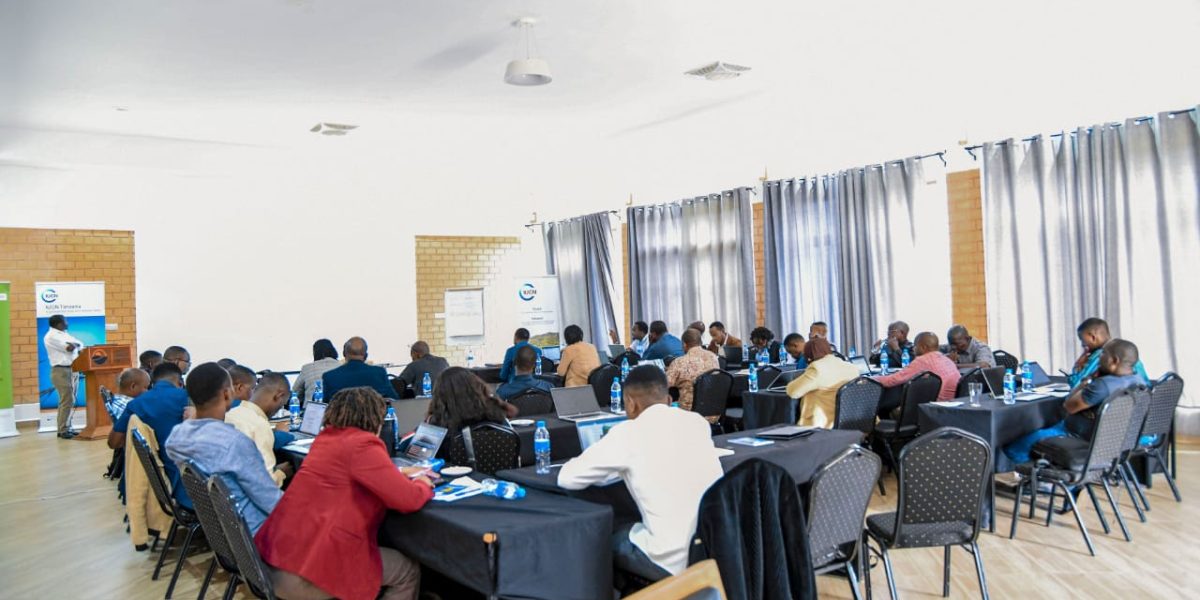
Signed on 23 April 2026 and convened by the International Union for Conservation of Nature (IUCN) together with AGCOT Centre, the Compact brings government authorities, private sector companies and field-level service providers under one shared framework — with clear commitments, shared tools, and regular accountability.
| Why It Matters Tanzania’s Agriculture Master Plan 2050 (AMP 2050) sets ambitious national goals for soil health and land security. This Compact translates those goals into coordinated, on-the-ground action in Morogoro and Iringa — regions that are central to the country’s agricultural future. |
Three Pillars, One Framework
The Compact is built on a tripartite structure — three groups working together under a single accountability framework:
| 🏛 PUBLIC SECTOR Policy authority, regulatory oversight and agricultural extension | 🏭 PRIVATE SECTOR Input supply, agronomic expertise and agricultural investment | 🌱 SERVICE PROVIDERS Technical delivery, restoration work and community engagement |
Signatories
| Pillar | Signatory | Witness |
| Public Sector | Elias W. Luvanda Acting Regional Administrative Secretary, Iringa | Peter Gama Regional Administrative Officer, Morogoro |
| Private Sector | Donath L. Fungu Agronomy Manager, Yara Tanzania | Moses C. Numbi CEO, Dodoma Cement Company Limited |
| Service Providers | Ainea H. Mgulambwa Field Coordinator, BRiTEN | Lasinja Nzao Country Programme Manager, Reforest Africa |
Scope: Beyond the Soil
The Compact takes a broad view of land health — one that goes beyond soil alone to include water systems, vegetation and biodiversity. It recognises that these systems are deeply connected and that sustaining agricultural productivity depends on managing them together.
Three core tools guide planning and monitoring:
- Landscape Resilience Index (LRI) — a standardised measure of land and ecosystem health
- Nature-based Solutions (NbS) — approaches that work with natural processes to restore and protect land
- Integrated Landscape Management (ILM) — a framework for coordinating land use across sectors and stakeholders
What Each Partner Has Committed To
| Public Sector Commitments |
| ✓ Scale up soil testing and soil health profiling across the two regions |
| ✓ Strengthen agricultural extension services to reach more farmers |
| ✓ Coordinate land health data using standardised indicators |
| ✓ Advance village land use planning that integrates conservation and production |
| ✓ Improve access to affordable financing for land restoration activities |
| ✓ Support national guidelines on soil management interventions |
| Private Sector Commitments |
| ✓ Strengthen farmer support through dedicated extension services |
| ✓ Ensure timely access to quality agricultural inputs |
| ✓ Maintain full compliance with regulatory standards |
| ✓ Manage agrochemical waste responsibly |
| ✓ Invest in agroforestry and watershed restoration |
| ✓ Integrate environmental, social and governance (ESG) standards into investment decisions |
| Service Provider Commitments |
| ✓ Deliver capacity building on land restoration and nature-based approaches |
| ✓ Strengthen water governance systems at the local level |
| ✓ Expand access to climate and land information services |
| ✓ Support inclusive participation across diverse farming systems |
What Has Already Been Achieved
The Compact builds on a strong foundation from the previous implementation cycle:
| 84,000+ | Farmers trained in climate-smart agriculture |
| 800+ | Demonstration plots established across the two regions |
| 2,200+ | Agro-dealers engaged to improve input access |
Water user associations and natural resource management committees have also been strengthened, improving local governance of land and water resources.
Key Challenges Being Addressed
The partnership process identified four critical constraints that the Compact is designed to tackle:
- Limited access to affordable finance for farmers and land managers
- Low uptake of soil testing, leaving many farms without essential data
- Knowledge gaps on the safe and effective use of agrochemicals
- Insufficient systems for managing agricultural waste responsibly
Linked to Tanzania’s National Strategy
The Compact is directly aligned with two flagship priorities under AMP 2050:
| Flagship 3 — Soil Health Targets the transition of 3 million hectares to climate-smart agriculture practices | Flagship 14 — Land Use & Security Focuses on strengthening land governance and securing tenure for smallholder farmers |
By linking regional coordination to national strategy, the Morogoro–Iringa Land Health Compact establishes a scalable model for integrated land management — one with clear potential to be replicated across Tanzania’s agricultural corridors.
Convened by IUCN in collaboration with AGCOT Centre