

ENERGY & DEVELOPMENT
Project Steering Committee declares Africa’s largest hydropower project 100% complete as national power generation surges from 1,600 MW to over 4,000 MW — with new transmission lines advancing rapidly.
By Our Correspondent | Pwani, Tanzania | February 26, 2026
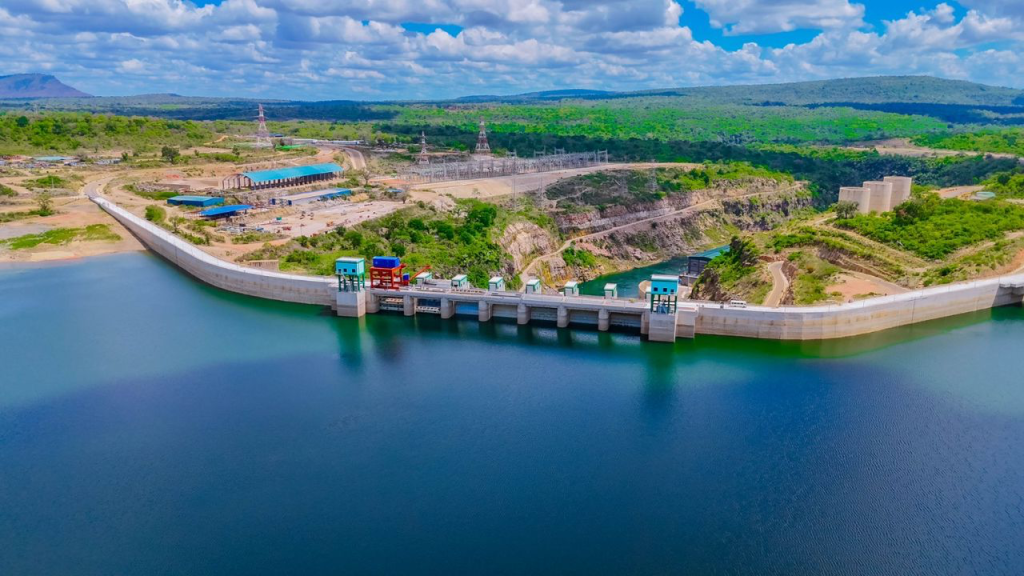
IN THE vast expanse of the Rufiji River basin, where waters once flowed unchecked toward the Indian Ocean, now stands a towering feat of modern engineering — the Julius Nyerere Hydropower Project (JNHPP), the largest hydroelectric dam in Africa. And its impact is already being felt across every corner of Tanzania.
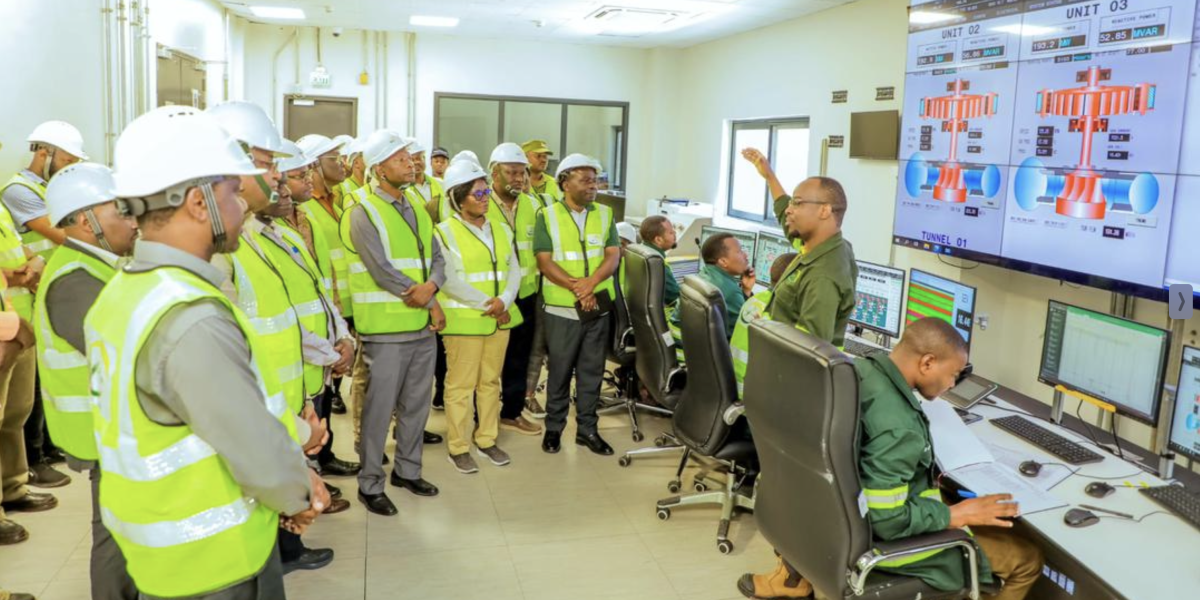
On February 26, 2026, the JNHPP Project Steering Committee conducted an inspection tour of the dam, led by its Chairperson, Dr. Jim Yonazi, who also serves as Permanent Secretary in the Prime Minister’s Office (Policy, Parliament, Coordination and Persons with Disabilities). The Committee’s verdict was unequivocal: the project has been managed and executed with exceptional efficiency, meeting quality standards commensurate with the Government’s investment.
“A Landmark Achievement for the Nation”
Dr. Yonazi made no effort to contain his satisfaction. Speaking to journalists after the tour, he said the Committee’s approval was grounded in clear evidence that this project stands apart in the history of energy infrastructure across the African continent.
“We are deeply satisfied with how this project has been managed and executed with remarkable efficiency. Compared to similar projects across Africa, this dam has been built to the highest standards of quality and has already eased the burden of electricity supply in the country. This is a landmark achievement for the nation.”
— Dr. Jim Yonazi, Chairperson, JNHPP Project Steering Committee
Those words carry significant weight. Many large-scale power projects across Africa have been plagued by delays, cost overruns, and questionable quality. But JNHPP, according to the Committee, has overcome those hurdles and delivered on its promise to a standard that justifies every shilling invested.
The Numbers Speak for Themselves
Perhaps the most powerful evidence of the project’s success lies in the numbers. Speaking on behalf of the Permanent Secretary of the Ministry of Energy, Director of Policy and Planning Petro Lyatuu painted a vivid picture: in 2021, the national grid had a total capacity of just 1,600 megawatts. Today, the country’s generation capacity exceeds 4,000 megawatts — an increase of more than 150 percent.
Lyatuu confirmed that the project is now 100 percent complete, and its contribution to the national energy landscape is already tangible.
“The dam is now generating power and its productivity is clearly visible. The increased generation has strengthened the national grid, and we continue to build momentum in the energy sector for the development of the country and the welfare of our citizens.”
— Petro Lyatuu, Director of Policy and Planning, Ministry of Energy
Chalinze: The New Heart of Power Distribution
A day before the dam inspection, on February 25, the Committee visited the Chalinze substation — a critical node in the entire system that receives electricity generated at JNHPP and distributes it to various parts of the country. The facility, now fully complete and operational, functions as an “electricity bridge” between the generation source and millions of consumers.
Speaking on behalf of the Managing Director of the Tanzania Electric Supply Company (TANESCO), Deputy Managing Director for Generation, Engineer Antony Mbushi, outlined progress on ongoing transmission projects: the Chalinze-to-Dodoma transmission line has reached 71.58 percent completion, while the Chalinze-Kinyerezi-Mkuranga line stands at 59.76 percent.
Both transmission projects are vital to ensuring that the power generated by JNHPP reaches industrial zones, residential areas, and commercial centres across the country — including the administrative capital Dodoma and the coastal areas south of Dar es Salaam.
The Bigger Vision: Tanzania as a Regional Energy Hub
Beyond solving domestic electricity challenges, the Committee sees a far larger opportunity on the horizon. In its concluding remarks, it declared that the implementation of strategic power projects like JNHPP positions Tanzania uniquely: as an investment magnet and a hub for electricity distribution across the East, Central, and Southern African regions.
This is a strategic move that goes far beyond generating megawatts. With surplus energy capacity and a growing transmission infrastructure, Tanzania could become a major power exporter to neighbouring countries — fundamentally shifting the nation’s economic trajectory from energy buyer to energy seller.
The Committee’s plan is clear: continue scaling up generation to ensure the country’s electricity supply is reliable and sustainable. With the dam operating at full capacity, transmission projects advancing steadily, and the national grid more than doubled in strength — JNHPP is not merely a project. It is the new foundation of Tanzania’s industrial economy.
■ ■ ■