

A humble tuber grown in the mists of the Southern Highlands is quietly transforming the fortunes of thousands of Tanzanian families. With the founding of the Potato Council of Tanzania and the power of farmer-led programmes, the country is poised to become Africa’s next great potato powerhouse.
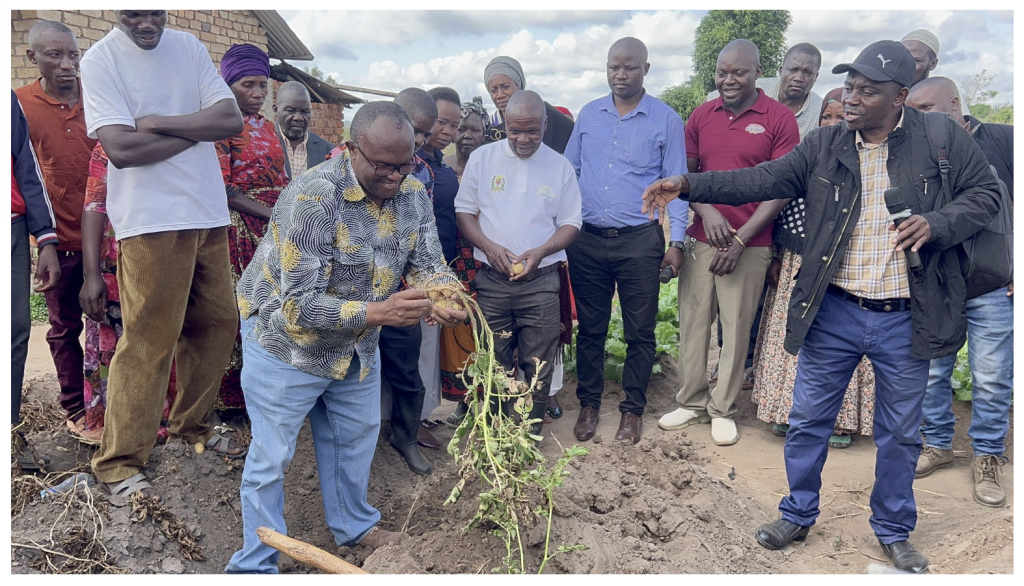
Kilimokwanza.org –The harvest that changed minds. Songea Municipal Hon. Mayor Michael Mbano (white shirt) watches as the first potatoes are pulled from the demonstration plot at Tanga Ward, Songea — flanked by Potato Council of Tanzania Chairman Beno Mgaya. SAGCOT research confirmed what the region long doubted: round potatoes flourish in Ruvuma, yielding up to 200 bags per hectare and TZS 16 million per farmer. 📍 Songea, Ruvuma | 2024/05/24
A Revolution Rooted in Red Soil
Perched between 1,800 and 2,700 metres above sea level, where the air is cool and the volcanic soils are among the most fertile on the continent, the farmers of Tanzania’s Southern Highlands have known for generations that the earth beneath their feet holds something special. For decades, however, that potential lay largely unfulfilled — crushed under poor seed quality, weak market linkages, and an absence of organised industry support.
That is changing. Rapidly.
Tanzania is already the sixth largest potato producer in Africa, generating over 1.7 million metric tons annually — with the Iringa, Njombe and Mbeya regions alone accounting for between 70 and 80 percent of total national output. The Southern Highlands are so productive that farmers in some areas plant and harvest twice a year, capitalising on the region’s rare bimodal rainfall pattern. In Njombe, farmers using the high-yielding Sagitta variety report harvests of up to 200 sacks per acre. In Iringa, yields that once averaged 5.2 tons per hectare have climbed to 18 tons — and the ceiling has not yet been reached.
But statistics, however impressive, tell only part of the story. The real story is told in the lives of people like Sara Martin of Maduma Village in Kichiwa Ward, who watched her annual harvest grow from 60 sacks to 400 sacks after adopting new seed varieties and training promoted through SAGCOT partnerships. “I am now capable of paying university fees for my daughter,” she has said simply — words that carry the full weight of what agricultural transformation really means.
“Our mission is to make Tanzania a leading producer of high-quality potatoes. We believe that with the right support and partnerships, Tanzania can become a leading exporter of potatoes in Africa.”
— Beno Mgaya, Chairman, Potato Council of Tanzania
Enter the Potato Council of Tanzania
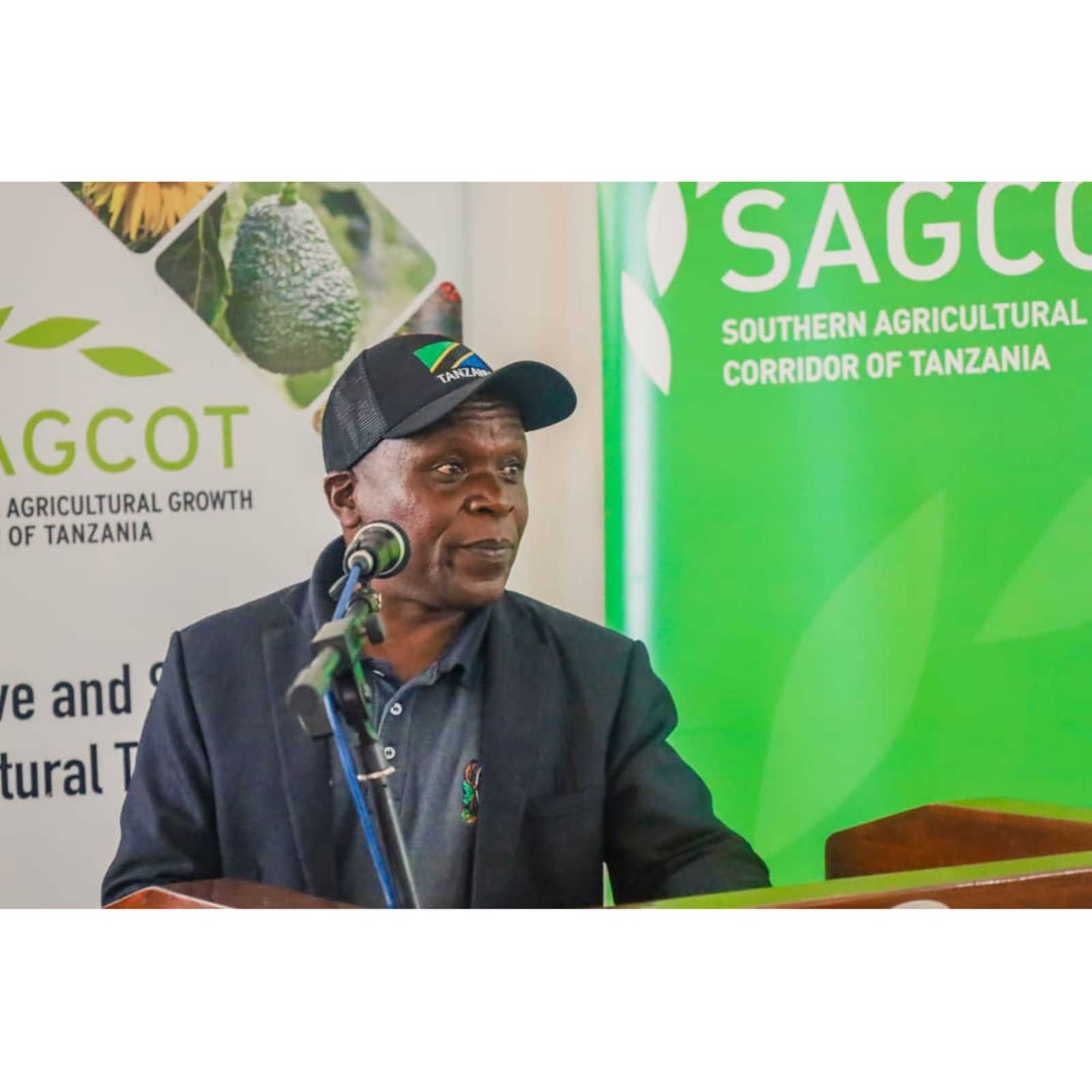
On a bright August morning in Dodoma, at the Nane Nane International Agriculture Trade Fair — Tanzania’s most prestigious agricultural showcase — a man stood at the Avocado Pavilion with a vision he had waited years to announce. Beno Mgaya, freshly appointed as Chairman of the newly registered Potato Council of Tanzania, was composed but electric with purpose.
“The council was established because of the critical importance of potato farming for our farmers’ economic well-being,” Mr. Mgaya explained. “Various emerging issues necessitated a dedicated organisation collaborating effectively with the government to address these challenges.”
The council — officially registered on June 27, 2024 — is not simply another agricultural association. It is a strategic industry body designed to do what Tanzania’s potato sector has long lacked: provide organised, systematic support across the entire value chain, from seed selection to sale. Its agenda targets four interlocking challenges that have historically suppressed the sector’s potential:
Seed quality. Poor and unverified seed varieties have long depressed yields and frustrated farmers who invest heavily in each planting season only to receive disappointing returns.
Soil health. Inadequate soil research has left many farmers unable to manage soil nutrition and disease pressure effectively, leading to unpredictable harvests season after season.
Market access and packaging. Without proper aggregation, packaging standards and market linkages, farmers are routinely forced to sell at farmgate prices that fail to reflect the quality or quantity of their produce.
Collection infrastructure. The absence of strategically placed collection centres forces farmers into logistical difficulties that increase post-harvest losses and reduce bargaining power.
“By improving the entire value chain — from farm to market — we hope to make Tanzania a recognised leader in potato production,” Mr. Mgaya told us. “Our goal is to bring international best practices to local farmers, enabling them to achieve higher yields, better quality, and greater profitability.”
Built on Coalition: How the PCT Was Founded
The Potato Council of Tanzania did not emerge spontaneously. It was the product of years of deliberate advocacy, strategic coalition-building, and the recognition — shared by farmers, government, and development partners alike — that the sector’s immense potential could only be unlocked through a dedicated, formally constituted institutional voice.
For years, the Tanzanian potato sector possessed that potential but lacked the unified body required to overcome its structural challenges and tap into cross-border markets. The catalyst for change came from the grassroots level: potato sector stakeholders across the country actively requested a dedicated organisation that could coordinate their efforts and align with the ambitious recommendations of the East African Community (EAC) Seed Potato Trade Strategy — a regional framework designed to harmonise seed standards and open the doors to intra-EAC potato trade.
2022: The Seed Is Planted
The journey officially began in June 2022, when SAGCOT Centre Limited (SCL) — in close collaboration with the Ministry of Agriculture — facilitated the initial formation of the Potato Council of Tanzania. Building a national institution, however, required more than goodwill. It required strategic allies and financial backing.
To solidify the PCT’s legal and operational foundation, a powerful agricultural coalition was assembled. SAGCOT Centre, Now AGCOT Centre joined forces with the Agriculture Council of Tanzania (ACT) and the Avocado Society of Tanzania (ASTA) to serve as founding subscribers. Together, this trio endorsed the Memorandum and Articles of Association (Memarts) and navigated the processes required to submit the documents to the Business Registration and Licensing Agency (BRELA). Agriculture and horticulture — two sectors whose fates are deeply intertwined in Tanzania’s highland economy — had found a shared institutional voice.
2024: A Triumphant Milestone
The story reached its defining moment during the 2024 reporting period. The Potato Council of Tanzania was officially registered under the BRELA Act — marking one of the most significant achievements of AGCOT’s Potato Strategic Partnership. It was this registration that brought Beno Mgaya to the Avocado Pavilion at Nane Nane with his announcement, and it was this formal recognition that transformed the PCT from a coalition aspiration into a legally mandated institution with the authority to act.
Today, the PCT stands as a formally recognised institution with a critical mandate that extends beyond Tanzania’s borders. As a founding entity connected to the regional Jumuiya Potato Platform, the Council is positioned to foster a structured, coordinated approach to advance the domestic potato industry, resolve key value chain bottlenecks, and champion Tanzania’s competitive role in the East African seed potato trade — with the EAC Seed Potato Trade Strategy as its north star.
Two Pillars, One Mission: The PCT and Mkulima kwa Mkulima
The Potato Council of Tanzania and AGCOT’s Mkulima kwa Mkulima (Farmer-to-Farmer) initiative are not parallel programmes running side by side. They are complementary pillars of a single strategic architecture — one operating at the institutional and policy level, the other at the community and farm level — designed together to transform the entire potato value chain from root to market.
The PCT is the policy anchor: a formal, recognised body that coordinates the domestic potato industry, resolves structural value chain bottlenecks, and advances Tanzania’s competitive position in regional seed potato trade. Mkulima kwa Mkulima is the on-the-ground engine: the peer-to-peer mechanism through which expert lead farmers — most notably from the Lusitu Agribusiness Group — travel to train their counterparts across regions on Good Agricultural Practices, certified seed use, and the business of farming. Both entities are working toward the same regional integration goals, both are aligned with the EAC Seed Potato Trade Strategy, and both have been shaped by AGCOT’s Potato Strategic Partnership.
Their connection is not merely conceptual. When Mkulima kwa Mkulima training in Njombe and Ruvuma revealed that the actual adoption rate of new techniques was only around 5 percent — driven by the limited availability of improved seed potatoes, which forced farmers to keep reusing old, disease-prone stocks — it was precisely the type of systemic bottleneck that the PCT exists to resolve. The grassroots programme identifies the problem; the institutional body is equipped to solve it. That is the architecture AGCOT has built.
The Proven Engine: A Programme’s Journey, Year by Year
The Mkulima kwa Mkulima initiative did not begin at scale. It began with 25 farmers and a conviction that knowledge, properly shared, could spread like seed across a field. The results since then have been remarkable — and instructive.
2022 — Cross-District Knowledge Transfer via “Tajirika na Lusitu”
Under the Tajirika na Lusitu branch of the initiative, skilled lead farmers from the Lusitu Agribusiness Group in Njombe made the journey to Igoma, Mbeya District Council, to train 25 potato farmers in Good Agricultural Practices, the proper introduction of certified seed potatoes, and the commercial mindset that distinguishes a subsistence grower from a farming entrepreneur. Crucially, the programme was designed from the outset for longevity: newly trained farmers were capacitated to take on training roles within their own localities, ensuring that knowledge multiplied rather than stopped at the point of first contact.
2023 — Nationwide Expansion Beyond the Corridor
What began as a Southern Highlands initiative broke its geographic boundaries in 2023. Spearheaded again by the Lusitu Agribusiness farmers, Mkulima kwa Mkulima expanded its reach significantly to explore opportunities outside the traditional SAGCOT area. Lead farmers travelled to train 101 farmers in Bahi District, Dodoma; 51 farmers in Nkasi District, Rukwa; and 17 farmers in the Buhigwa and Kasulu districts of Kigoma. The primary focus throughout these extensive training sessions was consistent: how to approach potato and avocado cultivation not as a survival strategy, but as a profitable business.
2024/2025 — Youth Integration, Field Demonstrations, and Bottleneck Identification
The initiative’s most recent phase marked its most ambitious yet. In collaboration with the Njombe and Ruvuma Regional Secretariats, Mkulima kwa Mkulima conducted large-scale training for 267 farmers across the two regions — with a deliberate focus on youth inclusion, with 40 percent of trainees being young people. Follow-up visits, however, revealed a sobering reality: despite the training, adoption of new potato farming techniques remained low at around 5 percent. The culprit was identified — the limited availability of improved seed potatoes was forcing farmers to continue reusing old, disease-prone seed stocks, negating the impact of even excellent training. In direct response, the Ihemi Cluster facilitated the Lusitu Agribusiness Group to establish a potato demonstration plot at Shule ya Tanga in Ruvuma. This model farm was showcased during a field day event and broadcast across regional media outlets — including ITV and local channels — to maximise peer-to-peer outreach and demonstrate what is possible when training is supported by quality inputs.
“All 4,780 farmers are engaged in commercial farming,” Mr. Mgaya confirmed. “They receive initial training, followed by practical demonstrations, and then apply what they’ve learned on their own farms.” The model — peer learning, practical demonstration, graduated independence — mirrors the most effective community-based development approaches deployed globally.
At the Lusitu Farmer Group in the Ihemi Cluster, this vision has become a living case study. What began as a small association of farmers has grown into a commercial enterprise with a packing and grading facility that supplies potatoes directly to buyers in Dar es Salaam, Zanzibar, and export markets — commanding premium prices that basic farmgate sales could never achieve. The group has established an informal Farmers Business School and is now exporting its Farmer-to-Farmer model to other regions across Tanzania.
Potato yields at Lusitu have risen from an average of 5 tons per acre to over 200 bags per acre — numbers that a farmer from the old system would struggle to believe. The Ihemi Cluster as a whole has become the flagship of Tanzania’s corridor approach: smallholder farmers who once earned TZS 200,000 a season now routinely take home between TZS 15 million and TZS 20 million. Some have crossed TZS 100 million in a single year.
Tanzania Potato Sector at a Glance
6th Largest potato producer in Africa
1.7M+ Metric tons produced annually
70–80% Of output from the Southern Highlands (Iringa, Njombe, Mbeya)
88% Of potatoes grown are sold for cash income
200 bags/acre Yields achieved by leading Njombe farmers using the Sagitta variety
4,780 Farmers empowered through the Farmer-to-Farmer programme across 7 regions
267 Farmers trained in Njombe and Ruvuma in 2024/25, with 40% youth participation
USD 255.3M Annual farmer revenues generated through AGCOT partners in FY 2024
14× Growth in cumulative farmer revenues since 2019 across the SAGCOT/AGCOT corridor
Sources: SAGCOT/AGCOT, CCAFS, CIP World Potato Atlas, Kilimokwanza.org
Beyond Potatoes: A Model for All of Agriculture
The Potato Council’s influence extends beyond the humble tuber. Through the Tajirika and Lusitu programmes, the council has supported farmers in making successful transitions into high-value crops — most notably avocados — demonstrating that the same principles of organised support, quality inputs and market linkage can be applied across Tanzania’s agricultural landscape.
Initially, high capital requirements kept small-scale farmers out of avocado production entirely. Through partnerships with the Tanzania Official Seed Certification Institute (TOSCI) and SAGCOT, participating farmers received training on producing quality seedlings and grafting techniques. Today, those same farmers manage their nurseries and orchards independently. The economic results have been striking: Mr. Mgaya estimates that approximately 60 to 70 percent of participating households have experienced meaningful improvements in their economic circumstances.
For avocado growers in the Ihemi Cluster, the numbers speak for themselves: a farmer with 600 mature trees, harvesting at 300 kg per tree at TZS 2,500 per kilogram, can generate more than TZS 400 million in a single season. These are not exceptional cases reserved for already-wealthy landowners — they are emerging realities for smallholders who entered the programmes with modest assets and graduated into commercial-scale producers.
Among the stories that stand out is that of a young woman who joined the Lusitu group with, in Mr. Mgaya’s own words, “nothing.” She has since built an aggregation business supplying potatoes to Zanzibar and regional markets — a trajectory that captures, in miniature, the entire ambition of the Potato Council: not charity, but commerce; not dependency, but enterprise.
A Crop Whose Moment Has Come
The establishment of the Potato Council arrives at a pivotal moment for Tanzania’s agricultural sector. Agriculture contributes over 25 percent of Tanzania’s GDP and employs almost 70 percent of the workforce — and within that landscape, the potato occupies a uniquely strategic position. Unlike cereals such as maize, rice and beans — where only 40 to 50 percent of production is sold for cash income — a remarkable 88 percent of Tanzania’s potato output is sold commercially. This is a cash crop hiding in plain sight.
Globally, the potato ranks fourth after maize, rice and wheat as a food crop, and first among all root and tuber crops by volume produced and consumed. Over a billion people eat potatoes daily. As urbanisation accelerates across East Africa and the demand for processed and convenience foods grows, Tanzania’s potato industry stands at the entrance of an enormous and expanding market.
The Tanzanian government has recognised this, signing a landmark Memorandum of Understanding with the Netherlands — the world’s leading potato exporting nation — to facilitate the importation of improved seed varieties and technical expertise. Potato production has been growing at an annual average rate of 11 percent over the past two decades and is projected to increase by 245 percent in the coming years. The Potato Council of Tanzania exists, in part, to ensure that when that growth arrives, it lands in the hands of Tanzanian smallholders — not in the pockets of intermediaries or foreign operators.
Partners in Progress: The AGCOT Connection
The work of the Potato Council does not stand alone. It is embedded within a broader ecosystem of public-private collaboration that Tanzania has been building — painstakingly but progressively — through the SAGCOT framework and its successor institution, AGCOT Centre (the Agricultural Growth Corridors of Tanzania). AGCOT is the operational and strategic engine coordinating agricultural corridors across Tanzania, serving as an honest broker and public-private partnership hub that facilitates relationships between government, agro-industries, SMEs, smallholder farmers, and development partners.
It was SAGCOT Centre Limited that convened the founding coalition, and AGCOT’s Potato Strategic Partnership that provided the programmatic architecture within which both the PCT and Mkulima kwa Mkulima operate. The scale of that collective achievement is visible in the aggregate numbers: cumulative farmer revenues have grown fourteen-fold since 2019, rising from a baseline of USD 42.9 million to a cumulative total of USD 606 million by the end of FY 2024. In FY 2024 alone, farmers associated with AGCOT partners generated USD 255.3 million in annual revenues — surpassing target by 118 percent.
“We are thrilled to see the Potato Council of Tanzania taking strategic steps to transform the potato industry by elevating production standards and creating sustainable value chains. The initiatives led by the Council are empowering our farmers and ensuring that Tanzania becomes a leader in high-quality potato production across the region.”
— Tullah Mloge, AGCOT Centre
For the Ihemi Cluster — the Potato Council’s natural home territory — that investment is now bearing the kind of fruit that development economists write papers about. The AGCOT Board’s March 2026 field visit to Njombe found not a sector still struggling, but one that had become a template: results proven, model documented, ready to be replicated across Tanzania’s four agricultural growth corridors. “The board and the AGM have agreed: maintain the economy here, so that when we build other corridors, we build on what we have already learned,” AGCOT leadership noted. Ihemi is no longer the destination — it is the template.
The Road Ahead: Building a Potato Nation
Mr. Mgaya is clear-eyed about the work that remains. The Potato Council’s immediate priorities — establishing collection centres, rolling out comprehensive soil research, standardising packaging, expanding certified seed availability, and forging stronger market linkages — are not glamorous. They are the unglamorous foundations without which no agricultural revolution sustains itself.
The challenges are real. Late blight disease and bacterial wilt remain persistent threats to potato crops across the highlands. Climate variability — frost, irregular rainfall, shifting seasons — introduces unpredictability into systems that farmers depend upon for their livelihoods. Processing infrastructure remains underdeveloped, meaning that much of Tanzania’s potato harvest still travels to market in raw, unprocessed form, leaving significant value-addition opportunities on the table. And as the 2024/25 Mkulima kwa Mkulima follow-ups showed, even excellent training fails to deliver results when farmers cannot access the improved seeds they need. Addressing that bottleneck — at the institutional level — is precisely where the PCT must now demonstrate its worth.
But the direction is unmistakable. A sector that once had no unified voice, no organised industry body, and no systematic support structure now has all three. The farmers who were once invisible to markets and to policy are now at the centre of a national conversation about food security, export earnings, and rural economic development.
“If we continue the momentum,” as one veteran farmer in the Southern Highlands has put it, “if farmers start investing in storage facilities and a number of potato processing industries are realised, Iringa and the surrounding areas will become a potato paradise.”
That paradise is not a distant dream. It is being built, row by row, season by season, in the cool red earth of the Tanzanian highlands — by farmers who have learned, organised, and refused to accept the ceiling that circumstance once placed above them. And now, for the first time, they have an institution that stands with them.
The Potato Council of Tanzania (PCT) was officially registered under the BRELA Act in 2024. It was established through the collaboration of SAGCOT Centre , the Agriculture Council of Tanzania (ACT), and the Avocado Society of Tanzania (ASTA). The Mkulima kwa Mkulima (Farmer-to-Farmer) initiative is a programme of AGCOT Centre (formerly SAGCOT Centre), supporting smallholder farmers across Tanzania’s agricultural growth corridors. Both form core pillars of AGCOT’s Potato Strategic Partnership.