

The fourteen-year experiment that mobilised $6.34 billion and reached a million farmers is now the template for nationwide commercialisation
Kilimokwanza Special Report
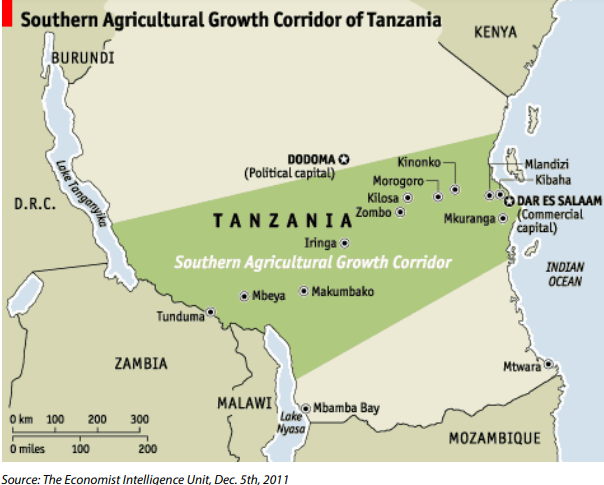
When President Samia Suluhu Hassan stood before agricultural stakeholders at State House on 17 March 2023, her directive was unambiguous: “Expand the SAGCOT model to the rest of the country.” What had begun as a regional pilot in Tanzania’s Southern Highlands was about to become the primary engine for the nation’s Vision 2050 goal of a $100 billion agricultural economy.
Two years later, that expansion is no longer hypothetical. The Agricultural Growth Corridors of Tanzania (AGCOT) initiative—officially launched on 27 April 2025—represents the largest coordinated agricultural transformation effort in East Africa, and arguably the most comprehensively documented public-private partnership model on the continent. Built on twin founding documents—a Blue Print that maps commercial coordination mechanisms and a Green Print that embeds sustainability as a non-negotiable design constraint—the model has proven that agricultural commercialisation and environmental stewardship need not be competing objectives. The question is no longer whether corridor-based agricultural development works. The question is whether Tanzania can replicate at national scale what took fourteen years to refine in one region.
The Numbers That Demanded Expansion
Between 2010 and 2024, the Southern Agricultural Growth Corridor of Tanzania (SAGCOT) accomplished what most development initiatives only claim in glossy brochures. The initiative mobilised $6.34 billion in cumulative investments—111% of its original target, achieved five years ahead of schedule. Of this, $5.02 billion came from public infrastructure investments in roads and energy, whilst $1.32 billion was driven directly by private sector agribusinesses.
The human impact tells an even more compelling story. Over one million smallholder farmers were integrated into commercial value chains. More than 253,000 jobs were created across the corridor. By 2024, farming revenues for those associated with the initiative had surged to over $600 million. Perhaps most significantly, 1.3 million hectares of land were brought under climate-resilient agricultural practices—a critical achievement in a continent where soil degradation and erratic rainfall increasingly determine the difference between subsistence and starvation.
These are not projections. They are audited outcomes from a pilot that consumed nearly a decade and a half of patient implementation. The Southern Highlands, which account for approximately 65% of Tanzania’s national food production, became the laboratory where theory confronted the messy realities of extension services, land tenure disputes, input supply bottlenecks, and the eternal challenge of linking smallholders to markets that actually pay.
The Architecture: Corridors, Clusters, and Compacts
The AGCOT model rests on a deceptively simple premise: rather than spreading resources thinly across an entire nation, concentrate public and private investments in areas with high agricultural potential and existing “backbone” infrastructure. These are the corridors—geographic zones anchored by transport routes that link production areas to ports, processing facilities, and regional markets.
Within each corridor, operations are subdivided into clusters: geographic concentrations of interconnected companies, specialised suppliers, service providers, commercial farmers, and supportive institutions such as research centres. SAGCOT originally identified six main clusters—Ihemi, Mbarali, Kilombero, Sumbawanga, Ludewa, and Rufiji—each with distinct agro-ecological characteristics and commodity strengths.
The genius of the cluster approach lies in what economists call agglomeration economies. When input suppliers, processors, off-takers, financial institutions, and farmers operate in close proximity, transaction costs plummet. Information flows more freely. Quality standards become enforceable. Mechanisation and irrigation services become commercially viable because they serve concentrated demand rather than dispersed plots separated by hundreds of kilometres of poor roads.
But infrastructure and proximity alone do not guarantee inclusion. This is where the model’s second innovation becomes critical: the hub-and-outgrower structure. Under this arrangement, a large-scale commercial agribusiness acts as a central “nucleus farm,” providing surrounding smallholder and emergent farmers with services they could not otherwise access—high-quality seeds and fertilisers on credit, mechanisation, low-cost irrigation, advanced extension services, post-harvest storage, and crucially, a guaranteed off-take market at competitive prices.
The arrangement is not philanthropic. It is hard-nosed commercial logic. Agribusinesses secure reliable supply. Smallholders gain access to inputs, knowledge, and markets. The SAGCOT Catalytic Trust Fund (SCTF) de-risks these arrangements with patient capital and matching grants, offsetting the heavy upfront costs of “last mile” infrastructure and outgrower programme development.
The Twin Foundations: Blue Print and Green Print
The AGCOT model’s enduring strength derives from a critical architectural decision made at its inception: the simultaneous development of two founding documents that function as inseparable counterparts. The Blue Print articulates the commercial logic—corridors, clusters, value chains, investment mobilisation, and market linkages. The Green Print embeds sustainability imperatives—environmental stewardship, social inclusion, climate resilience, and grievance mechanisms—directly into the partnership framework.
This is not a case of “greenwashing” commercial objectives with sustainability rhetoric added as an afterthought. The Green Print, operationalised through the Inclusive Green Growth (IGG) tool, establishes non-negotiable compliance standards that agribusinesses must meet to access partnership support. The Blue Print ensures commercial viability. The Green Print ensures that viability does not come at the expense of soil health, water resources, biodiversity, or smallholder rights.
The practical manifestation of this dual foundation is the Green Reference Group (GRG), co-chaired by government and private sector representatives, which conducts rigorous environmental and social assessments of prospective agribusiness partners. Compliance is not optional—it is the price of entry. The IGG tool measures sustainability across three dimensions: social inclusivity (youth and women’s participation, land rights, fair labour practices), environmental management (soil conservation, water use efficiency, biodiversity protection), and business sustainability (long-term commercial viability, resilience to climate shocks).
The genius of the twin-document approach is that it transforms potential conflict between economic growth and environmental protection into a design constraint that generates innovation. When agribusinesses know that soil degradation or exploitative labour practices will disqualify them from partnership support, they invest in regenerative agriculture, mechanisation that reduces drudgery, and grievance mechanisms that resolve disputes before they escalate. The Green Print does not constrain the Blue Print—it makes the Blue Print’s promises durable.
Between 2010 and 2024, this framework enabled SAGCOT to bring 1.3 million hectares under climate-smart agricultural practices whilst simultaneously mobilising $6.34 billion in investments. The expansion to AGCOT carries forward this dual mandate: the Blue Print will guide commercial coordination across four corridors, whilst the Green Print ensures that Tanzania’s agricultural transformation does not replicate the environmental degradation and social displacement that have marred commercialisation efforts elsewhere on the continent.
The Engine: Partnerships and Compacts
If clusters provide the geographic framework and hubs provide the commercial architecture, partnerships are the operational engine of the AGCOT model. The AGCOT Centre Limited (formerly SAGCOT Centre Ltd) functions as an “honest broker”—a deliberately neutral secretariat that convenes stakeholders who would not ordinarily sit at the same table.
The Centre does not implement agricultural projects directly. Instead, it facilitates Strategic Value Chain Partnerships that unite input suppliers, machinery providers, processors, financial institutions, development partners, and government bodies to resolve shared constraints within specific commodities. SCL has successfully fostered partnerships in dairy, potatoes, soya, tea, tomatoes, poultry, and rice—each tailored to the specific bottlenecks of that value chain.
Take the Potato Strategic Partnership. Tanzania’s potato sector was plagued by a severe shortage of quality seed, with farmers recycling degenerated stock that yielded less than eight tonnes per hectare. The partnership brought in HZPC, an international seed company, revised the archaic Seed Act of 2003 to allow seed marketing, trained the Tanzania Official Seed Certification Institute (TOSCI) in seed potato regulation, and established a coalition of land preparation, fertiliser, crop protection, and storage companies.
The results were dramatic. Productivity in farmers’ fields increased to 30 tonnes per hectare. Four new seed companies emerged. Demand for clean seeds now outstrips supply many times over. Farmers in Njombe and Mbeya who adopted varieties like Sagitta—now ubiquitous in local markets—report incomes four times higher than before. Many consider themselves to have escaped poverty outright.
Similar stories emerge from the Tomato Strategic Partnership, where the introduction of “Mtumbwi” water-efficient technology and protected cropping systems through partners like Green Vale Agro’s RAHA Farm increased seedling production from 3,000 to 400,000 per month. Employment at RAHA Farm surged from 15 to 58 workers, 85% of them women. Or the Soya Strategic Partnership, where 137 demo farms and 35 model farms were established across 19 districts, linking 151 farmers with off-takers like Silverlands Tanzania and Tanfeeds International, which collectively indicated demand for over 400,000 metric tonnes of soy grain and meal.
Crucially, these partnerships are formalised through Compacts—binding written agreements that ensure stakeholders commit to executing agreed-upon interventions. Cluster Compacts operate at the geographic level, coordinating public, private, and civil society actors within specific zones. Commodity Compacts, introduced as AGCOT scaled nationwide, are comprehensive business plans for high-priority value chains, complete with indicative investment cases, funding requirements, and intervention roadmaps.
In SCL’s annual partner surveys, 91% to 100% of participants consistently report that collaborations formed through these compacts are highly valuable, successfully aligning investment priorities, enhancing market linkages, and solving bottlenecks. This is not soft development speak. It is measurable commercial coordination.
The Expansion: From One Corridor to Four
The success of SAGCOT created what might be termed “agricultural envy” across Tanzania. Northern Corridor stakeholders requested similar support. Central Corridor leaders demanded cluster development. Mtwara Corridor actors sought the same partnership frameworks that had transformed the Southern Highlands. The question became unavoidable: why should only the South benefit?
President Hassan’s 2023 directive answered that question by establishing the Presidential Food and Agriculture Delivery Council and mandating SAGCOT Centre to lead national expansion. On 27 April 2025, at an event in Dodoma officiated by Prime Minister Kassim Majaliwa and endorsed by President Hassan the following day, SAGCOT formally transitioned to AGCOT. The legal mandate shifted from regional to national. Geographic scope expanded from one corridor to four. Strategic framework evolved from pilot to full implementation.
The four corridors now comprise:
- Southern Corridor (Established, Deepening Impact) Regions: Morogoro, Iringa, Njombe, Mbeya, Songwe, Rukwa, Katavi Focus: Maize, paddy, tea, potatoes, livestock
- Northern Corridor (Activated 2026) Regions: Arusha, Kilimanjaro, Tanga, Manyara Focus: Horticulture, coffee, avocado, wheat (export-oriented)
- Central Corridor (Activated 2026) Regions: Dodoma, Singida, Tabora, Lake Zone Focus: Sunflower, soybean, fisheries, maize
- Mtwara Corridor (Activated 2026) Regions: Lindi, Ruvuma, Mtwara Focus: Cashews, sesame, legumes, coconut
The AGCOT 2025-2030 strategic plan sets ambitious targets: 10% annual agricultural GDP growth, a 25% boost in smallholder incomes, $3 billion in agro-processing output, $6 billion in net agricultural exports, and lifting two million people out of poverty. To achieve this, the strategy allocates approximately $13.5 million specifically for developing three initial national Commodity Compacts—for soya, rice, and poultry—that will coordinate public and private investments at scale.
Operationalising Sustainability: Thematic Partnerships and Grievance Mechanisms
Beyond the IGG compliance framework, the AGCOT model addresses systemic agricultural challenges through Thematic Partnerships—cross-cutting coalitions that tackle foundational constraints affecting multiple value chains simultaneously.
The Soil Health Partnership exemplifies this approach. Recognising that severe soil degradation and acidity limit yields across all crops, the partnership brought together the Tanzania Agricultural Research Institute (TARI), cement companies, and development partners to map local agricultural lime and gypsum deposits. Thousands of farmers have been trained on lime application, and collaboration with the Guiding Acid Soil Management Investments in Africa (GAIA) project has generated data-driven soil rehabilitation recommendations. This is infrastructure at the molecular level—rebuilding soil structure so that other investments in seeds, fertiliser, and irrigation can generate returns.
The Fit4Ag Innovative Finance Partnership tackles the capital access barrier that strangles both smallholder expansion and agribusiness investment. Working with the Financial Sector Deepening Trust (FSDT), the SAGCOT Catalytic Trust Fund (SCTF), and commercial banks including the Tanzania Agricultural Development Bank (TADB), NMB, and CRDB, the partnership designs financial products tailored to agriculture’s unique risk profile—matching grants, de-risking mechanisms, patient capital structures that recognise seasonal cash flows and climate volatility.
Critically, the Green Reference Group operates a Grievance Redress Mechanism (GRM) that peacefully resolves land and contract disputes between farmers and investors before they escalate into social conflict or legal gridlock. The mechanism has handled disputes over land boundaries, contract terms, payment schedules, and environmental compliance—mundane conflicts that, left unresolved, can destroy partnerships and undermine community trust. The GRM is not a public relations exercise. It is operational infrastructure for conflict resolution, backed by the legitimacy of both government and private sector co-chairship.
The Replication Challenge
The expansion from one corridor to four is not simply a matter of copy-pasting the SAGCOT playbook. Each corridor has distinct agro-ecological conditions, commodity portfolios, infrastructure baselines, and institutional capacities. The Northern Corridor’s export-oriented horticulture requires cold chain logistics and phytosanitary certifications that differ fundamentally from the Southern Corridor’s emphasis on staple grains. The Mtwara Corridor’s cashew and sesame sectors face different market dynamics than Central Tanzania’s sunflower and fisheries value chains.
Moreover, the original SAGCOT pilot had the luxury of time—fourteen years to build trust, refine instruments, resolve policy bottlenecks, and demonstrate results. AGCOT must now replicate that impact across three additional corridors simultaneously, whilst continuing to deepen impact in the Southern Highlands. The AGCOT Centre’s institutional capacity will be tested. The ability to convene meaningful partnerships in regions where the Centre has limited historical presence remains unproven. And the political economy of agricultural transformation—land tenure disputes, bureaucratic bottlenecks, rent-seeking behaviour—does not become simpler at national scale.
Yet the model’s very existence represents a significant achievement. Unlike many African agricultural strategies that remain locked in policy documents, the AGCOT framework is grounded in fourteen years of implementation experience. The Commodity Compacts are not theoretical constructs—they are based on functional partnerships that have already mobilised billions of dollars and integrated a million farmers. The cluster approach is not an academic abstraction—it is a proven method for generating agglomeration economies in areas with historically fragmented value chains.
A Blueprint for the Continent?
Tanzania’s willingness to pilot, evaluate, and scale an agricultural transformation model over nearly two decades offers lessons that extend beyond national borders. The AGCOT model demonstrates that public-private partnerships in African agriculture need not be euphemisms for corporate land grabs or hollow consultation forums. When structured correctly—with neutral brokering institutions, binding compacts, transparent grievance mechanisms, and patient capital to de-risking early-stage ventures—such partnerships can deliver measurable commercial outcomes whilst genuinely integrating smallholders.
The twin architecture of Blue Print and Green Print provides the model’s exportability. The Blue Print—with its corridors, clusters, commodity compacts, and investment mobilisation frameworks—can be adapted to any country with concentrated agricultural potential and backbone infrastructure. The Green Print—with its IGG compliance tool, environmental assessments, and grievance mechanisms—ensures that adaptation does not sacrifice sustainability for speed. Other African nations seeking agricultural transformation need not choose between commercial viability and environmental stewardship. The AGCOT model demonstrates that these objectives are mutually reinforcing when embedded as design constraints from inception.
The model also validates the corridor approach as a strategic alternative to nationwide, uniform agricultural policies. By concentrating investments in high-potential zones with existing infrastructure, governments can generate demonstration effects, build institutional capacity, and create commercial momentum that eventually spills over into adjacent areas. The key is resisting the political pressure to spread resources everywhere simultaneously—a discipline that Tanzania maintained for fourteen years in the Southern Highlands before expanding nationally.
As AGCOT enters its implementation phase across all four corridors, the initiative’s success or failure will be determined not by policy pronouncements or partnership MOUs, but by the mundane realities of seed availability, credit access, road conditions, off-taker reliability, and farmer incomes. The Blue Print provides the commercial coordination mechanisms. The Green Print ensures that coordination does not degrade the natural resource base upon which long-term productivity depends. If the model proves replicable at national scale, Tanzania will have produced not just an agricultural transformation, but an exportable framework where economic growth and environmental sustainability function as mutually reinforcing imperatives—a blueprint for a continent where 60% of the world’s uncultivated arable land coexists with persistent food insecurity.
For now, the Southern Highlands stand as proof of concept. The potato farmers in Njombe harvesting 30 tonnes per hectare, the women entrepreneurs at RAHA Farm producing 400,000 tomato seedlings monthly, the soya farmers linked to Silverlands’ processing facilities—these are not development success stories. They are commercial realities, operating at scale, generating measurable returns. The question is whether that reality can be systematically replicated across Central Tanzania’s sunflower fields, Northern Tanzania’s coffee estates, and Mtwara’s cashew plantations.
The answer will determine whether AGCOT becomes the blueprint for African agricultural transformation, or simply another ambitious plan that foundered on the complexities of implementation at scale.
Kilimokwanza is East Africa’s leading platform for agricultural policy analysis and rural transformation reporting. For more on AGCOT’s commodity compacts and cluster development frameworks, visit agcot.co.tz