

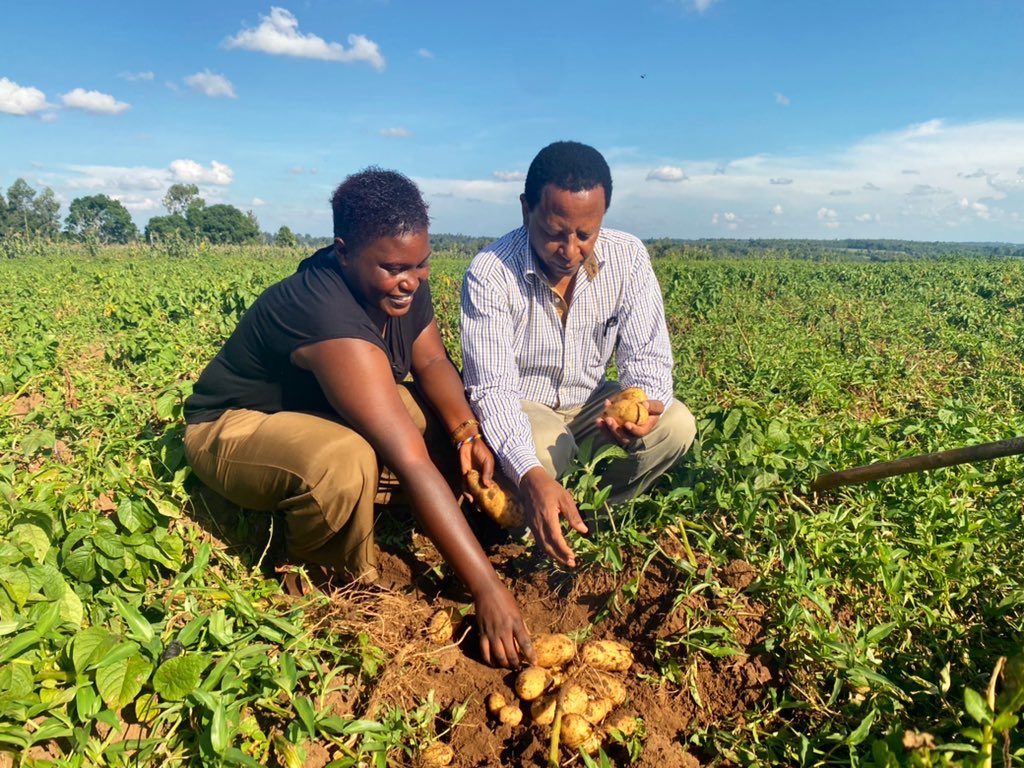
A conversation with Geoffrey Kirenga reveals how six decades of strategic investment, policy evolution, and farmer resilience built one of Africa’s rare food self-sufficient nations
When Geoffrey Kirenga settles into the studio chair at TBC, he carries with him not just the institutional memory of Tanzania’s agricultural sector, but a profound respect for the millions who have tilled its soil across six decades of independence. As Chief Executive Officer of the AGCOT centre, Kirenga has watched policies shift, technologies evolve, and generations of farmers transform a newly independent nation into something remarkable: a country that feeds itself.
In an era when food insecurity haunts much of the African continent, Tanzania stands apart. For nearly three decades, the country has consistently produced more than it consumes—not marginally, but substantially. Over the past decade alone, national food production has reached between 120 and 130 percent of requirements. This achievement, Kirenga emphasizes to journalist Salome Baptister, did not emerge by accident. It represents the cumulative result of deliberate choices made across six presidential administrations, each building upon the foundations laid before.
The Nyerere Foundation: Building from the Ground Up
The story begins where Tanzania’s independence itself begins: with Mwalimu Julius Kambarage Nyerere and the vision of a nation that would control its own destiny. Nyerere understood something fundamental that would shape Tanzania’s trajectory for generations—that true independence required food independence, and food independence required investing in rural communities where the vast majority of Tanzanians lived.
The first-phase government established the architecture that still supports Tanzania’s agricultural sector today. State enterprises were created to handle production, processing, and marketing. Extension services reached into villages. Research institutions began studying local conditions and crops. Educational programs trained agronomists and technicians. The Ujamaa village system, whatever its economic complications, embedded a cooperative spirit and rural development priority that would outlast the policy itself.
“Many of the country’s major crops and value chains gained their footing through investments made during this era,” Kirenga reflects. It was a period of institution-building, when the technical experts who would dedicate their entire careers to improving agriculture, livestock, and fisheries first received their training and began their work.
The Pivot to Markets: Phases Two Through Four
As Tanzania entered its second phase under Ali Hassan Mwinyi, the economic winds shifted. Privatization became the watchword. State enterprises that had dominated the agricultural landscape were restructured or sold. The private sector, both domestic and foreign, received invitations to invest in ways previously unimaginable.
This transition proved neither simple nor painless, but it opened channels for capital and entrepreneurship that the state sector alone could not provide. The third phase continued expanding private sector participation across the agricultural value chain—from input supply to production, processing to marketing. By the fourth phase, this involvement had deepened considerably as market opportunities grew and Tanzania’s economic direction evolved.
The cooperative movement, meanwhile, experienced its own turbulent journey. Cooperatives had flourished in earlier years, providing farmers with collective bargaining power and access to markets. But they also weathered periods of decline and dysfunction. Recent efforts to rebuild their capacity, Kirenga notes, are beginning to show results. When functioning well, cooperatives enable farmers to access capital, manage income more effectively, and enter larger markets from positions of strength rather than vulnerability.
Industrialization and the Youth Dividend
The fifth-phase government under John Magufuli marked another inflection point with its emphasis on industrialization and value addition. Agro-processing facilities began transforming raw agricultural products into finished goods, creating reliable domestic markets for farmers and generating employment for young people. These industries strengthened the agricultural economy while expanding job opportunities in both rural and urban areas.
Now, in the sixth phase, the focus has sharpened on youth, technology, and modern markets. Tanzania’s population approaches seventy million people, creating a dynamic domestic market that has fundamentally altered agricultural economics. Crops once grown primarily for export now find strong demand locally. High-value sectors including horticulture, spices, and livestock products are expanding rapidly.
Science, information and communication technology, and digital agriculture are reshaping how farming happens. But perhaps more importantly, they are reshaping who participates in agriculture and how.
Kirenga speaks passionately about this transformation: “No nation can advance without its young people. Youth carry the weight of a country’s economic growth.”
He points to the Building a Better Tomorrow (BBT) program as transformative precisely because it reaches youth directly in their communities, providing land, training, mentorship, access to finance, and the opportunity to build meaningful agricultural enterprises without migrating to cities. Yet agriculture offers opportunities for youth well beyond production itself.
The expansion of rural road networks has created an entire logistics sector. Young people operating motorcycles and small trucks move crops from farms to markets, monetizing infrastructure investments while simultaneously relieving women from the historical burden of carrying harvests on their heads—a social transformation with profound implications for gender equity and dignity.
Value addition, processing, extension services, warehousing, market operations, and food retailing all present openings for educated young professionals. Virtually every link in the agricultural value chain now welcomes youth participation, creating pathways to prosperity that previous generations could not have imagined.
Infrastructure: The Invisible Revolution
Running through Kirenga’s narrative like a sustaining current is infrastructure—the unsexy but essential foundation upon which agricultural transformation rests. Rural roads, electrification, irrigation systems, storage facilities: these investments have made it possible for farmers and investors to establish businesses in areas that previously lacked basic connectivity.
The impact extends beyond simple convenience. Infrastructure enables commercialization, transforms subsistence farming into market-oriented agriculture, and integrates rural producers into national and regional value chains. Without roads, agricultural potential remains theoretical. With them, it becomes actualized in ways that generate wealth and employment.
The Unfinished Agenda: Productivity, Quality, and Predictability
For all Tanzania has achieved, Kirenga identifies critical gaps that must be addressed for agriculture to become a more powerful engine of economic growth. His prescription centers on three interconnected priorities essential for transitioning to true “Kilimo Biashara”—agriculture as business.
First, Tanzania must dramatically increase productivity. Many crops are still produced at only a quarter of their potential yields. Closing this gap requires deeper investments in efficiency, technology, and knowledge transfer from research stations to farmers’ fields.
Second, quality standards must be strengthened. Markets, whether local or international, demand products that meet specific requirements. Tanzanian agriculture cannot compete on global markets—or even maximize domestic market potential—without consistent adherence to quality specifications.
Third, the country must ensure reliability in supply. Competitiveness depends on producing the right quantity, with the right quality, at the right time, season after season. Predictable, timely supply establishes trust with buyers and strengthens Tanzania’s market position.
Yet all of these improvements, Kirenga emphasizes, depend fundamentally on policy predictability. In one of his most striking observations, he argues that it is better to have a bad but predictable policy than a good one that changes unexpectedly. Agricultural cycles operate on biological timeframes that cannot be compressed. When policies shift mid-season, planning becomes impossible and markets get disrupted.
Predictable policies allow farmers, traders, and investors to plan with confidence, adjust strategies, and manage risks. Kirenga acknowledges progress, noting that the government has been “responsive” in removing nuisance taxes and levies that previously obscured investment opportunities. Still, he sees substantial room for strengthening alignment and stability in policy and regulatory frameworks.
The Heart of the Sector
Throughout the conversation, Kirenga returns repeatedly to a central theme: for all the importance of government policy, private sector investment, development partner support, and institutional reform, the heart of Tanzania’s agricultural sector remains the farmers, livestock keepers, and fishers who work the land and waters daily.
These are the people who maintained production through policy shifts and economic turbulence. They adopted new technologies when effective extension reached them and persisted with traditional methods when it did not. They fed their families and their nation through droughts and floods, through periods of high prices and low, through cooperative strength and cooperative collapse.
“Without their daily work,” Kirenga concludes, “agriculture would not stand where it does today.”
It is a reminder that carries particular weight in an era of technocratic policy discourse. Data and strategy matter. Investment and infrastructure matter. But ultimately, agriculture happens in fields and on farms, in the daily decisions of millions of producers whose accumulated knowledge, resilience, and labor create the food security that Tanzania has achieved.
Looking Forward
As Tanzania enters its seventh decade of independence, its agricultural sector stands at an inflection point. The foundations are strong—stronger than most African nations can claim. Food self-sufficiency is no longer aspirational but actual. Infrastructure continues expanding. Youth are finding opportunities. Markets are growing.
Yet the challenges Kirenga identifies—productivity gaps, quality inconsistencies, supply unreliability, policy unpredictability—remain substantial. Addressing them will require sustained commitment, careful planning, and the kind of long-term vision that characterized Tanzania’s most successful agricultural investments.
The blueprint exists in the nation’s own history: patient institution-building, investment in rural areas, respect for farmers’ knowledge, adaptation to changing conditions, and above all, policy stability that allows agricultural cycles to unfold without disruption.
If Tanzania can maintain this approach while embracing the technological and market opportunities of the 21st century, Kirenga’s optimism about the continued transformation of Tanzania’s agricultural landscape seems well-founded. The country that has fed itself for three decades can become the country that not only sustains its own growing population but emerges as a regional agricultural powerhouse.
The farmers who made Tanzania’s agricultural independence possible are still in their fields. The question now is whether the policies, investments, and institutions surrounding them will rise to match their dedication and skill. Sixty-four years of history suggests they can. The next chapter will reveal whether they will.
This feature is based on a special independence-year interview conducted by journalist Salome Baptister with Geoffrey Kirenga, Chief Executive Officer of the AGCOT centre, on TBC.