

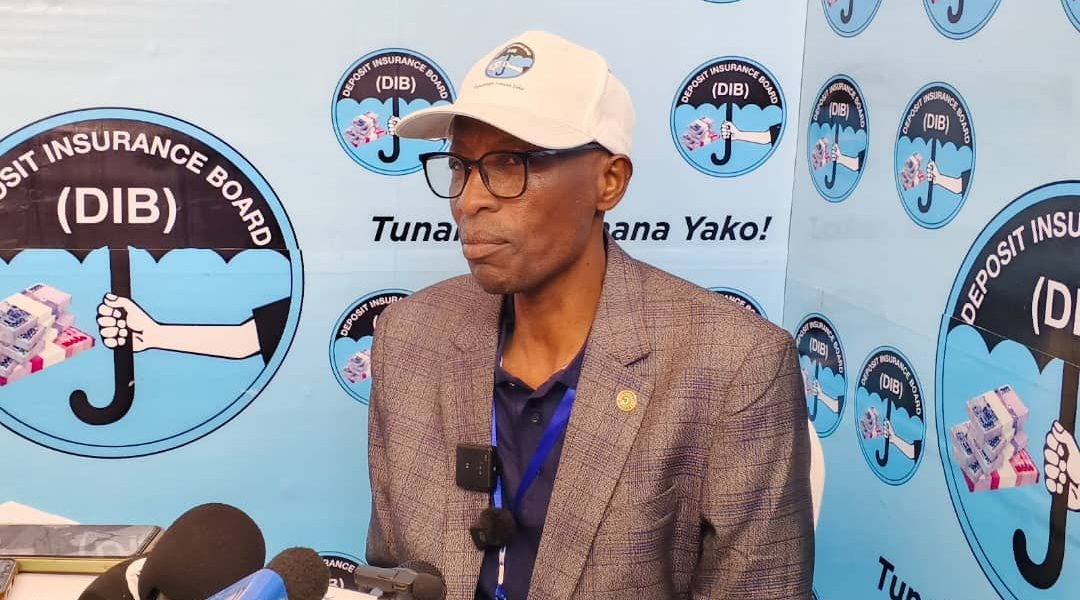
At the 33rd National Nane Nane Exhibition, the Deposit Insurance Board urged customers of closed banks to claim their funds
By Esther Mnyika, Dodoma
The Deposit Insurance Board (DIB) has said that many Tanzanians still have limited understanding of deposit insurance, leaving them anxious whenever a bank is closed or has its licence revoked.
The Board is also using the 33rd National Nane Nane Agricultural Exhibition to educate the public on the importance of keeping money in licensed banks, how the deposit insurance system works, and the procedures customers should follow if a bank is closed or becomes insolvent.
Speaking on 6 August 2026 at the 33rd National Nane Nane Farmers’ Exhibition in Dodoma, DIB Head of Public Relations and Communications, Lwaga Mwambande, said the institution’s primary mandate is to protect depositors’ funds held in banks.
He said that the current maximum insurance coverage is TSh 7.5 million per depositor, per bank, in the event that a bank is closed or has its licence revoked by the Bank of Tanzania (BoT).
“I want to assure the public that money deposited in licensed banks in Tanzania is protected through the deposit insurance system. We also encourage customers of failed banks who have not yet claimed their funds to come forward and follow up on their payments,” he said.
Mwambande explained that once a customer opens an account with a bank that is a member of the Deposit Insurance Fund, their deposits are automatically insured. Should the bank be closed, DIB compensates eligible depositors in accordance with the law.
He further explained that compensation is financed through annual contributions made by member banks, with each bank contributing 0.15 per cent of its total deposits to the fund every year.
The funds are invested in Government securities and other secure investments to ensure that the fund remains financially capable of compensating depositors whenever necessary.
“DIB is also responsible for administering the liquidation of banks closed by the Bank of Tanzania and participating in interventions aimed at rescuing financial institutions facing financial distress before they become insolvent,” he said.
He noted that rescuing a financially distressed bank at an early stage is less costly than waiting for it to fail, as early intervention protects depositors’ funds and reduces the overall cost of compensation.
Meanwhile, DIB Finance and Accounting Manager Romuli Mtui said the Board has entered the final phase of payments to certain creditors of banks under liquidation, including customers of the Tanzanian branch of FBME Bank whose deposits exceeded the deposit insurance compensation limit.
He urged customers of the affected banks who have not yet collected their payments to contact DIB or visit its offices located within the Bank of Tanzania buildings in Dar es Salaam or Dodoma to follow up on their claims.
“Liquidation is a legal process involving the collection and sale of a bank’s assets, as well as the recovery of outstanding loans. Because of legal procedures, including court cases, the process can take considerable time to complete,” he said.
Mtui explained that customers whose deposits exceeded the insured limit at the time their banks were closed should continue monitoring the distribution of funds recovered through the liquidation of the respective banks’ assets.
He added that more than TSh 2.9 billion in deposit insurance compensation remains unclaimed by customers of closed banks, urging those affected to come forward and claim their funds to avoid losing their entitlement.