

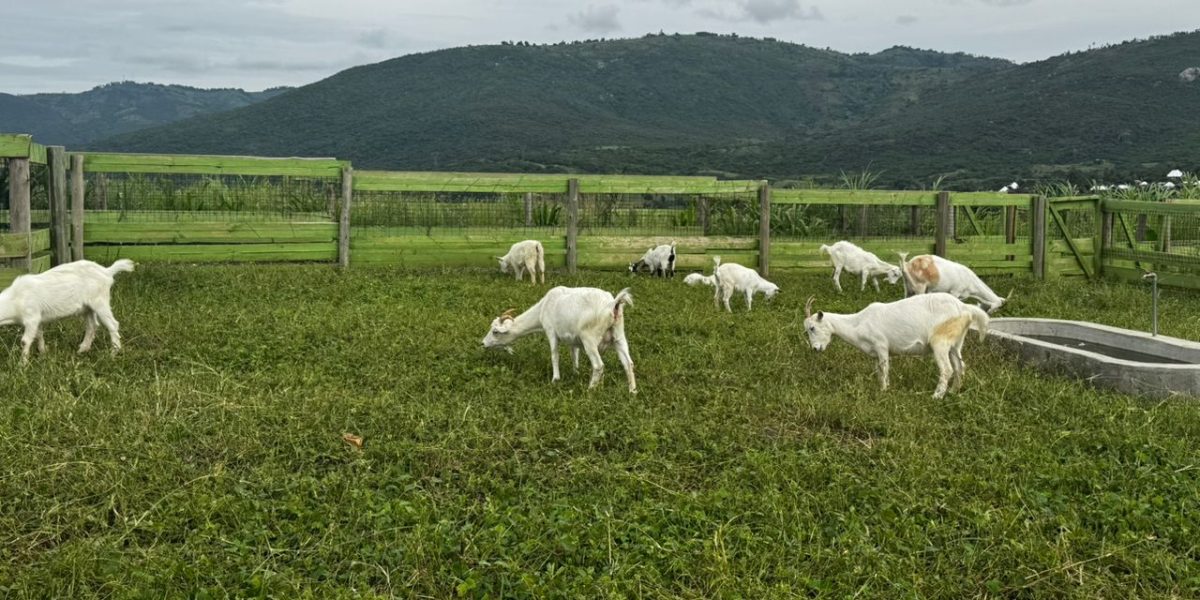
From the cool slopes of Iringa, a quiet revolution in goat milk production is taking shape, and smallholder farmers are at the centre of it.
MAZOMBE, KILOLO DISTRICT, IRINGA: At first glance, a herd of goats grazing on the hillside above Ilula Village looks unremarkable. But look closer, at the animals’ build, their temperament, their udders, and something different becomes apparent. These are not ordinary goats.
They are Norwegian Dairy Goats, a high-yielding breed sourced originally from Norway, acclimatised through careful breeding at Mgeta before being brought to Farm for the Future’s operation in Tanzania’s Iringa region. And if all goes to plan, they are about to transform the local dairy economy.
A Farm with a Mission Bigger Than Its Boundary Fence
Established in 2018 on 350 hectares in Mazombe, Farm for the Future (FFF) has built a reputation as one of the Ihemi Cluster’s most dynamic agribusinesses. Its core commercial portfolio spans seed maize produced in partnership with Seed Co Tanzania, macadamia nuts, and a certified potato seed programme developed alongside Dutch potato experts. With 20 full-time staff and more than 80 seasonal workers, the farm is a significant employer in Kilolo District.
But employment figures alone do not capture what FFF is. Through its Agronomic Community Empowerment (ACE) arm, the farm has trained more than 2,000 local farmers and partnered with three Agricultural Marketing Cooperative Societies (AMCOs), earning a 2025 Certificate of Recognition from the Iringa Regional Commissioner for its role as a driving force in community development. The farm runs four distinct empowerment programmes: Farmers for the Future, Women for the Future, Children’s Farm, and Goat Milk for Nutrition. It is this last programme that is now generating considerable interest across the region.
A Breed Built for the Highlands
Farm for the Future did not choose the Norwegian Dairy Goat by accident. Before a single animal arrived, the farm’s management conducted deliberate research across the surrounding area, ultimately selecting six villages in Ilula Ward where conditions, particularly the cool highland climate, matched what this breed needs to thrive.
“These goats perform very well in cold environments,” says Ms Grace Kimonge of Farm for the Future. “We researched several villages and identified six where we were confident these animals could do well.”
The results so far are striking. In their first lactation, the Norwegian Goats produce between two and a half to three litres of milk per day. By the second lactation, assuming the breed is kept pure and not crossbred, output climbs to as much as four litres per day per animal. These goats regularly deliver twins and can remain productive for eight to nine years, making the economic case for smallholder participation a compelling one.
At present, the Goat Milk for Nutrition programme is managing a herd of 370 goats: 200 females and 100 males. That number is expected to grow as the programme expands further into the identified villages.
From Norway to Mgeta, and Now to Iringa
The breed’s journey to Mazombe is itself a story of agricultural development at work. Sokoine University of Agriculture (SUA), a public university based in Morogoro, Tanzania, first introduced Norwegian Goats to the country, acquiring original stock directly from Norway and establishing a breeding programme at Mgeta. Farm for the Future sourced their animals from that population, building on years of adaptation work already done to fit the breed to Tanzanian highland conditions.
It is precisely the kind of cross-institutional knowledge transfer that AGCOT Centre, the Agricultural Growth Corridors of Tanzania, has championed in this region. By connecting farms, development partners, and value chain actors across the Ihemi Cluster, the AGCOT framework helps ensure that agricultural innovations reach the farmers who need them most, rather than remaining confined to a single enterprise.
Practical Farming for Real Families
One of the most compelling aspects of the Goat Milk for Nutrition programme is how deliberately accessible it has been designed to be. Management has calibrated care and husbandry routines for smallholder farmers, including those operating at the lower end of the income scale.
“Even our farmers who keep these goats come from low-income households,” Ms Kimonge notes, “but they are able to manage these animals without major challenges.”
The feeding regime is straightforward. The goats subsist primarily on natural pasture, though yields can be boosted significantly by supplementing their diet with a mix of bran, sunflower or cotton cake, and bone meal. The supplement is optional, as the animals survive and produce on grass alone, but it is recommended for farmers who want to push milk output higher.
Disease management follows a similarly practical calendar: deworming every three months, and a vaccination against lung disease administered during the cold month of June. Adhere to that schedule, the programme says, and these animals prove remarkably resilient.
“They drink ordinary water, they are not troublesome,” she adds. “You can let them graze freely during the day and bring them back to their enclosure in the evening. The management is not complicated.”
Growing the Next Generation of Farmers
Farm for the Future’s vision extends well beyond today’s smallholders. Through the Children’s Farm programme, the farm opens its gates to primary school pupils from across Iringa Region, introducing young learners to the principles of modern, sustainable agriculture. The Norwegian Goat herd plays a central role in this outreach. Children who may never have encountered a dairy goat up close gain hands-on exposure to animal husbandry, feeding routines, and basic livestock management, lessons delivered not from a textbook, but from the farm itself.
It is an investment in agricultural literacy that FFF hopes will shape how the next generation thinks about farming: not as a fallback, but as a profession worth pursuing with skill, knowledge, and ambition.
The Milk Collection Centre: Ready and Waiting
Perhaps the most significant infrastructure development in the Goat Milk for Nutrition programme is the newly completed milk collection centre, equipped with a 500-litre tank. The facility is ready. Collection is expected to begin in May.
The centre is designed not just to serve Farm for the Future’s own herd, but to function as an aggregation hub for all surrounding farmers producing goat milk in the area. Without reliable collection and cold chain infrastructure, even high-yielding animals cannot translate into sustainable income for smallholders. This facility bridges that gap.
“We are expecting to start collecting milk from all our farmers, and also from other farmers around us who have goat milk,” Ms Kimonge explains. “The centre is already complete.”
It is a model of inclusion that mirrors everything Farm for the Future stands for: a commercial operation that functions simultaneously as an anchor for the smallholder community around it.
Women at the Heart of the Value Chain
The social dimension of the goat programme connects directly to another of FFF’s flagship initiatives. Through Women for the Future, the farm empowers women with vocational skills in agriculture-based enterprises, recognising that women are both the backbone of smallholder farming and, too often, the last to benefit from agricultural growth.
AGCOT Centre has previously supported FFF projects targeting young and single mothers in agribusiness, including assistance navigating tax relief provisions from the Tanzania Revenue Authority (TRA). A thriving goat dairy value chain, with low input costs and reliable milk offtake through the new collection centre, fits directly into this mission of women’s economic inclusion.
Part of a Bigger Picture
The Goat Milk for Nutrition programme sits within a wider story of transformation that FFF has been writing since 2018. The farm has doubled food corn yields from 3 to 6 tons per hectare and lifted seed corn output from 1 to 4.5 tons per hectare through conservation agriculture and soil health management. It anchors the 14-member Iringa Soybean Commodity Compact, is expanding into 69 new hectares of macadamia, and has collaborated with Rikolto, the Tanzania Horticultural Association (TAHA), and local authorities on avocado nursery development. It has trained more than 2,000 farmers through its ACE arm and been recognised by regional government for the breadth of its community impact.
The dairy programme adds a vital nutritional and economic dimension to this portfolio. Goat milk is rich in nutrients, commands premium pricing in urban markets, and offers smallholders a product they can sell year-round, not just at harvest time.
A Herd, a Hub, and a Horizon
Across the six selected villages of Ilula Ward, farming families are watching the collection centre with quiet anticipation. For some, the Norwegian Goat is already part of daily life: the morning milking, the evening grazing, the three-monthly deworming that has become routine. For others, the programme is still new, the animals still settling in.
But the infrastructure is built. The breed is proven. The market for fresh, high-yield goat milk is waiting to be supplied.
On this hillside in Mazombe, three hundred and seventy animals with origins in Scandinavian fjords are writing the next chapter of Farm for the Future. And if this farm’s track record is any guide, the story they tell will eventually belong not just to one enterprise, but to the thousands of smallholder farmers whose futures FFF has made its own business.
Farm for the Future operates in Mazombe, Kilolo District, within the AGCOT Ihemi Cluster in Tanzania’s Iringa Region. For more information, visit www.ffftanzania.com or contact Marietha Thomas, Public Relations Manager, Farm for the Future. The farm is supported through the AGCOT Centre framework, which facilitates public-private partnerships across Tanzania’s agricultural growth corridors.