

In Nkhondola village in Zambia, Royd Michelo and his wife have transformed their farm into a self-sustaining agroecological landscape, exemplifying how ecological farming techniques are gaining recognition at global policy levels including COP30 climate negotiations.
By Isaiah Esipisu
Chongwe, Zambia: In a quiet village known as Nkhondola, in Chongwe District, Eastern Zambia, Royd Michelo and his wife Adasila Kanyanga have transformed their five acre piece of land into a self sustaining agroecological landscape. With healthy soils built over time, the farm teems with diverse food crops, fruit trees, livestock and birds, nourishing their family and the surrounding community.
“On this farm, we are not concerned about soil fertility and food security,” said Michelo as he fed his flock of diverse birds that include tens of free range chicken, ducks, guinea fowls and hundreds of pigeons. “We are deliberately nurturing healthy soils and food sovereignty, making sure that we control what we grow, how we grow it, and ultimately, what we eat,” he told Kilimo Kwanza.
The animals and birds feed on crop residues, thriving insects and worms on the farm, and the dung and droppings are converted into nutrient rich manure that builds soil organic matter and microbes, creating healthy soils that support growth of stronger crops that in turn feed the livestock, birds and humans.
“On daily basis, we collect at least two trays of guinea fowl eggs, another two of free range indigenous chicken, and the farm is abundant with different types of vegetables and fruits, while our cattle and goats give us milk for the family nutrition and daily income,” said Michelo.
Agroecology Gaining Global Recognition
The self sustaining farming system, also known as agroecology is now gaining popularity as the most sustainable and climate resilient farming system particularly for smallholders across the world.
During the 2025 Conference of Parties (COP 30) on climate change in Belem, Brazil, the Sharm el-Sheikh joint work on implementation of climate action on agriculture and food security highlighted the potential of agroecology in ensuring the sustainability of agriculture and food systems, thereby bringing the ecological farming technique at the negotiation table for the first time in 30 years of global climate dialogue.
“Apart from increased food productivity and income to the farmers, agroecology provides resilience to crises related to food, climate, biodiversity, soil and even social crisis,” said Dr Million Belay, the General Coordinator at the Alliance for Food Sovereignty in Africa (AFSA).
Belay argues that since science has proven that agroecology addresses nearly all the looming crises, it is important for it to be central to frameworks such as the Comprehensive African Agriculture Development Programme (CAADP), as well as to all policies produced by the regional economic commissions.
However, despite the CAADP’s Kampala Declaration not expressly mentioning agroecology, regional commissions are steadfastly advancing agroecology as a relevant pathway for climate resilience. (The Kampala Declaration is the continent’s latest 10-year roadmap (2026-2035) for transforming African food systems into resilient, sustainable, and inclusive agri-food systems).
Regional Research Networks and Implementation
Through a consortium of different research institutions and universities in the Southern Africa Region, the Centre for Coordination of Agricultural Research and Development for Southern Africa (CCARDESA) is in the process of implementing a project known as Research on Agroecology Network for Southern Africa (RAENS), with the aim of establishing a robust, innovative, and sustainable multi-actor transdisciplinary agroecology research and knowledge network in Southern Africa.
CCARDESA is a sub-regional research organisation established by the Southern African Development Community (SADC) member states to coordinate agricultural research and development in the Southern Africa region.
The main goal for the RAENS research project is to strengthen existing agroecology initiatives like what Michelo and his wife are doing in Zambia, to showcase the potential and scalability of agroecology, to facilitate shifts in agricultural training and research towards agroecological food systems, and to inform policy thereby leading to an enabling landscape for agroecology uptake, research and training.
“One of the components of the RAENS project is to equip scholars and practitioners with skills, knowledge and tools through developing new or enhancing existing agroecology modules and curricula for university students and extension agents, and through cross-learning between institutions through co-teaching/guest lecturing and co-supervision of postgraduate students,” said Dr Jerome Queste, the Resource Mobilisation Specialist at CCARDESA in Gaborone, Botswana.
He noted that the project will also provide new leadership on agroecology through postgraduate students and postdoctoral fellows in South Africa, Zimbabwe, Zambia, Malawi and Tanzania, and beyond undertaking research on priority topics.
Policy Integration and Trade Frameworks
“This is a step to the right direction,” said Bright Phiri of the Civil Society Agrarian Partnership (CSAP) “With agroecology having been recognised at the UNFCCC climate negotiation level, learning institutions will be crucial for training the next generation of experts, researchers, and practitioners for a smooth transition,” he told Kilimo Kwanza.
In the same vein, the Common Market for Eastern and Southern Africa (COMESA) is in the process of revising its Regional Agriculture food system and Investment Plan (RAIP), and according to the secretariat, there is a deliberate intent to include a section that will directly address agroecology.
“We are already in discussion with different partners including the African Union Development Agency (AUDA-NEPAD), because we also intend to embed agroecology in our standards and trade frameworks, so that we focus on issues that affect it in terms of trade,” said Providence Mavubi, the Director for Industry and Agriculture Division at COMESA.
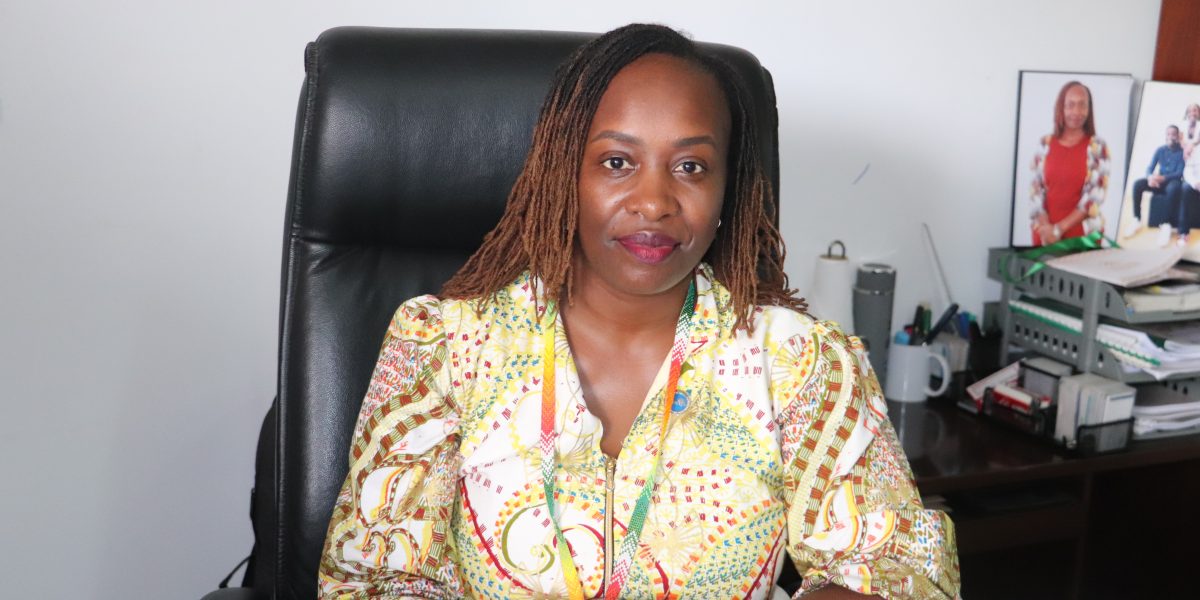
“We are also going to put agroecology as part of our value chain development programmes, and include it in our climate and green finance mobilisation drive because we believe that this is an area that has been left behind,” she told Kilimo Kwanza during an interview in Lusaka.
Knowledge Networks and Capacity Building
According to Phiri, efforts by CCARDESA and COMESA mirror the role of other initiatives like the Knowledge Hub in Eastern Africa (KHEA) and the Knowledge Centre for Organic Agriculture & Agroecology in Africa (KCOA), which are pivotal in disseminating agroecological knowledge and capacity building.
esipisus@yahoo.com