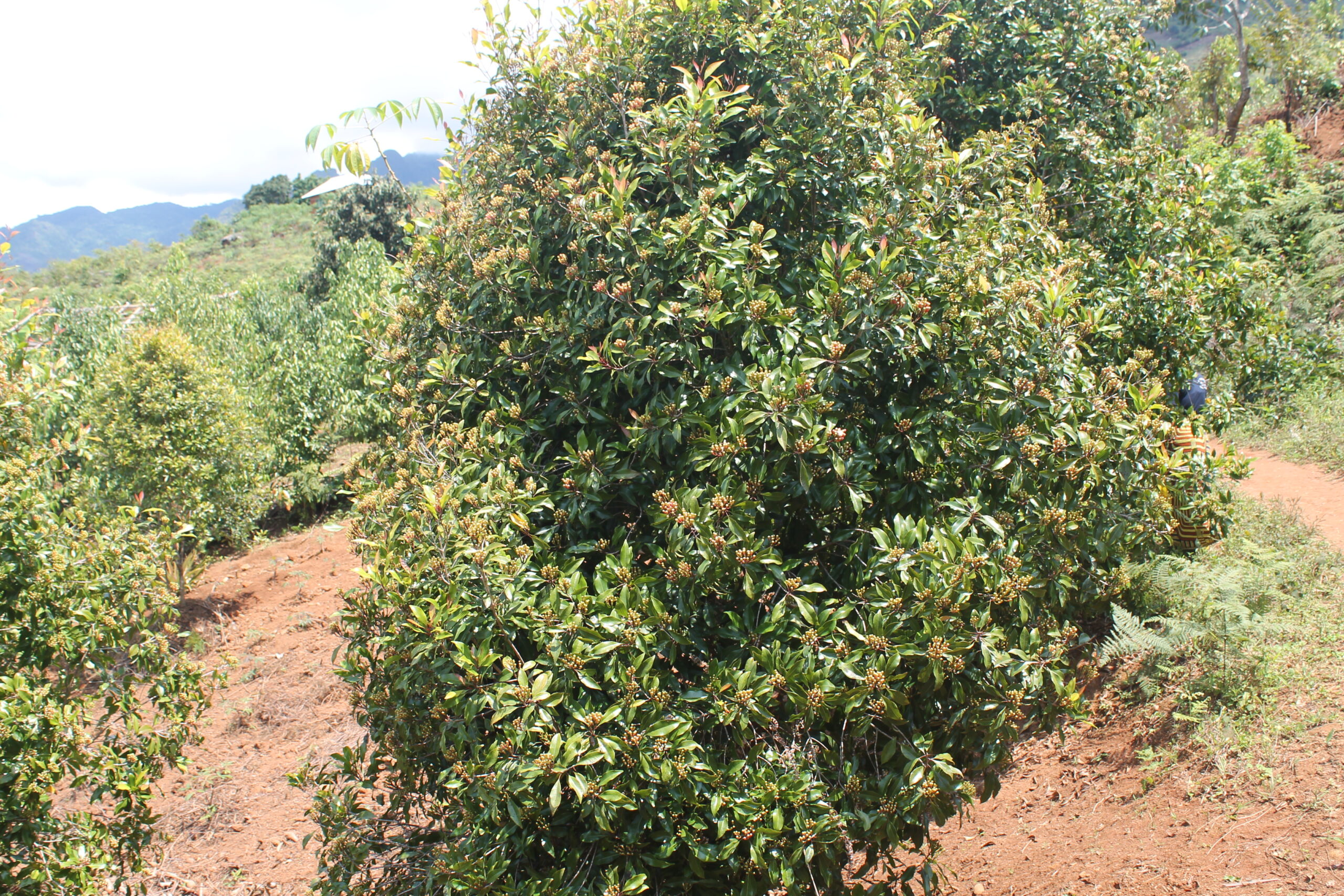
1. Introduction: The Anatomy of a Market Failure
The global spice trade, a complex nexus of botanical vulnerability, geopolitical shifting, and climatic volatility, is currently witnessing a profound dislocation in its historical center: the Zanzibar Archipelago. For centuries, the islands of Unguja and Pemba have been synonymous with the clove (Syzygium aromaticum), a commodity that once underpinned the entire economy of the Sultanate and continues to serve as a critical, albeit diminishing, pillar of the semi-autonomous region’s fiscal stability. However, the fiscal year ending September 2025 has registered a catastrophic contraction in this sector, an event that demands a rigorous forensic analysis to disentangle the conflicting narratives of “global oversupply” touted by local officials and “acute shortage” identified by international market analysts.
Fresh data released by the Bank of Tanzania (BoT) in its Monthly Economic Review paints a stark picture of industrial collapse. In the year ending September 2025, the value of Zanzibar’s clove exports plummeted by approximately 76 percent, falling to a historic low of $6.3 million.1 This represents a precipitous decline from the previous year, where earnings stood at nearly $28.8 million.2 The volume of exports mirrored this value destruction, shrinking from 3,900 tonnes to a mere 1,200 tonnes.1 While the broader Tanzanian economy demonstrated resilience—buoyed by a 35.8 percent surge in gold exports and a 11.9 percent rise in tourist arrivals—the clove sector has effectively decoupled from this growth trajectory, becoming a significant drag on the island’s current account.3
The central tension of this report lies in the divergence of explanations for this collapse. On one side, the Zanzibar State Trade Corporation (ZSTC), the state-run monopsony responsible for the purchase and export of cloves, alongside government officials, cites “global oversupply,” unfavorable international market conditions, and the entry of new producers as the primary drivers of the downturn.1 On the opposing side, independent trade data, global essential oil market reports, and agricultural assessments from major producing nations like Madagascar and Indonesia suggest a market characterized by tightness, supply deficits, and firming prices for high-quality inventory.6
This report posits that the “oversupply” narrative is a misdiagnosis—potentially a political obfuscation designed to manage local expectations regarding farmgate prices—while the true drivers of the collapse are internal and structural. The reality involves a convergence of acute agronomic failure (disease and climate change), systemic leakage through illicit smuggling routes to Kenya, and a rigid marketing board mechanism that has failed to adapt to the volatility of modern commodity markets. By analyzing the 2024-2025 production cycle, global trade flows, and the political economy of the ZSTC, this document aims to provide an exhaustive explanation of why Zanzibar’s clove industry is contracting during a period of global opportunity.
2. The Macroeconomic Context: 2024-2025 Export Performance
To understand the severity of the 2025 collapse, one must first contextualize the clove sector’s performance within the broader macroeconomic framework of the United Republic of Tanzania and the specific economy of Zanzibar.
2.1 Statistical Dimensions of the Collapse
The data for the year ending September 2025 indicates not merely a cyclical dip, but a structural seizure of the export mechanism. The Bank of Tanzania’s reporting highlights a disintegration of both volume and value.
Table 1: Zanzibar Clove Export Performance Indicators (Year Ending September)
| Metric | 2023/2024 (Previous Cycle) | 2024/2025 (Current Cycle) | Variance (%) | Implication |
| Total Export Value | ~$28.8 Million USD | ~$6.3 Million USD | -78.1% | Severe loss of Forex earnings.2 |
| Export Volume | 3,900 Metric Tonnes | 1,200 Metric Tonnes | -69.2% | Massive contraction in physical trade flow.1 |
| Implied Unit Value | ~$7.38 USD/kg | ~$5.25 USD/kg | -28.8% | Potential liquidation of low-grade stock or transfer pricing issues. |
| Contribution to GDP | Significant | Negligible | N/A | Decoupling from economic growth drivers like Tourism.3 |
Data synthesized from Bank of Tanzania Monthly Economic Reviews.1
While the ZSTC attributes the value drop to falling global prices, the volume drop of nearly 70 percent is the more alarming metric. Price fluctuations are common in soft commodities; however, a volume collapse of this magnitude implies a fundamental break in the supply chain—either the cloves were not produced, they were destroyed post-harvest, or they exited the country through unofficial channels.
2.2 The Divergence from the National Economy
The collapse of the clove sector stands in stark contrast to the rest of the Tanzanian economy. In the same period (year ending September 2025), Tanzania’s total exports of goods and services rose by 14.8 percent to over $17 billion.3 Gold exports, driven by global safe-haven demand, surged by 35.8 percent to $4.4 billion.3 Tourism, Zanzibar’s other economic engine, saw arrivals increase to 2.3 million visitors.3
This divergence highlights the isolation of the agricultural crisis. While the service and extractive sectors benefited from global reopening and monetary policy trends, the clove sector—dependent on biological yields and state-controlled marketing—faltered. The BoT explicitly notes that the growth of the economy (estimated at over 6 percent) was driven by credit to the private sector and general export performance, despite the collapse in cloves.1 This suggests that while Zanzibar’s government finances may be strained by the loss of clove levies, the broader economy is transitioning away from agrarian dependence, perhaps accelerating the neglect of the sector.
2.3 Seasonality and the “Cyclical” Defense
Official explanations frequently rely on the “cyclical nature” of the crop to explain downturns.2 Clove trees (Syzygium aromaticum) exhibit a physiological trait known as alternate bearing or biennial bearing. A “bumper” crop year, which places high nutrient stress on the tree, is typically followed by a year of vegetative recovery with minimal flowering.
However, the 2025 data defies standard cyclical variance. Historical variances in “off” years typically see volume reductions of 20-40 percent, not the near-70 percent collapse witnessed in 2025. Furthermore, the “cyclical” argument fails to address why the value per tonne would drop if supply is naturally tight. In a functional market, a cyclical drop in supply should theoretically support prices, mitigating the revenue impact. The fact that both volume and unit value collapsed simultaneously suggests that the market dynamics are being influenced by factors far more malignant than simple biological cycles.
3. Global Market Dynamics: The Myth of Oversupply
The ZSTC and Zanzibar officials claim that “global conditions are unfavorable due to increased supply”.1 To evaluate this, we must audit the production and inventory status of the world’s major clove producers: Indonesia, Madagascar, and the emerging competitors. The data overwhelmingly suggests that the ZSTC’s assessment is incorrect or willfully misleading.
3.1 Indonesia: The Sovereign Consumer
Indonesia is the titan of the clove world, producing over 70 percent of the global supply (approx. 72,000 to 130,000 tonnes annually depending on the cycle).7 However, Indonesia occupies a unique position as both the largest producer and the largest consumer. The domestic Kretek cigarette industry absorbs between 85 percent and 90 percent of local production.9
Table 2: Indonesian Market Dynamics 2024-2025
| Indicator | Status | Supporting Data |
| Domestic Production | Volatile / Weather Affected | Erratic rainfall and rising temperatures have upset reliable cycles.10 |
| Domestic Consumption | High / Growing | Kretek industry demand remains inelastic and robust.9 |
| Trade Position | Net Importer | Indonesia continues to import from Madagascar, Tanzania, and Comoros.7 |
| Import Volume | Significant | Imported $248M from Madagascar and $25M from Tanzania in recent cycles.12 |
If there were a global oversupply, Indonesia—the market of last resort—would cease imports and rely solely on domestic stocks. Instead, trade data confirms that Indonesia remains a major buyer of East African cloves to blend with its local varieties.11 Reports indicate that Indonesian clove oil markets are “very short” with high demand placing pressure on prices.6 The persistence of Indonesian imports proves that global demand exceeds easily accessible supply, directly contradicting the ZSTC’s narrative.
3.2 Madagascar: The Supply Shock
Madagascar is Zanzibar’s direct competitor in the export market (since Indonesia consumes its own). Madagascar typically accounts for over 40 percent of world exports.12 However, the 2024-2025 production cycle in Madagascar has been disastrous.
Reports from October 2024 indicated a massive reduction in harvest forecasts. Preliminary assessments of clove bud productivity showed a 50-70 percent reduction compared to the previous year.6 The harvest was projected to fall to between 6,000 and 8,000 metric tons, down from 17,000 metric tons the prior year.6 This shortfall is attributed to the long-term impact of cyclones (specifically Cyclone Freddy and subsequent storms) which damaged tree stocks, and the natural physiological downturn of the trees.
Insight: If the world’s largest exporter of whole cloves (Madagascar) loses 50 percent of its production, the global market is mathematically in a state of shortage, not oversupply. This shortage has firming implications for prices, with spot prices in global hubs like Singapore and Rotterdam holding steady or rising for premium grades.6
3.3 The Comoros and Regional Contagion
The Comoros archipelago, sharing similar climatic and soil conditions with Zanzibar, also reported a crisis. Export revenues fell by 53 percent between 2022 and 2024.14 The Comorian government has launched national consultations to address “structural challenges,” high port fees, and freight costs. The synchronous decline of Zanzibar, Madagascar, and Comoros suggests a regional event—likely climatic—affecting the entire East African coastal belt, further tightening global supply.
3.4 The Real Price Trend
Contrary to the “falling prices” claim by Zanzibar officials, independent market analysis suggests that global prices are reacting to these shortages.
- Clove Oil: Market reports describe the sector as “very short” with prices expected to continue firming.6
- Whole Cloves: While there may be fluctuations, the scarcity of high-quality Madagascar cloves typically drives buyers to seek alternatives, which should theoretically benefit Zanzibar.
- Unit Value Discrepancy: The BoT data showing a drop in unit value for Zanzibar cloves (to ~$5.25/kg) 2 likely reflects the realized price obtained by ZSTC, which may be dampening due to poor quality (rain damage) or distressed sales, rather than the benchmark global price which remains higher (trading between $6.8 and $8.4 in various markets).8
4. The Agronomic Crisis: Why Zanzibar Cannot Produce
If the global market is hungry for cloves, why is Zanzibar exporting so little? The answer lies in a “perfect storm” of biological and climatic failures that have degraded the island’s production capacity.
4.1 The “Sudden Death” Disease
The most existential threat to Zanzibar’s industry is a pathology known locally as “Sudden Death.” Reports indicate that over 500,000 clove trees in the Unguja North region alone have been affected by a mysterious disease causing leaf wilt and rapid tree mortality.16 This disease attacks the root system, often exacerbated by waterlogging, and can kill a mature, productive tree within a single season.
The loss of half a million trees is a massive blow to the island’s capital stock. Unlike annual crops, clove trees take 5-7 years to reach maturity. The current replanting efforts, while touted by the government (distributing 1 million seedlings annually 18), are struggling to keep pace with the mortality rate. Furthermore, young saplings require shade and irrigation, resources that are scarce during the increasingly erratic dry seasons.
4.2 Climate Change and Rainfall Variability
The 2024-2025 agricultural season in East Africa was defined by extreme weather volatility, driven by Indian Ocean Dipole (IOD) oscillations.
- Rainfall Excess: The region experienced prolonged wet conditions and heavy rainfall during what should have been the harvest and drying season.19 Clove buds must be sun-dried for at least three days to cure properly.21 Excessive rain during harvest (September-December) leads to fungal growth, bud rot, and a darkening of the clove, which relegates it to lower grades (Grade 3 or distillation grade) rather than premium Grade 1.
- Drought Stress: Conversely, intermittent severe dry spells have stressed the trees during the flowering induction phase.22 The “East Africa Seasonal Monitor” notes delayed onsets of rains followed by erratic distribution, a pattern that disrupts the delicate phenology of the clove tree.19
- Impact on Yield: Farmers in Pemba reported that the erratic weather caused flowers to drop prematurely or fail to set, directly reducing the tonnage available for harvest.5
4.3 The Aging Tree Stock
A significant percentage of Zanzibar’s clove trees are geriatrics, planted during the colonial era or the early post-revolution drives of the 1960s and 70s. These trees have passed their peak productivity. While the ZSTC distributes seedlings, land tenure issues and the long gestation period deter smallholder farmers from aggressively clearing old trees to replant. The result is a slow, grinding decline in potential yield, accelerated by the “Sudden Death” pathogen.23
5. The Political Economy of Collapse: ZSTC and the Price Mechanism
The ZSTC holds a legal monopsony on the clove trade. Farmers are legally obligated to sell to the corporation, which sets the price and manages exports. This centralized control, intended to stabilize income and capture revenue for the state, has become a primary driver of the sector’s dysfunction.
5.1 The Price Setting Disconnect
For the 2024-2025 season, the ZSTC announced new buying prices in an attempt to incentivize farmers:
- Grade 1: 15,000 TZS per kg (approx. $5.70 – $6.00 USD).24
- Grade 2: 13,500 TZS per kg.24
- Grade 3: 12,500 TZS per kg.24
While officials frame this as a price increase (up from 14,000 TZS previously), it fails to account for inflation and the depreciation of the shilling. More critically, it fails to compete with the “shadow price” offered by smugglers. The ZSTC’s claim of “global oversupply” serves a specific political function here: it justifies capping the producer price. If the ZSTC admitted that global spot prices were spiking due to the Madagascar shortage, farmers would organize to demand a higher share of the export revenue (e.g., closer to the $8.00+ USD global trading value). By claiming the market is flooded, the ZSTC protects its margin, which is used to fund the Revolutionary Government’s budget.
5.2 The “Oversupply” as Inventory Overhang
There is a nuance to the “oversupply” claim that may be technically true but misleading. If the ZSTC is holding large stocks of old inventory from the 2023 season—specifically inventory that might have been damaged by humidity or improper storage—they may indeed find “unfavorable conditions” for that specific stock. International buyers are fastidious about eugenol content and moisture levels. If ZSTC warehouses are full of Grade 3 cloves while the market wants Grade 1, they face a localized oversupply of unsellable product, even as the world screams for high-quality spice. This mismatch between inventory quality and market demand allows officials to claim “market difficulties” without admitting to quality control failures.
6. The Smuggling Epidemic: The “Missing” Volume
The most critical factor explaining the discrepancy between the 3,900 tonnes of 2023/24 and the 1,200 tonnes of 2024/25 is likely smuggling. The cloves did not necessarily vanish; they simply flowed North.
6.1 The Kenya Route
Historically, a massive black market exists where Zanzibar cloves are smuggled via dhow to the Kenyan coast (Mombasa, Lamu, and Shimoni).23
- The Incentive: Smugglers pay cash on the spot (instant liquidity), often at prices 20-40% higher than the ZSTC rate. They also accept ungraded or mixed cloves, saving farmers the labor-intensive sorting process required by ZSTC buying centers.23
- The 2025 Surge: With global prices firming due to the Madagascar shortage, international traders in Mombasa likely raised their buying prices. The ZSTC, bound by bureaucratic price-setting cycles, could not adjust its 15,000 TZS price fast enough to close the arbitrage gap. Consequently, farmers in Pemba (closer to Kenya) diverted massive volumes to the black market.
- Evidence: In August 2024, the Zanzibar Anti-Corruption and Economic Crimes Authority (ZAECA) charged six residents of Pemba with smuggling, indicating a crackdown was necessary due to the scale of the illicit trade.26
6.2 Statistical Invisibility
The BoT data captures only legal exports handled by ZSTC. If 2,000 tonnes of cloves were smuggled to Kenya and re-exported as “Kenyan” or “East African” origin spice, they disappear from Zanzibar’s balance of payments. Thus, the “collapse” is partly a statistical artifact of the informal economy cannibalizing the formal economy.
7. Macroeconomic Implications for Zanzibar
The implosion of the clove sector leaves Zanzibar dangerously exposed.
7.1 Forex Fragility and Tourism Dependence
With clove exports falling to $6.3 million, the island has lost its primary “counter-cyclical” buffer. Tourism is currently booming (up 11.9% to 2.3 million arrivals) 3, but tourism is highly sensitive to external shocks (pandemics, terrorism, global recessions). The loss of a robust agricultural export sector means the island has no backup generator for foreign exchange earnings.
7.2 Rural Poverty and Social Stability
Cloves are the livelihood of the rural peasantry, particularly in Pemba, which has historically been politically marginalized. The collapse in legal sales means the state is capturing less revenue to redistribute, while the profits from smuggling accrue to a small network of traders and boat owners. The “Clove Development Fund” (CDF), established to support farmers, is reportedly not fully functioning 18, leaving farmers without a safety net against the climatic shocks destroying their trees.
8. Strategic Outlook and Recommendations
The situation in Zanzibar is not a “market cycle” but a structural crisis requiring immediate intervention. The ZSTC’s strategy of blaming global markets is a delaying tactic that risks the total obsolescence of the industry as new producers like Vietnam and Brazil 27 capture market share with reliable, high-quality supply.
8.1 Recommendations for Revitalization
- Liberalization of Export Licenses: The ZSTC monopsony must be dismantled or reformed. Allowing private companies to buy directly from farmers for export would introduce price competition, driving farmgate prices up to global parity and naturally eradicating the incentive to smuggle to Kenya.
- Industrial Value Addition: To counter the effects of wet harvests, the government must invest in industrial mechanical dryers and distillation units in rural hubs. This would allow farmers to sell wet cloves for immediate processing into oil (which is in global shortage), bypassing the need for sun-drying and reducing post-harvest losses.
- Scientific “Sudden Death” Taskforce: A fully funded research initiative, in partnership with international agronomists, is needed to identify resistant rootstocks or treatments for the disease wiping out the tree population.29
- Data Transparency: The government must move beyond the “oversupply” narrative. acknowledging the global shortage would allow them to market Zanzibar cloves as a premium, scarce heritage product, potentially commanding a higher price point in niche organic markets in Europe and North America.30
8.2 Conclusion
The truth regarding Zanzibar’s clove industry is that it is being strangled by a rigid state marketing system that cannot compete with the agility of the black market, while its biological foundations are rotting due to disease and climate change. The “global oversupply” is a myth; the world wants cloves, but Zanzibar is failing to deliver them. Unless structural reforms are implemented to address land tenure, price responsiveness, and agronomic health, the “Spice Island” risks becoming a historical footnote in the global trade it once dominated.
9. Appendix: Comparative Market Data
Table 3: The “Big Three” Producer Status 2025
| Country | Status | Production Trend | Market Impact |
| Indonesia | Dominant | Volatile (Weather) | Consumes domestic supply; Imports to fill deficits. |
| Madagascar | Crisis | -50% to -70% (Cyclones) | Primary driver of global shortage; Spot prices firming. |
| Zanzibar | Collapse | -76% (Disease/Smuggling) | Irrelevant to global price setting; Losing market share. |
Table 4: Price Structure Analysis
| Price Type | Estimated Value | Implication |
| ZSTC Official (Grade 1) | ~15,000 TZS/kg ($5.70) | Below market clearing price. |
| Smuggling Price (Kenya) | ~18,000 – 20,000 TZS/kg | massive incentive for illicit trade. |
| Global Spot (Whole) | ~$6.80 – $8.40 USD/kg | Significantly higher than ZSTC realized price. |
| Global Spot (Oil) | High Premium | Shortage of raw material driving value. |
Data sources: 6
Works cited
- Monthly Economic Review BANK OF TANZANIA September 2025, accessed November 28, 2025, https://bot.go.tz/Publications/Regular/Monthly%20Economic%20Review/en/2025101508491975.pdf
- Monthly Economic Review – Aug 2025 | PDF | Inflation | Monetary Policy – Scribd, accessed November 28, 2025, https://www.scribd.com/document/919721741/Monthly-Economic-Review-Aug-2025
- Tanzania Monthly Economic Review September 2025: Gold Exports Up 35.8%, Traditional Exports Up 38.3%, Tourist Arrivals Up 11.9%, Current Account Deficit Narrowed Notably – TanzaniaInvest, accessed November 28, 2025, https://www.tanzaniainvest.com/economy/trade/bot-economic-review-exports-september-2025
- Monthly Economic Review – Bank of Tanzania, accessed November 28, 2025, https://www.bot.go.tz/Publications/Regular/Monthly%20Economic%20Review/sw/2025081914421928.pdf
- (PDF) Determinants of Clove Exports in Zanzibar: Implications for Policy – ResearchGate, accessed November 28, 2025, https://www.researchgate.net/publication/366571706_Determinants_of_Clove_Exports_in_Zanzibar_Implications_for_Policy
- Clove – Global Market Update : Berjé Inc, accessed November 28, 2025, https://berjeinc.com/media/berje-report/clove-global-market-update/
- Global Cloves Production Share by Country (Metric Tons) – ReportLinker, accessed November 28, 2025, https://www.reportlinker.com/dataset/1a03e01effe8e74b593a41b6bb81ed1bcef3a3a4
- Cloves Market Size & Growth, Forecast [2033], accessed November 28, 2025, https://www.marketgrowthreports.com/market-reports/cloves-market-113217
- Clove Market Size, Trends, Growth Analysis 2025-2030 | Forecast Report, accessed November 28, 2025, https://www.mordorintelligence.com/industry-reports/global-clove-market
- Production and Income of Clove Farming in Latuo Village, Southeast Sulawesi: A Comparative Analysis between 2023 and 2024 – ResearchGate, accessed November 28, 2025, https://www.researchgate.net/publication/394873533_Production_and_Income_of_Clove_Farming_in_Latuo_Village_Southeast_Sulawesi_A_Comparative_Analysis_between_2023_and_2024
- Indonesia Imports from Comoros of Cloves (whole fruit, cloves and stems) – 2025 Data 2026 Forecast 2011-2024 Historical – Trading Economics, accessed November 28, 2025, https://tradingeconomics.com/indonesia/imports/comoros/cloves-whole-fruit-cloves-stems
- Cloves | Imports and Exports | 2023 – TrendEconomy.com, accessed November 28, 2025, https://trendeconomy.com/data/commodity_h2/0907
- Whole Clove import company and importers in Indonesia – Tridge, accessed November 28, 2025, https://www.tridge.com/intelligences/clove/ID/import
- Comoros Launches Talks to Rebuild Struggling Clove Sector – Ecofin Agency, accessed November 28, 2025, https://www.ecofinagency.com/news-agriculture/1911-50617-comoros-launches-talks-to-rebuild-struggling-clove-sector
- Comoros moves to revive its clove sector | AgriTech Middle East & Africa – Trends in Investments, Innovation & Sustainability in the Agriculture Industry, accessed November 28, 2025, https://www.agritechmea.com/comoros-moves-to-revive-its-clove-sector/
- Latest global Whole Clove insight news and analysis report – Tridge, accessed November 28, 2025, https://www.tridge.com/intelligences/clove/market-insights
- Zanzibar launches probe after mysterious disease affects cloves, accessed November 28, 2025, https://www.foodbusinessmea.com/zanzibar-launches-probe-after-mysterious-disease-affects-cloves/
- Tanzania: Challenges in Promoting Clove Farming – allAfrica.com, accessed November 28, 2025, https://allafrica.com/stories/201808290481.html
- East Africa Seasonal Monitor: Delayed and Erratic Start to the October to December 2025 Rains Across the Eastern Horn of Africa, November 5, 2025 – Burundi, accessed November 28, 2025, https://reliefweb.int/report/burundi/east-africa-seasonal-monitor-delayed-and-erratic-start-october-december-2025-rains-across-eastern-horn-africa-november-5-2025
- Drought intensifies during northern and southern Africa’s main crop seasons, accessed November 28, 2025, https://joint-research-centre.ec.europa.eu/jrc-news-and-updates/asap-assessment-january-2025-2025-02-07_en
- Zanzibar Cloves – Zanzibar State Trading Corporation – ZSTC, accessed November 28, 2025, https://zstcznz.org/zanzibar-cloves/
- Drought in Africa – April 2025, accessed November 28, 2025, https://drought.emergency.copernicus.eu/data/reports/new/GDODroughtNews202504_Africa_JRC142074.pdf
- Zanzibar Clove Industry Challenges | PDF | Poverty – Scribd, accessed November 28, 2025, https://www.scribd.com/document/668609312/5
- Smiles as cloves prices increase despite drop in production – The Citizen Tanzania, accessed November 28, 2025, https://www.thecitizen.co.tz/tanzania/zanzibar/smiles-as-cloves-prices-increase-despite-drop-in-production-4324978
- Tanzania: Taking the spice out of cloves? – African Business, accessed November 28, 2025, https://african.business/2015/02/energy-resources/tanzania-taking-spice-cloves
- Six charged with economic crimes for ‘clove smuggling’ | The Guardian – Ipp media, accessed November 28, 2025, https://ippmedia.com/the-guardian/news/local-news/read/six-charged-with-economic-crimes-for-clove-smuggling-2024-08-29-234946
- Clove Price in Brazil – 2025 – Charts and Tables – IndexBox., accessed November 28, 2025, https://www.indexbox.io/search/clove-price-brazil/
- Vietnam’s Clove Market Report 2025 – Prices, Size, Forecast, and Companies – IndexBox, accessed November 28, 2025, https://www.indexbox.io/store/vietnam-cloves-market-analysis-forecast-size-trends-and-insights/
- Mwinyi orders study on clove production decline in Zanzibar – Daily News, accessed November 28, 2025, https://dailynews.co.tz/mwinyi-orders-study-on-clove-production-decline-in-zanzibar/
- Organic Cloves from Zanzibar 2024 Season | eBay, accessed November 28, 2025, https://www.ebay.com/itm/253247501038