AGRIBUSINESS & WOMEN’S EMPOWERMENT
The Half That Feeds Africa: Women Agripreneurs Step into the Spotlight
As AGRA opens applications for its 2026 WAYA Awards, a gathering in Maputo put Africa’s women farmers and agribusiness leaders centre stage — and made the case that unlocking their potential is the continent’s most consequential agricultural investment.
By Staff Correspondent | Maputo, Mozambique | March 2026
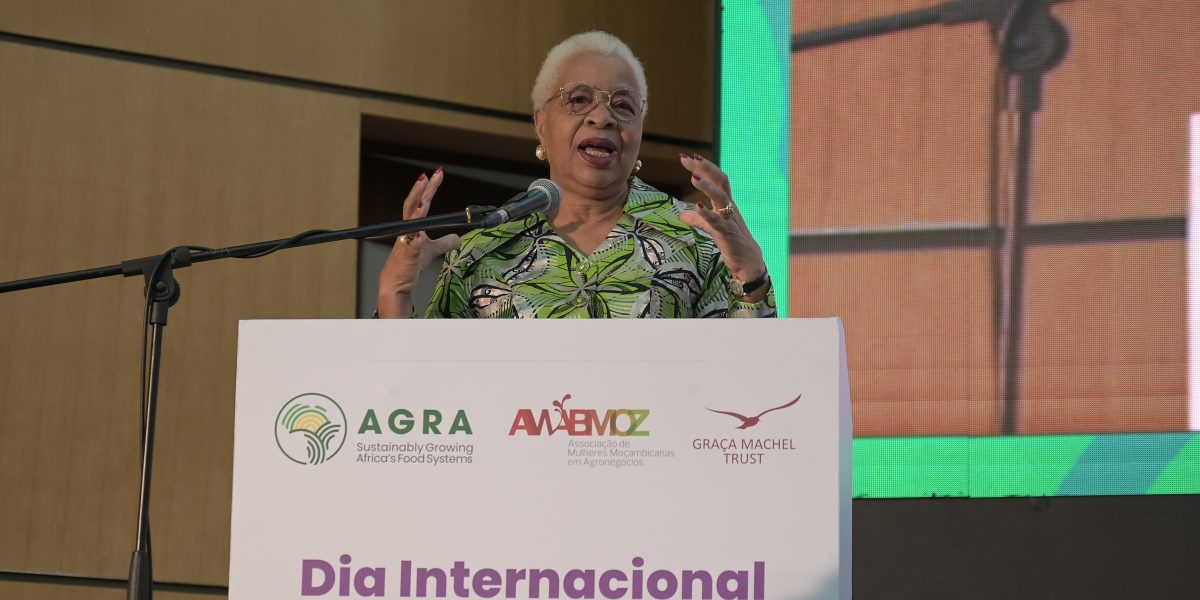
The Joaquim Chissano International Centre in Maputo was humming with purpose on International Women’s Day. Inside, women who grow, process, trade, and innovate across Africa’s agricultural value chains had gathered not to be praised in abstraction, but to do business — comparing notes on access to finance, arguing the finer points of agri-tech scale, and planning their next moves in boardroom breakout sessions. Outside, banners announced something more concrete: a USD 300,000 prize, and a continental competition that has quietly become one of the most watched events in African agribusiness.
The occasion was the 2026 International Women’s Day convening hosted by AGRA through its VALUE4HER initiative — and the formal opening of applications for the Women Agripreneurs of the Year Awards (WAYA2026). But for the women in the room, it was something more: a reckoning with just how much has changed, and how much has not.
“Women are not just participants in Africa’s agrifood systems — they are innovators, entrepreneurs, and leaders driving transformation across the value chain.”
— Alice Ruhweza, President, AGRA
The Numbers Behind the Narrative
The data underpinning the day’s discussions is both striking and sobering. Women make up nearly half of the agrifood workforce in sub-Saharan Africa — with more than three-quarters of all employed women working within agrifood systems. They manage farms, lead farmer cooperatives, build agribusinesses from the ground up, and develop the kinds of localised solutions that development blueprints rarely anticipate.
And yet structural barriers persist with stubborn consistency. Access to finance remains a wall rather than a door for most women agripreneurs. Land rights are contested or absent. Markets are difficult to enter without networks that tend to favour men. Productive resources — inputs, equipment, extension services — flow disproportionately toward male farmers.
The Food and Agriculture Organization estimates that if women farmers had equal access to productive resources as their male counterparts, yields could increase by 20 to 30 percent — a shift that could reduce global hunger by up to 17 percent. That is not a marginal gain. It is a structural transformation.
‘Give Agency to Gain Growth’: A Theme With Teeth
The convening was held under the theme “Give Agency to Gain Growth” — a formulation that the event’s organisers were careful to present not as a slogan, but as a framework. Agency, in this reading, is not simply a matter of attitude or aspiration. It is the concrete capacity to make decisions, access resources, and exercise control over one’s economic life. Growth, correspondingly, is not an individual outcome but a systemic one: when women agripreneurs grow, food systems strengthen.
Mozambique’s Prime Minister, Dr. Maria Benvinda Levy, spoke to this directly. Citing her government’s National Program for the Eradication of Poverty, she described women agripreneurs as central to the country’s transformation agenda — not as beneficiaries of development, but as its drivers.
“Women agripreneurs are central to this transformation,” she said, “driving productivity, strengthening food systems, and expanding opportunity in our communities.”
From Recognition to Real Capital: The WAYA Awards
At the centre of the Maputo convening was the announcement that applications for the 2026 Women Agripreneurs of the Year Awards are now open. Launched in 2021 as a flagship programme of AGRA’s VALUE4HER initiative, WAYA has evolved from a recognition scheme into something with genuine financial weight.
Winners receive grants of up to USD 300,000 to scale their enterprises. That is not prize money in the ceremonial sense — it is growth capital, deployed to businesses with demonstrated track records and clear expansion plans.
The 2025 edition drew nearly 2,000 applicants from across the continent — a figure that speaks to both the programme’s growing profile and the appetite among women agripreneurs for platforms that combine visibility with tangible support. Finalists came from Benin, Burkina Faso, the Democratic Republic of Congo, Ghana, Kenya, Malawi, Nigeria, South Africa, Tanzania, and Uganda, representing innovations across value addition, agricultural technology, community leadership, and sustainable farming.
The 2026 winners will be announced in September at the Africa Food Systems Forum in Kigali, Rwanda. Applications close on 8 May 2026.
Maputo as a Mirror
There is a reason AGRA chose Maputo for this convening. Mozambique’s agricultural economy is overwhelmingly female-managed at the smallholder level, while access to finance, formal markets, and decision-making power at the sector level has historically been male-dominated. That gap is not unique to Mozambique — it maps onto almost every country on the continent. But holding the conversation here, with the country’s Prime Minister at the podium, gave it a specificity that continental-level gatherings can easily lose.
Alice Ruhweza, speaking virtually as AGRA’s President, framed the day’s significance in terms that pushed past celebration: “Investing in women’s agency, leadership, and access to opportunities unlocks growth not only for women-led businesses, but for Africa’s food systems and economies.”
For the women in the Joaquim Chissano Centre, that investment is already underway. The question being pressed in Maputo is how quickly, and how structurally, the rest of the system will catch up.
HOW TO APPLY
Applications for the 2026 WAYA Awards are open to women-led agribusinesses across Africa. The call closes on 8 May 2026. Details are available on the AGRA and VALUE4HER social media pages (LinkedIn, X, Facebook) and at agra.org.
— END —