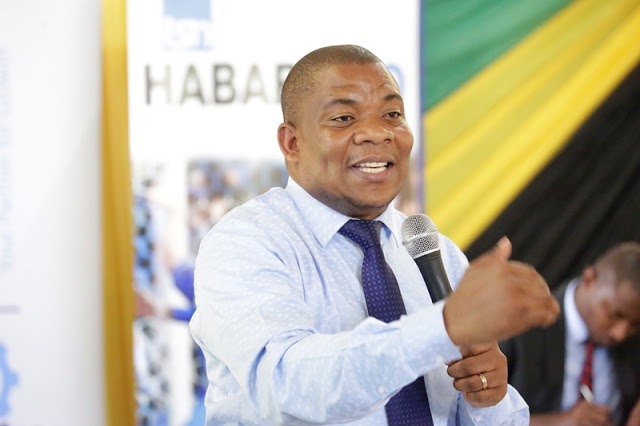
Njombe RC Anthony Mtaka challenges residents to see beyond the cold, seize local opportunities
NJOMBE, Tanzania — While many associate Njombe with its chilly highland climate, Regional Commissioner Anthony Mtaka is painting a different picture: one of untapped economic potential waiting to be seized by enterprising residents.
Speaking at a public gathering, Mtaka challenged Njombe residents to shift their perspective from viewing their region as merely “cold Njombe” to seeing it as a landscape rich with economic opportunities spanning timber, agriculture, renewable energy, and tourism.
Hidden Profits in Plain Sight
The Regional Commissioner highlighted stark market disparities that reveal significant business opportunities. He pointed to the carpentry industry in Taniwatu, where doors manufactured locally for 40,000 shillings fetch up to 200,000 shillings in Dar es Salaam — a five-fold markup that leaves substantial value on the table.
“Visit Taniwatu and see those doors that Dar es Salaam buyers purchase for 200,000 shillings, but are made here for perhaps 40,000 or 47,000 shillings,” Mtaka urged, encouraging residents to explore direct marketing opportunities.
Beyond Timber: A Diversified Economic Vision
Mtaka outlined several economic sectors ripe for development:
Timber Industry: The region’s lumber sector offers opportunities not just in wood products but in value addition and waste utilization. The RC noted that even sawdust can be converted into electricity and sold to the national power company, Tanesco — turning what many consider waste into revenue.
Potato Economy: Njombe’s potato production presents commercial opportunities that residents should capitalize on, Mtaka emphasized.
Agritourism: Perhaps most innovatively, the RC championed farm tourism as an emerging sector. He specifically mentioned Mzee Msuya’s avocado farms as potential destinations for agricultural tourism, urging development of “farm tourism right here in town.”
A Call to Action Against Complacency
Mtaka’s message carried an urgent tone, challenging residents to actively pursue prosperity rather than accept poverty as inevitable.
“Don’t accept dying poor, don’t accept dying lazy,” he declared to applause from the gathered crowd.
The Regional Commissioner used vivid metaphors to challenge his audience about their engagement with development opportunities. He asked whether attendees would leave the meeting having “filled a barrel, filled a 20-liter jerrican, filled a water bottle” with ideas, or whether they were merely “sieves” — letting information flow in one ear and out the other.
“Do you understand me? Do you understand me well? For me, these are my people. I see you there — don’t accept dying poor, don’t accept dying lazy,” Mtaka emphasized.
Strategic Positioning
The Regional Commissioner’s remarks suggest a broader strategy to reposition Njombe from a peripheral highland region to an active economic hub. By highlighting the region’s competitive advantages — from climate-appropriate crops like avocados and potatoes to timber resources — Mtaka appears to be building a case for local entrepreneurship and value addition rather than raw material export.
His specific mention of price differentials between Njombe and Dar es Salaam markets indicates opportunities for residents to capture more value by engaging in processing, marketing, and direct sales rather than selling raw materials or intermediate products to coastal traders.
The meeting reflects a growing emphasis by regional authorities on economic self-reliance and local wealth creation, challenging residents to become active participants in their region’s economic transformation rather than passive observers.