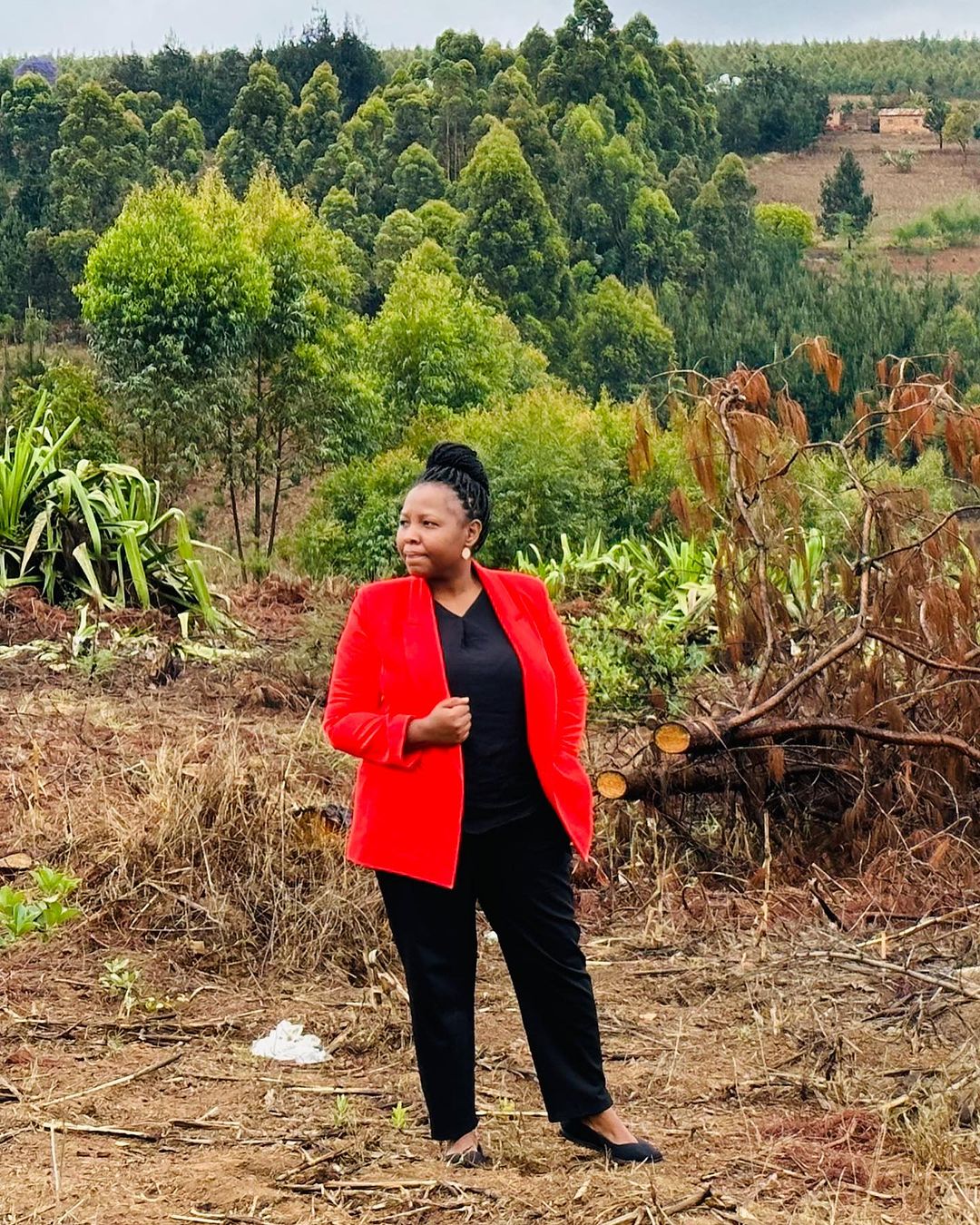
Hadija Jabiri’s Mission to Brand Tanzania Globally
In the ever-evolving landscape of Tanzania’s agriculture sector, transformative conversations often spark the greatest change. Recently, Tullah Mloge from AGCOT Centre (formerly SAGCOT Centre) sat down for an eye-opening dialogue with one of Tanzania’s most inspiring agripreneurs, Hadija Jabiri.
This candid and insightful exchange reflects on the transformative power of agribusiness, the importance of branding Tanzanian produce, the role of government and partnerships in export readiness, and the future of youth in agriculture.
From Small Beginnings to Global Impact
Hadija Jabiri is the Co-founder and Managing Director of GBRI Business Solutions, known by its brand name EatFresh. Based in Iringa, Tanzania, GBRI has been in business for over seven years, specializing in the aggregation and value addition of multicultural produce.
“We have been working with farmers across Southern Highlands, but since 2023 we started working in Burundi as well. As of now, we have over 5,000 smallholder farmers, and we are exporting to European countries as well as India.”
Their journey began humbly in Kiwele Village around 2017 when Hadija was just 26 years old. At that time, she had a small greenhouse and a farm producing traditional vegetables for the local market. Early challenges included accessing funding and dealing with unreliable power supply.
“Back then, unfortunately, we could not approach financial institutions and get funding to expand our operations… I remember we had issues with the power.”
However, with support from AGCOT (formerly SAGCOT), GBRI was able to overcome these obstacles. Through strategic connections, they gained access to investors and even partnered with a Dutch company that helped mobilize resources to build their own facility.
“SAGCOT has been with us for the past seven years… incubating us basically. They connected us with some investors, but also with a company based in the Netherlands which supported us with resource mobilization… eventually enabling GBRI to construct our own facility.”
Hadija described AGCOT as being like a guiding mother figure—providing crucial support and acting as a bridge between her company and the government.
“They have been a link between us and the government… SAGCOT has introduced us to different other partners, and through those partnerships GBRI has been able to get where we are today.”
Branding Tanzania on the World Stage
One of the most inspiring aspects of GBRI’s story is its commitment to branding Tanzanian products internationally. Hadija expressed her frustration at seeing African countries exporting raw materials while importing finished goods.
“Africans will import rather than export finished products… We send raw materials to other developed countries, but it has been something which has always been troubling me.”
She noticed that while other African horticultural products appeared in European supermarkets, Tanzanian produce did not.
“When you visit supermarkets in Europe, it was quite a common thing to see horticultural produce from other African countries, but you couldn’t see produce coming from Tanzania.”
From the beginning, GBRI’s vision has been to take the Tanzanian flag to international markets.
“As much as we started as a very small company, our desire has always been taking our flag to international markets. What GBRI has been doing basically is selling the name of our country.”
“When you go to a supermarket in Europe or India and you see a product which is coming from Tanzania, branded as the produce of Tanzania—that is the way that GBRI has been contributing to taking our flag out there.”
Government Support and Sector Growth
The Tanzanian government has played a significant role in the growth of the agriculture sector through infrastructure development, especially in irrigation, and by supporting export initiatives.
“Thanks to the government for prioritizing the sector. As we are seeing now, there is a lot of infrastructure development happening in the country—irrigation infrastructure. The government has been very supportive of farmers and companies like ours to open up export markets.”
GBRI has benefited greatly from this environment, expanding beyond fresh produce into processing avocado oil—a move made possible by government backing and strong partnerships.
“There is no way we could have been able to do that without the huge support that we are getting from the government, but also from other partners—the likes of SAGCOT, which has played a really important role to incubate a local company like ours and take us to where we are now.”
Breaking Stereotypes in Export Markets
Despite their success, Hadija shared how local companies like hers face skepticism when entering international markets.
“When we started exporting, most of the time when we were interacting with the partners and clients, the question they were asking was: ‘Are you owned by a foreign company or are you a local company?’ There has been a negative perception—maybe that local companies cannot grow to the level where they get to the export market.”
But things are changing.
“I’m happy to see many more companies are not just thinking locally, but they are thinking bigger—they are thinking beyond Tanzanian borders.”
Youth and the Future of Agriculture
Hadija also reflected on the role of young people in agriculture. When she started in her early twenties, she never imagined ending up in farming—a feeling she says is common among many African youth who often overlook agriculture as a viable career path.
“I started my journey in my early twenties. Personally, I never thought that a day would come when I would be in the agriculture sector. And I think it’s the same story for many young people—not just in Tanzania, but across Africa.”
Yet after seven years in the industry, she sees vast opportunities across the entire agricultural value chain.
“There are so many opportunities in agriculture along the value chain, and young people can grab that opportunity.”
“For example, someone who has done ICT—there are opportunities to develop software that can support farmers with some of their pressing challenges. There are opportunities in market access—youth can look at developing marketing platforms.”
“All the challenges which are in the agriculture sector present opportunities that can really be grabbed by young people.”
In a region facing high unemployment rates, agriculture offers a promising opportunity.
“In countries like ours—and across the African continent—with the challenges of unemployment, I think agriculture is the low-hanging fruit which really needs to be looked at.”
With the government prioritizing the sector, the time is ripe for youth to step in, embrace agripreneurship, and transform not only their lives but also the economy.
“Tanzania is one of the countries which has been prioritizing the agriculture sector, and I think it’s the right sign for us—as young people—to grab those opportunities and transform our lives.”
Building the Future of African Agriculture
The conversation between AGCOT and GBRI highlights the powerful combination of public-private partnerships, entrepreneurial drive, and strategic government support that is transforming Tanzania’s agriculture sector. As companies like GBRI continue to thrive and expand globally, they pave the way for a new generation of agripreneurs ready to shape the future of food systems in Africa.
Through determination, innovation, and collaboration, Tanzanian agribusinesses are not only feeding nations but also building global brands—one farm, one export, and one young entrepreneur at a time.