As Tanzania grapples with increasingly unpredictable weather patterns, the Agricultural Growth Corridors of Tanzania (AGCOT) has issued a strong advisory calling on farmers to urgently adopt soil health–centered farming practices as a practical response to climate change, drought, and declining agricultural productivity.
Across Tanzania and much of Africa, farmers are facing a growing convergence of challenges: reduced rainfall, delayed onset of rains, erratic distribution, and prolonged dry spells. These conditions have turned farming into a high-risk venture, particularly for smallholder farmers who rely almost entirely on rain-fed agriculture. AGCOT warns that responding to these realities requires more than emergency measures—it demands a fundamental shift in how farmers manage their soils.
While the expansion of irrigation remains critical, AGCOT emphasizes that irrigation alone is not sufficient. Farmers must also adopt complementary strategies that strengthen the soil’s natural ability to retain moisture, nutrients, and biological life. These include planting drought-tolerant crops, using early-maturing seed varieties that can escape drought, and adopting seeds bred to withstand moisture stress. Increasingly, farmers are beginning to recognize the central role of soil health, particularly through the adoption of Conservation Agriculture.
Between earlier years, AGCOT—then operating as SAGCOT—worked in close collaboration with the Tanzania Agricultural Research Institute (TARI) to conduct multiple trials on soil health–focused farming systems. The results were highly encouraging, demonstrating that practices centered on soil cover, reduced disturbance, and crop diversification significantly improve resilience to drought and variability in rainfall. Building on these results, AGCOT is now intensifying efforts to disseminate this knowledge more widely, positioning soil health and Conservation Agriculture as key tools for climate adaptation and sustained productivity.
Why Now? The Climate Signal of La Niña 2025
AGCOT’s advisory comes at a critical moment, as Tanzania experiences another episode of below-normal rainfall linked to the La Niña climate phenomenon. La Niña is associated with delayed rainfall onset, reduced totals, and extended periods of intense heat—effects that are particularly pronounced in the Coastal and Central zones.
Climate experts note that La Niña often triggers what is known as a “green drought.” In such seasons, crops may germinate well following initial rains, creating a false sense of security. However, when rains abruptly stop mid-season, crops stagnate, wilt, or dry out entirely. In these conditions, farmers who have invested in soil health have a clear advantage. Their soils retain moisture and nutrients more effectively, allowing crops to survive dry spells and reducing the risk of total crop failure and hunger.
The Cost of Leaving Soil Bare
AGCOT cautions that one of the most damaging yet common practices across farming landscapes is leaving soil bare without any form of cover. This practice accelerates erosion by both wind and water, strips away fertile topsoil, depletes moisture, destroys soil biodiversity, and ultimately leads to declining yields.
In many regions—including the Coastal Zone, Central Corridor, Northern Highlands, Lake Zone, and beyond—farmers are working soils that are already fragile, particularly on smallholder plots. When soil is exposed, even productive land can degrade rapidly, undermining the farmer’s long-term livelihood.
AGCOT stresses that this challenge is no longer localized or marginal. It has become a national concern that requires urgent and widespread changes in how farming is practiced.
What Farmers Are Seeing on the Ground
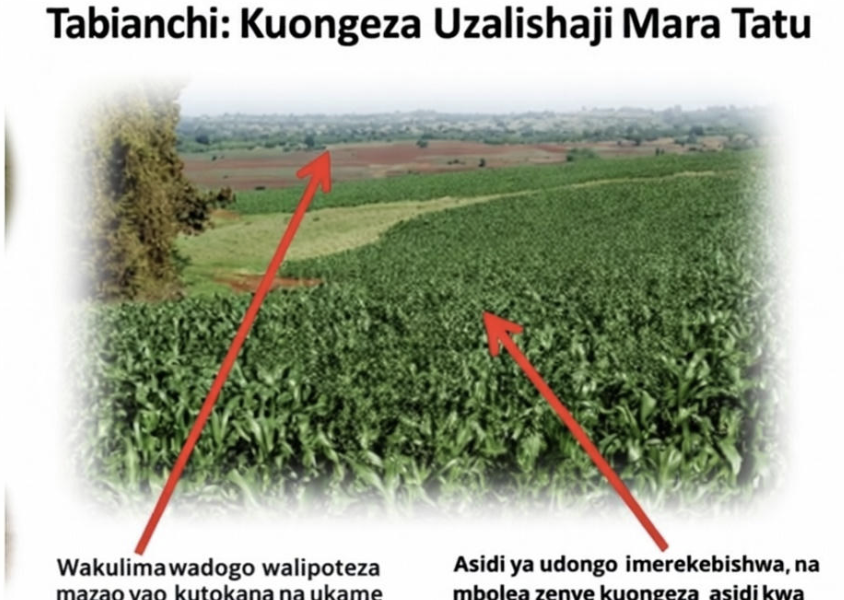
The advisory draws attention to a common and troubling sight in thousands of fields: maize plants just two to three weeks old growing in completely bare soil, with no crop residues or organic cover. Although the soil may still be capable of producing crops, direct exposure to intense sunlight causes it to dry out quickly, weakening young plants at a critical growth stage.
According to AGCOT, these early stresses set the stage for poor yields long before farmers realize there is a problem. The issue is not the seed, but the condition of the soil itself.
Conservation Agriculture: A Strategic Shift Forward
To address these challenges, AGCOT recommends a strategic transition to Conservation Agriculture, built on three core principles.
First, permanent soil cover. Farmers are urged to leave crop residues in the field, create mulch layers of at least two to three centimeters, and completely avoid burning residues. Research shows that even minimal soil cover can reduce soil temperatures by 5–10°C and cut moisture loss by up to 50 percent.
Second, reduced soil disturbance. Frequent ploughing damages soil structure, accelerates the loss of soil carbon, and contributes to the formation of hard surface layers that prevent rainwater infiltration. AGCOT advises farmers to reduce or eliminate conventional tillage and instead use alternatives such as the Magoye Ripper. This tool allows farmers to prepare land and plant crops while preserving soil structure, unlike traditional ploughing that inverts and disrupts the soil.
Third, crop rotation and diversification. Rather than planting the same crop season after season, farmers are encouraged to rotate or intercrop cereals with legumes such as pigeon pea, lablab, or mucuna. These crops add organic carbon to the soil, produce large amounts of residue for soil cover, conserve moisture, and enhance soil fertility after harvest.
The Special Challenge of Sandy Soils
AGCOT highlights that in areas dominated by sandy soils—especially the Coastal and Central zones—the core problem is not fertility alone, but soil structure. Sandy soils drain water rapidly, and without sufficient carbon, even limited rainfall is quickly lost.
Studies indicate that many Tanzanian soils contain extremely low levels of organic carbon, often below 0.3 percent. Through the use of cover crops, manure, compost, and biochar, farmers can increase soil carbon to above 0.7 percent within three to four years—dramatically improving the soil’s ability to retain water and nutrients.
Biochar: Turning Waste into Soil Wealth
For the first time, AGCOT has explicitly promoted biochar as a practical, farmer-friendly solution, particularly in rice-growing areas where rice husks are often discarded or burned.
Biochar technology converts crop residues into long-lasting soil amendments that improve water retention and nutrient storage. When applied correctly, biochar can transform sandy soils into drought-resilient fields without requiring expensive external inputs, turning agricultural waste into a valuable resource for soil restoration.
Evidence from Research Institutions
The advisory cites research from TARI centers including Tumbi, Ilonga, Selian, and Mbinga. These studies show that combining soil cover, Conservation Agriculture, and water conservation can double or even quadruple maize yields during drought years. They also demonstrate that crops grown in healthy soils can withstand dry spells for seven to fourteen days longer, even when rains stop mid-season.
Policy Alignment and National Direction
AGCOT’s guidance aligns directly with Tanzania’s Agriculture Development Vision 2050 and broader continental efforts to restore soil health. Emphasizing this alignment, AGCOT Chief Executive Officer Geoffrey Kirenga notes:
“The time has come for farmers to give soil health the same importance we have long given to improved seed and fertilizer. Without living soil, no technology can save our crops.”
A Call to Action
AGCOT calls on farmers, extension officers, researchers, and development partners to actively promote Conservation Agriculture as a low-cost, scalable solution adaptable across much of the country. The main requirement, AGCOT stresses, is a change in knowledge, mindset, and daily farm decisions.
Leaving soil bare is no longer a neutral choice—it is a direct contributor to low productivity and persistent poverty. Covering the soil, by contrast, is a strategic investment, comparable to building irrigation infrastructure, yet well within the reach of most farmers and capable of delivering benefits within just a few seasons.
As Tanzania advances toward the goals of Agriculture Development Vision 2050, AGCOT’s message is unequivocal: soil health is not a future concern—it is a present and national priority, central to food security, climate resilience, and economic sustainability.
Tanzania’s Agricultural Growth Corridors under AGCOT
AGCOT coordinates agricultural transformation through four strategic growth corridors:
- Central Corridor: Dodoma, Singida, Tabora, and Lake Zone regions
- Northern Corridor: Arusha, Kilimanjaro, Manyara, and Tanga
- Mtwara Corridor: Lindi, Mtwara, and Ruvuma
- SAGCOT Corridor: Morogoro, Iringa, Njombe, Mbeya, Songwe, Rukwa, Katavi, Dar es Salaam, and Pwani
Across these corridors, the foundation remains the same: healthy soil as the engine of resilient, productive, and profitable agriculture.