

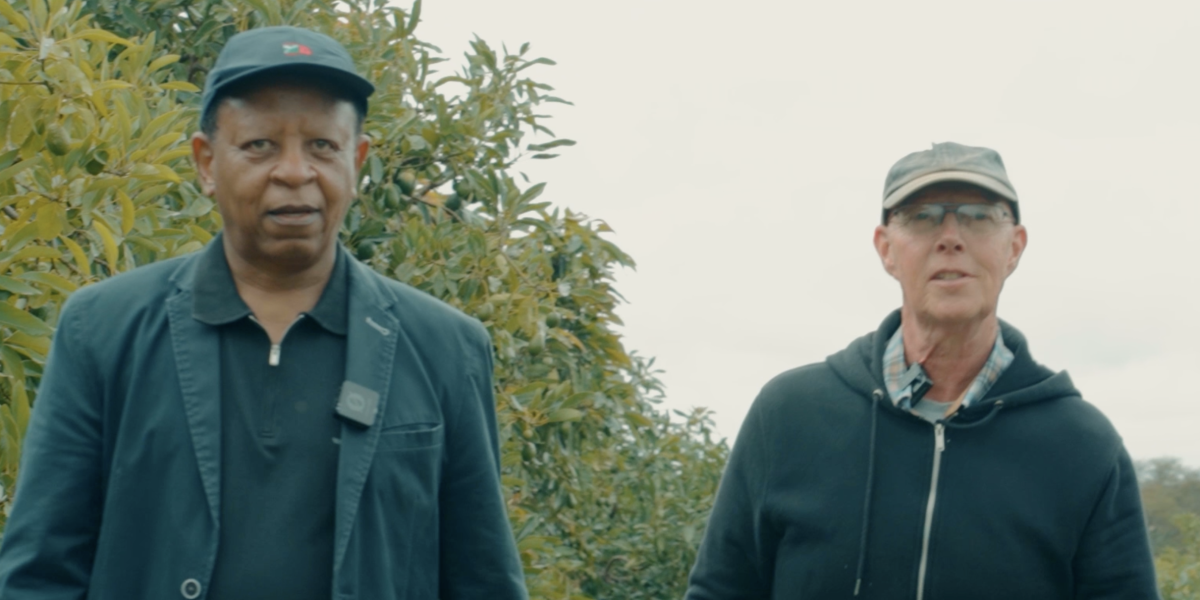
From Barren to Bountiful: How One Farm in the Southern Highlands Is Writing Tanzania’s Agricultural Future
The name says everything. Rutuba — Swahili for soil fertility. But twenty years ago, standing on this land in the Southern Highlands of Tanzania, you would never have guessed it.
THE LAND THAT REFUSED
There is a particular kind of despair that settles over a farmer standing on uncooperative ground. The soil at what would become Rutuba Tanzania Limited was poor, stripped of nutrients, and locked in high acidity — a combination that renders earth almost biologically hostile to crops. In a region that sits at the heart of Tanzania’s food production ambitions, this was land that had, for all practical purposes, given up.
When the farm’s owners first arrived here about two decades ago, they faced a choice familiar to many across sub-Saharan Africa: walk away, or commit to the long, expensive, uncertain work of healing the ground beneath their feet.
They chose to stay.
That decision — sustained over twenty years of deliberate soil management, scientific investment, and a willingness to challenge conventional farming wisdom — has produced one of the most compelling agricultural transformation stories in the SAGCOT Corridor. Today, Rutuba Tanzania Limited is not just a thriving commercial farm. It is, as AGCOT Centre CEO Geoffrey Kirenga observed during a recent field visit, a proof of concept for what Tanzania’s agricultural future can look like.
GEOFFREY KIRENGA COMES TO LOOK — AND TO LEARN
The field visit was not a ceremonial one. Kirenga, who leads the Agricultural Growth Corridors of Tanzania as it transitions from a regional project to a national vehicle for economic transformation, was here with purpose: to document, understand, and ultimately scale models of agricultural excellence that can inform the country’s broader strategy.
Tanzania is pursuing a $100 billion agricultural economy by 2050, anchored by the Agriculture Master Plan and the National Development Vision 2050. These are bold, ambitious targets. But Kirenga is one of those rare development leaders who understands that national transformation is not built in conference rooms — it is built in fields, in orchards, in the quiet revolution of a farmer deciding to stop burning crop residue and start recycling it back into the earth.
Rutuba was exactly the kind of farm he needed to visit.
Director Robert Clive met Kirenga in the fields, walking him through what has become a sophisticated, diversified commercial operation that spans seed maize, avocado horticulture, dairy livestock, and an ambitious new entry into malting barley. The conversation that unfolded between the two men — farmer and development strategist, practitioner and policymaker — is the kind of exchange that rarely makes headlines but quietly shapes the direction of a country’s agriculture.
THE SCIENCE OF SOIL: CHEMISTRY, STRUCTURE, AND THE COURAGE TO DO LESS
To understand what Rutuba has achieved, you must first understand what was wrong.
“Without the right acidity and without nutrients, you cannot grow a crop,” Clive explained, standing in a field of seed maize so healthy it seemed almost defiant of the history beneath it. The twin problems of nutrient deficiency and high soil acidity are common across Tanzania’s agricultural clusters, and they are not solved quickly. They require a multi-year commitment to soil chemistry — adding carefully calibrated fertilizers to restore mineral balance, and applying lime to neutralize acidity and unlock the nutrients already present in the ground.
But chemistry, Clive was quick to note, is only half the battle. Soil structure — the physical arrangement of particles, pores, and organic matter that determines how well a soil holds water, circulates air, and supports biological life — is equally critical, and far harder to fix.
This is where Rutuba made its most counterintuitive decision.
They stopped plowing.
Zero Tillage, as the practice is formally known, runs against decades of conventional agricultural wisdom. The image of a tractor pulling a disc plow through dark earth is almost synonymous with farming itself — a symbol of productivity, of getting the land ready, of doing the work. To suggest that farmers should simply not do that is, as Kirenga acknowledged during the visit, genuinely difficult to communicate.
“That is what actually constitutes farming — people think you must plow,” Kirenga said, almost laughing at the cultural weight of the idea. “And we’re buying tractors and plows. It’s very difficult to get that into people’s minds.”
Clive nodded. “It’s a traditional thing as well. They feel like unless they plow, they’re not going to get a crop. But it’s the other way around.”
At Rutuba, zero tillage means exactly what it says. They do not plow the soil. They do not rip it. They do not mechanically disturb it in any way. Instead, seeds are planted directly into the residue — the chopped stems, leaves, and organic matter — left behind by the previous crop. That residue, which most farmers across Tanzania still burn in preparation for the next season, is left on the surface to slowly break down.
The difference this makes is profound, and it is visible to the naked eye.
Kirenga crouched to look at the soil surface during the visit and immediately saw what healthy, undisturbed earth looks like. Earthworms. Millipedes. Insects. A living community of organisms that exist precisely because the soil has not been mechanically destroyed, baked by sun exposure, or chemically sterilized by the repeated trauma of tillage.
“Burning is bad because it’s bad for your soil — you’re destroying all this beautiful organic matter which feeds the soil,” Clive explained. “It feeds the microbes in the soil when this breaks down. Chop it up so that it slowly breaks down and increases the organic matter.”
Organic matter is the invisible engine of productive soil. It holds moisture, binds nutrients, creates the spongy, aerated structure that allows roots to penetrate deeply and access water during dry spells. Burning destroys it in minutes. Building it back takes years. Rutuba has been building it for two decades — and the compound interest of that investment is now visible in every crop growing on the farm.
THE PRINCIPAL CROP: SEED MAIZE FOR A CONTINENT
Walk through Rutuba’s main fields and you are walking through a commercial seed production operation of considerable scale. The farm grows two maize varieties — 419 and 403 — under contract for Seedco, one of Africa’s leading seed companies. Seed maize is a precision enterprise, distinct from commercial grain production. The quality of the seed determines the yield of every farmer who plants it, which means Rutuba’s commitment to soil health is not just good for this farm — it ripples outward to thousands of smallholder farmers across the region.
The crops growing in these fields are a direct consequence of the soil work done beneath them. Healthy, well-structured, nutrient-balanced soil produces the consistent, high-quality conditions that seed production demands. You cannot grow reliable seed maize on compromised ground.
THE ORCHARDS: EIGHTY HECTARES OF GREEN GOLD
Cross to the far side of the property and the landscape shifts entirely. Eighty hectares of avocado trees — varieties Hass and Gem — stretch out in long, carefully managed rows. Specifically, 33 hectares of Hass planted from 2018, and 45 hectares of Gem introduced from 2020. These trees, now six to eight years old, are entering their most productive phase.
This year, Rutuba expects to harvest 12 to 13 tonnes per hectare — an impressive yield for trees of this age, and a figure that reflects not just good agronomy but the same soil health principles applied in the maize fields.
“It’s climate and soil,” Clive said simply when asked what drives avocado productivity. “They do like a bit of nutrition and liming is very important as well to control soil acidity.”
The management of the avocado section at Rutuba falls under the care of Avocado Manager Jori Kipiter Kiung’aro, whose technical expertise bridges the gap between field management and international market standards. His knowledge goes well beyond planting and irrigation — it extends to the precise science of harvest timing, a discipline that determines whether Tanzanian avocados reach the world market in peak condition or fall short of grade.
“When we harvest, we look at three main things,” Kiung’aro explained. The first is size — fruits that are too small are rejected. The second is skin appearance: a fruit with an unnaturally bright, oily sheen has not yet matured and will fail on the market. The third, and most precise, is dry matter content — the internal measure of ripeness that determines whether a fruit will ripen correctly after harvest.
“We sent samples to Kibidula for testing and confirmed that dry matter was between 29, 30, and up to 35 — well above the minimum of 24,” he noted. “That is when we knew we could begin harvesting.”
Each harvesting tray holds up to 20 kilograms of fruit — roughly 75 to 80 individual avocados depending on size. The fruit travels to the Kibidula pack house, where it is cleaned, graded into first and second class, boxed at approximately 14 fruits per box, and prepared for export. The pack house is the interface between the farm and the global market — and the quality of what arrives there determines everything that follows.
Two Harvests, Multiple Markets
Rutuba runs two harvest seasons per year. The current early harvest runs in February — what the team calls the “off season.” The main, high-volume harvest runs from July through October. This dual-season structure gives the farm a commercial flexibility that single-harvest operations cannot match.
The markets Rutuba targets are telling. India has emerged as a high-priority destination — a vast population, a rapidly growing middle class, and a staggering market opportunity. As Clive noted, an estimated two-thirds of India’s population has never even encountered an avocado. That is not a niche market. That is a continent-scale opportunity in the making.
China and Europe remain important markets, but India’s proximity — “just a short boat ride,” as Clive put it — gives Tanzanian producers a logistical advantage that European competitors cannot replicate. And in an era when disruptions like the Suez Canal crisis can paralyze global supply chains, geographic diversification is no longer a luxury. It is a survival strategy.
The current export price sits at approximately one dollar per kilogram — a figure Clive considers acceptable but insufficient to fully unlock smallholder participation. His ideal price is two dollars per kilogram.
“If we got two dollars per kilo, it would be really good. It would encourage more farmers to go into avocado farming,” he said. It is a number that the industry — exporters, government, and development organizations like AGCOT — needs to work toward through market development, quality improvement, and supply chain efficiency.
AVOCADO AS A SMALLHOLDER OPPORTUNITY — AND A WARNING
Kirenga raised something during the orchard visit that deserves serious attention. Research conducted a few seasons ago in the Southern Highlands — covering Iringa, Njombe, and Mbeya — observed an astonishing 24 million avocado seedlings in nurseries. This season, nursery supplies ran short because planting had accelerated so dramatically.
Tanzania is on the verge of becoming one of Africa’s major avocado producers. The question is not whether the crop will be planted — it clearly will be. The question is whether it will be planted correctly, managed well, and harvested to the quality standards that premium export markets demand.
Clive’s advice to smallholder farmers is worth committing to memory:
First, prepare your field meticulously. Do proper liming. Get soil acidity and nutrition right before you plant a single seedling. Plant on ridges or mounds — avocados cannot tolerate waterlogged roots and will die in poorly drained ground.
Second, source quality seedlings without compromise. Inferior planting material cannot be corrected after the fact. If the seedling is wrong, everything that follows is wasted investment.
Third, manage Phytophthora. This soil-borne disease is the primary killer of avocado trees across Tanzania and beyond. Prevention is far cheaper than cure, but cure is now possible — Rutuba has been successfully treating affected trees through targeted injection of a protective solution, applied once or twice per year. The cost is justified given what’s at stake: years of investment in soil preparation, seedlings, fertilization, and labour, all of which are lost if a tree dies.
“If the tree dies, it’s wasted money,” Clive said plainly. “But if you inject and keep your trees alive, you protect everything you’ve already put in.”
THE DAIRY HERD: INTEGRATION AS STRATEGY
A farm of Rutuba’s ambition does not stop at crops. A thriving dairy herd of 150 to 160 cows completes the picture, adding a third value chain to the operation and providing the kind of integrated agricultural system that development economists describe in theory but rarely see fully executed at this scale.
The dairy operation mirrors the productivity philosophy of the rest of the farm — high standards, careful management, and long-term thinking. It also contributes to soil fertility through manure, creating a circular nutrient cycle that reinforces the zero-tillage approach across the whole enterprise.
MALTING BARLEY: THE FARM THAT REFUSES TO STAND STILL
Perhaps the most telling indicator of Rutuba’s character is what comes next. The farm is introducing malting barley into its crop rotation — a move that signals continuous innovation, market awareness, and a refusal to be defined by what the farm currently does rather than what it could do.
Malting barley feeds the brewing industry, a sector with significant and growing demand across East Africa. Adding it to the rotation diversifies revenue, improves soil health through varied cropping sequences, and positions Rutuba at the intersection of agriculture and agro-processing — exactly where development economists want commercial farms to be.
A COLLABORATION WORTH WATCHING
The most significant outcome of Kirenga’s visit was not what he observed — it was what he proposed.
“We will come to visit and show all the stages that a good farmer should be doing in order to have minimum tillage, how to take care of the soils, in order to develop a package and training material in a practical way to show farmers how to do it,” Kirenga told Clive.
Clive’s response was immediate: “We would like to collaborate on that.”
In those two sentences, a partnership was formed that has implications far beyond this farm. AGCOT, with its mandate to scale investment-ready agricultural models across Tanzania’s corridors, and Rutuba, with twenty years of documented, proven practice in conservation agriculture, are natural allies. Together, they can do what neither can do alone — translate field-level excellence into transferable knowledge that reaches smallholder farmers across the Southern Highlands and beyond.
This is the kind of collaboration that the Agriculture Master Plan 2050 was designed to catalyze. Not government telling farmers what to do. Not development organizations writing reports that gather dust. But a commercial farm opening its gates, a national agricultural body showing up to listen and learn, and both committing to build the practical training materials that can change how a generation of Tanzanian farmers thinks about soil.
THE NAME AND THE VISION
As the field visit concluded, Kirenga paused to note something that had clearly moved him.
“Thank you very much and congratulations to Rutuba Farm for this. The name of the farm is Rutuba — which is very true. Rutuba is a Swahili word for soil fertility.”
It is a name that was perhaps chosen with aspiration in mind two decades ago, when the soil here was anything but fertile. Today, it reads as prophecy fulfilled.
As Tanzania charts its course toward Vision 2050, the lesson of Rutuba is both practical and philosophical. Degraded land is not dead land. Acidic, nutrient-poor soil is not a permanent condition — it is a challenge with known solutions, requiring only the commitment, the science, and the patience to address them systematically.
National agricultural transformation does not begin in Dodoma or Dar es Salaam. It begins in a field in the Southern Highlands, where a farmer decides to stop plowing, stop burning, and start listening to what the soil is asking for.
Rutuba listened. And the land answered.
#RutubaTanzania #FromBarrenToBountiful #ConservationAgriculture #ZeroTillage #AGCOT #SoilHealth #Vision2050 #ClimateSmartAgriculture #SouthernHighlands #AvocadoTanzania #SeedMaize #SAGCOT #TogetherWeGrow