January 4, 2026
by Kilimokwanza
Titled “Mwongozo wa Uendelezaji wa Tasnia ya Parachichi”, this comprehensive roadmap, issued by the Ministry of Agriculture—outlines best practices from farm to export, defines quality standards (including dry matter ≥21%), clarifies stakeholder roles, and includes a regional harvest calendar for Hass & Fuerte varieties. A major step toward boosting smallholder incomes, export competitiveness, and sector […]
January 3, 2026
by Kilimokwanza
Dar es Salaam — Strategic investment in market promotion is delivering tangible gains for Tanzania’s horticulture sector, boosting exports, job creation, and global visibility, according to a new academic study released at the end of 2025. The paper, The Influence of Market Promotion on the Performance of the Tanzania Horticulture Sector, authored by Steven Tumaini […]
January 1, 2026
by Kilimokwanza
Kilimokwanza.org 2026- R1 1. Executive Summary The 2024-2025 period represents a pivotal juncture for the food systems of East Africa, characterized by a divergent yet interconnected trajectory of structural transformation across Kenya, Tanzania, Ethiopia, Uganda, and Rwanda. Following the debilitating sequence of climatic shocks—most notably the prolonged drought of 2020-2023 and the subsequent El Niño-induced […]
December 31, 2025
by Kilimokwanza
1. Introduction: The Anatomy of a Market Failure The global spice trade, a complex nexus of botanical vulnerability, geopolitical shifting, and climatic volatility, is currently witnessing a profound dislocation in its historical center: the Zanzibar Archipelago. For centuries, the islands of Unguja and Pemba have been synonymous with the clove (Syzygium aromaticum), a commodity that […]
December 31, 2025
by Kilimokwanza
1. Introduction: The Dual Heritage of Tanzanian Flavor The beverage culture of Tanzania is a complex tapestry woven from two distinct yet overlapping botanical heritages: the oceanic and the continental. Along the Swahili Coast and the islands of Zanzibar (Unguja and Pemba), the definition of “spice” aligns with the classical trade definitions—aromatic, dried seeds, fruits, […]
December 31, 2025
by Kilimokwanza
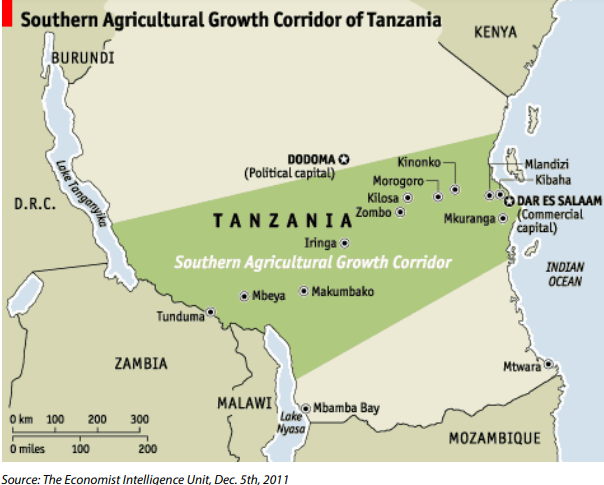
Kilimokwanza.org Report 52, Dec, 2025 The Southern Agricultural Growth Corridor of Tanzania (SAGCOT) represents one of Africa’s most ambitious and sustained experiments in public-private partnership (PPP) for agricultural transformation. Initiated in 2010, the SAGCOT model has undergone a significant strategic evolution, moving from a broad, geographically-based development approach to a highly focused, value-chain-centric strategy. This […]
December 30, 2025
by Kilimokwanza
First commercial shipment opens premium market for smallholder farmers Nairobi, December 30, 2025 – Kenya Airways Cargo flagged off the country’s first commercial shipment of apple mangoes to the United Kingdom on December 20, marking a watershed moment for Kenya’s horticulture sector and opening a high-value export corridor for thousands of smallholder farmers. The three-tonne […]
December 30, 2025
by Kilimokwanza
Kilimokwanza.org editorial response to “Resurrecting a presumed ghost: the challenges and revival of the Southern agricultural growth corridor of Tanzania in a changing political landscape”Mudimu, Brüntrup & Mutabazi (Third World Quarterly, 2025) Editorial Position Academic critique strengthens policy when grounded in institutional reality. But when evocative metaphor displaces empirical fact, scholarship risks embedding dangerous narratives […]
December 19, 2025
by Kilimokwanza
AGCOT Centre Chief Executive Officer, Mr. Geoffrey Kirenga, has called for greater clarity in how startups and Small and Medium Enterprises (SMEs) are understood and supported, arguing that the distinction is critical for effective youth entrepreneurship programmes, smarter investment decisions, and sound public policy. Reflecting on enterprise development, Mr. Kirenga notes that startups and SMEs […]
December 15, 2025
by Kilimokwanza
Kilimokwanza Report, 56, Dec 2025 This report provides an exhaustive analysis of the emergent aggregation models transforming agricultural value chains, focusing on the distinction between technology-driven “Smart Harvest Aggregators” and infrastructure-led “Shared Harvest/Hub Aggregators.” The analysis establishes a critical definitional framework: The convergence of these concepts yields the “Smart Harvest Aggregator,” which is, in practice, […]